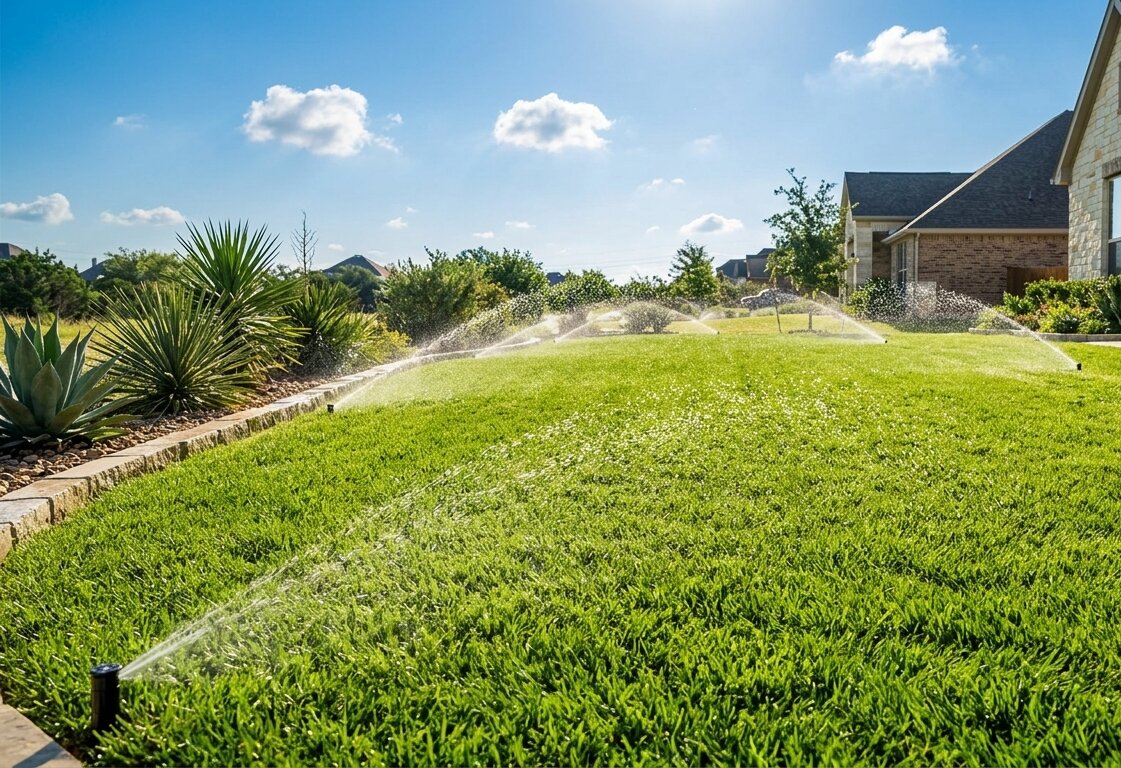
Standing water after 24 hours signals a drainage problem. San Antonio's heavy clay south of 1604 seals like a bowl; thin soil over limestone north of 1604 causes runoff pooling. Signs include puddles, soggy foundations, dead grass patches, and mud in garages. We diagnose root causes and install lasting solutions.
Here's what folks usually notice first.
•Puddles that show up in the exact same spot every single storm
•Grass that's thin, yellow, or just gone in one low area while the rest of the lawn looks fine
•Soil pulling away from the foundation, or damp block and brick along the base of the house
•A musty smell in the garage or a downstairs closet after heavy rain
•Gutter downspouts dumping straight onto the ground within a few feet of the wall
•Mushrooms, moss, or mosquitoes hanging around one part of the yard
And watch where the water goes during the storm, not after. Step out under the porch and look. Is it sheeting toward the house or away from it? That thirty seconds of watching tells us more than a dry yard ever will.
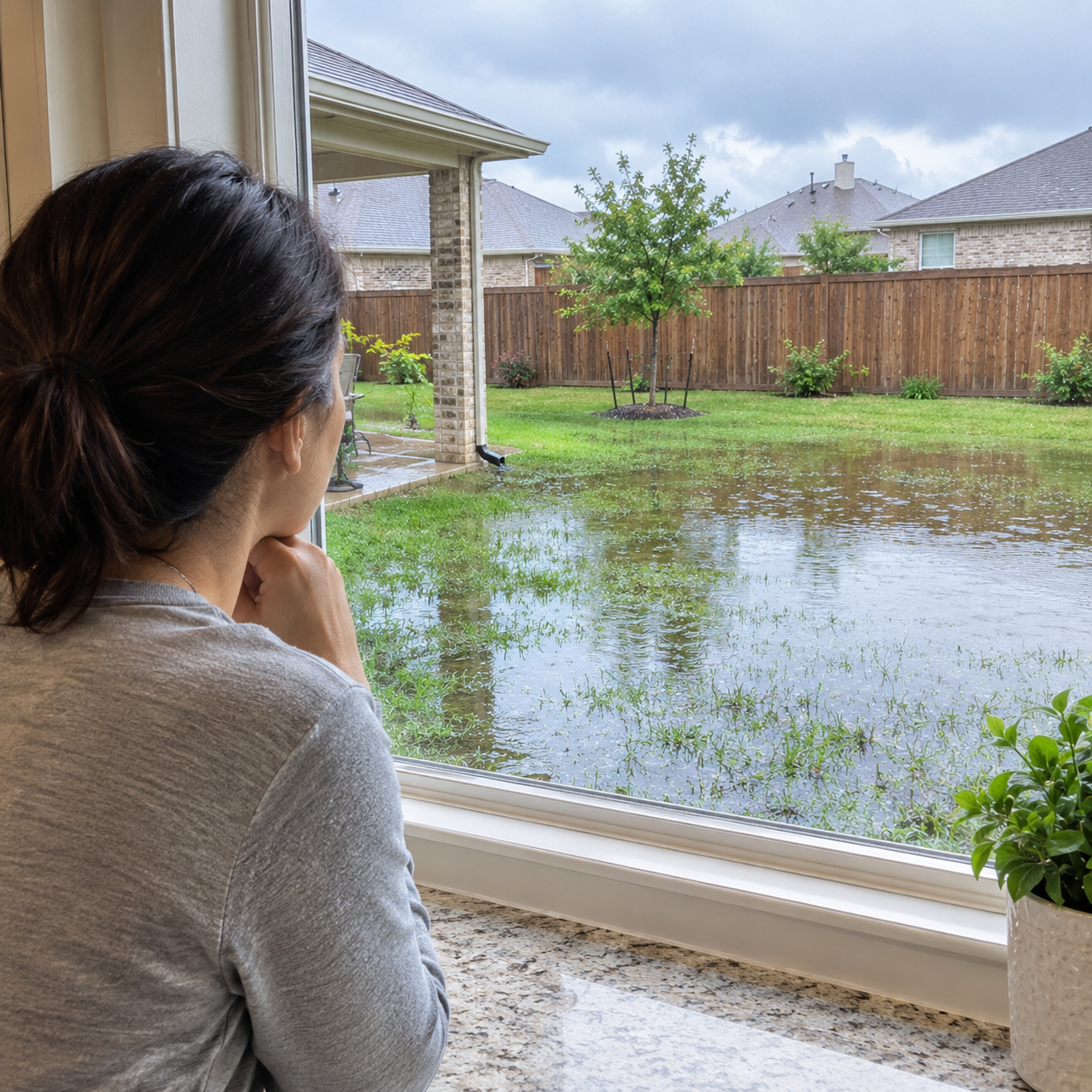
Here's something we'll tell you before we take your money. Sometimes the fix is gutters and downspouts, and that's it. If the water pooling in your yard shows up right along the drip line of the roof, and the rest of the lawn stays firm, you may just need the roof water carried farther away. Extend a downspout ten feet and watch it through the next few storms.
But roof water is only one source. When the downspouts are already running into the street and the side yard is still soft four days later, that's not roof water anymore. That's ground water moving across the lot and stalling in a low spot. No amount of downspout extension will drain a yard that's graded to hold water.
A few things point us away from a gutter fix. Water standing where there's no roof above it. Soggy ground on the uphill side of a fence or retaining wall. A patio slab that stays damp long after the rain quits.
Not sure which one you've got? Wait for the next real rain and go look while it's happening. Where the water comes from tells you almost everything. Thinking about Drainage Services? Let's talk. (210) 490-5394 Call now for a free estimate. Moore Irrigation Services Inc is ready to help.
People call us asking for a French drain. Sometimes that's right. Often it isn't. The water tells us what it needs.
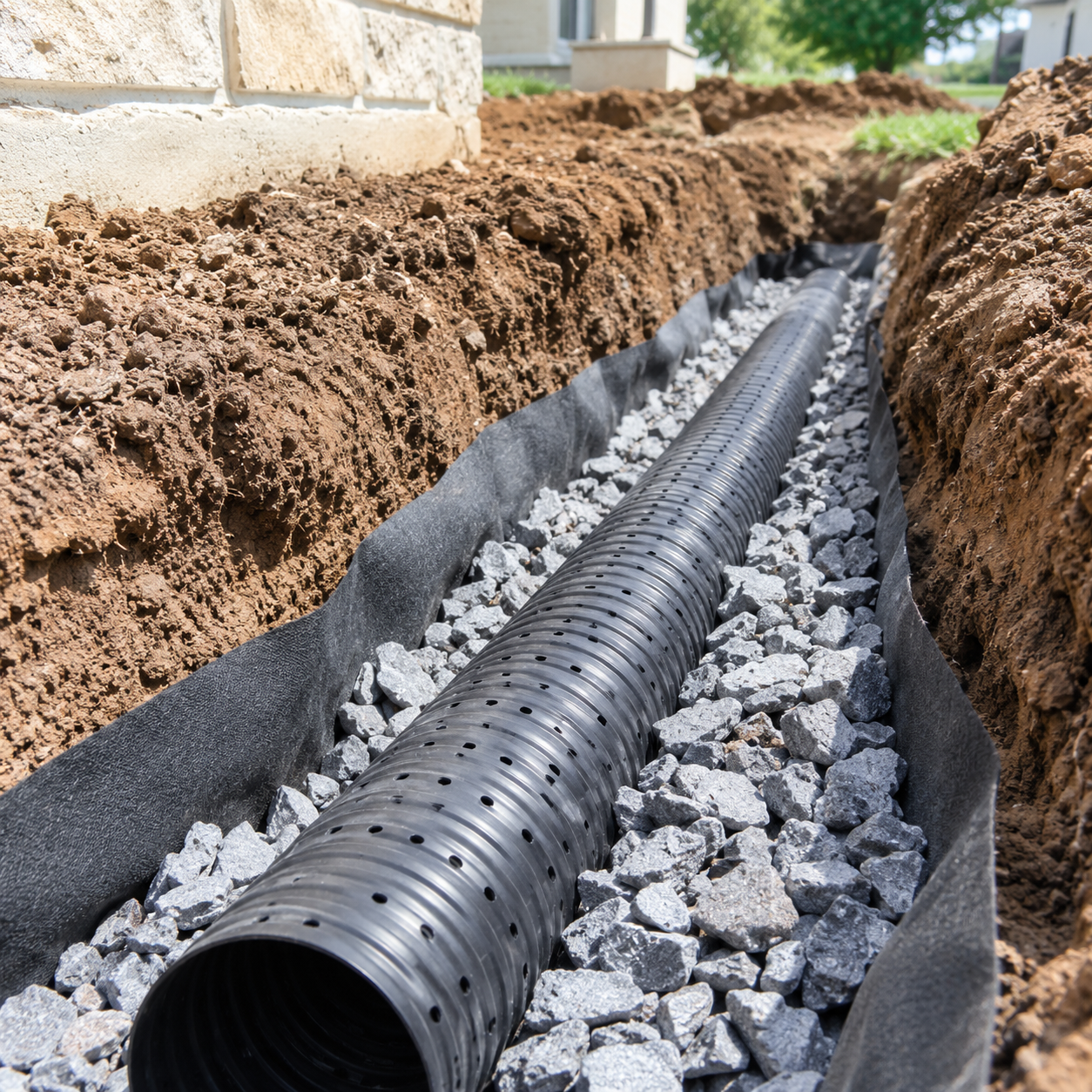
A French drain is a gravel-filled trench with perforated pipe in it. Water soaks down, hits the pipe, and gets carried somewhere safer. That's the answer when water sits in one low spot and won't move, which the heavy clay south of 1604 makes common.
Regrading is different. That's reshaping the dirt so water leaves on its own before any pipe is involved. It solves the slow, wide problems: soil settled against the foundation, a yard that tilts toward the house, mulch beds built up higher than the slab over the years. In the shallow rocky soil north of town, digging deep trenches gets expensive fast, so reshaping the surface is frequently the smarter move. We look at grade before we quote a trench every single time.
• Standing puddles that last more than a day after rain: usually a French drain
• Water running toward the foundation or pooling along the slab: usually a grading correction
• Both at once: more common than you'd think, and worth one visit instead of two
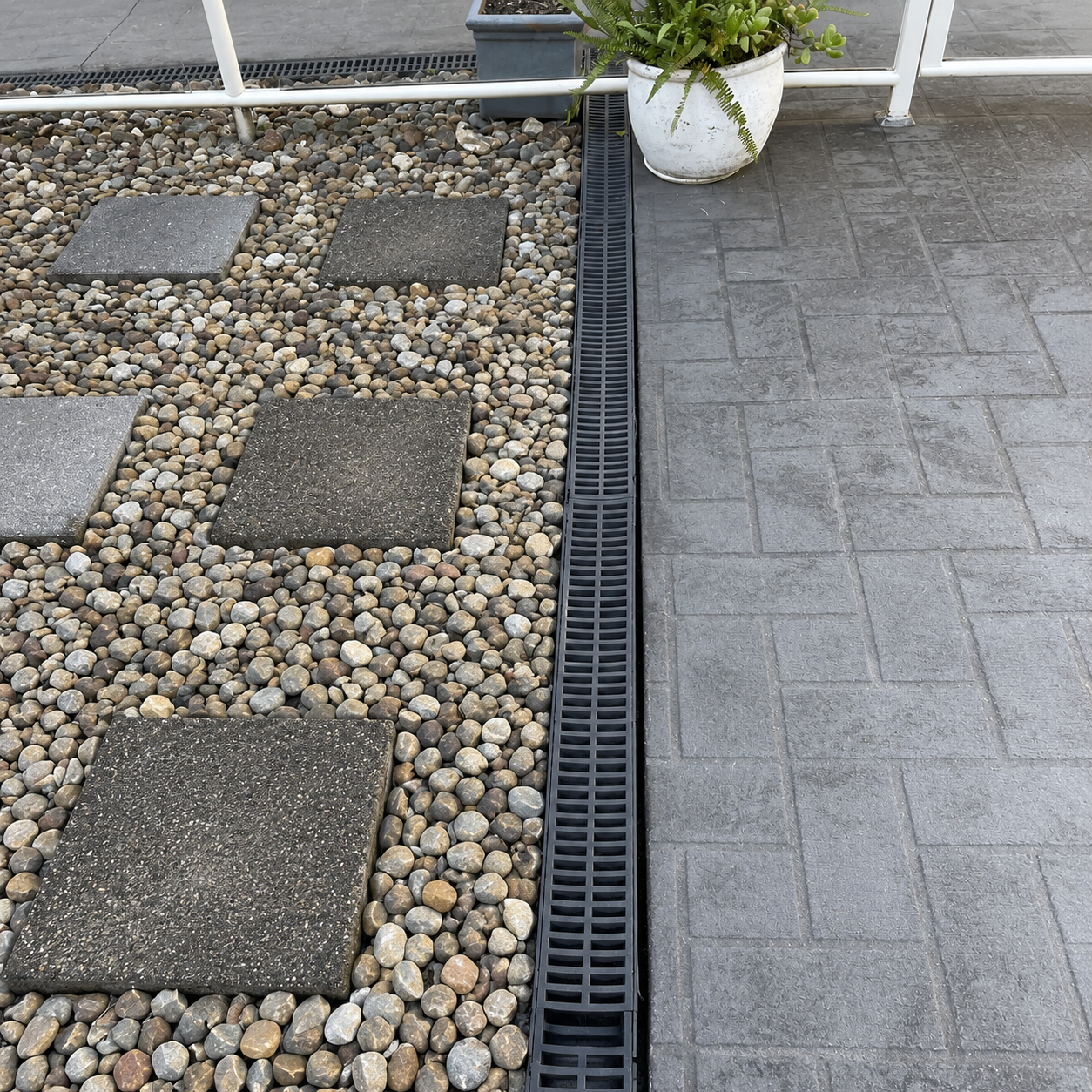
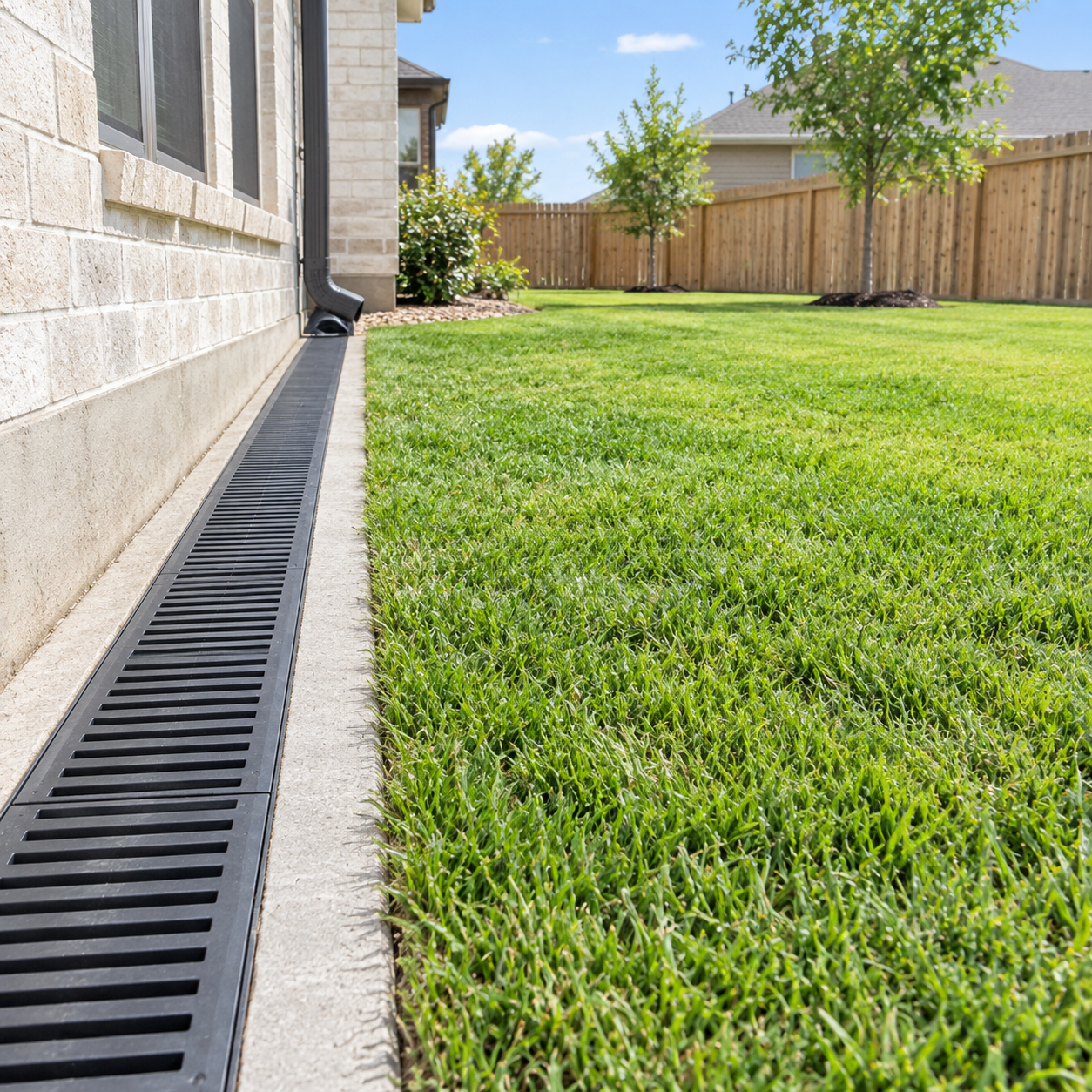
A drain doesn't make water disappear. It moves it. And the whole job lives or dies on where that water comes out. We walk the low spots first, then we walk the property line. If the only downhill point on the lot is your neighbor's back fence, we're not putting an outlet there. Pushing concentrated runoff onto the lot next door is the fastest way to turn a wet yard into a dispute.
So where does it go? Usually one of a handful of places, and the lot decides which.
• Daylight at a lower point on your own property, far enough from the house and the line that the soil can take it
• The street curb or gutter, where the lot slopes that way and the city allows the connection
• A dry well or gravel pit sized to hold a surge and let it soak in slowly
• A rain garden or planted low area that's built to flood on purpose and drain down after
Never tie a yard drain into a sanitary sewer cleanout. Stormwater doesn't belong in that system and it can back up into the house.
If you're in an HOA or on a lot with a recorded drainage easement, there may be rules about where you can discharge and what you can build across. We ask about that before we dig, not after. Estimates are free, and the outlet gets settled at that visit.
If water is still standing more than a day after rain stops, that's your answer. Look for puddles in the same spot every storm, soggy ground near the foundation, or grass that dies in one low area year after year. Step outside during the next storm and watch where the water goes.
Sometimes, but only if the puddling happens right along the roof's drip line. If the rest of your yard stays firm, extending a downspout ten feet can solve it. But if water still sits four days later with downspouts running into the street, that's ground water moving across your lot, not roof water.
A French drain is a gravel-filled trench with pipe that carries away water sitting in one low spot. Regrading reshapes the dirt so water leaves on its own, without any pipe. Regrading usually solves slower, wider problems like soil settled against the foundation or a yard tilting toward the house.
%20(1).jpg)