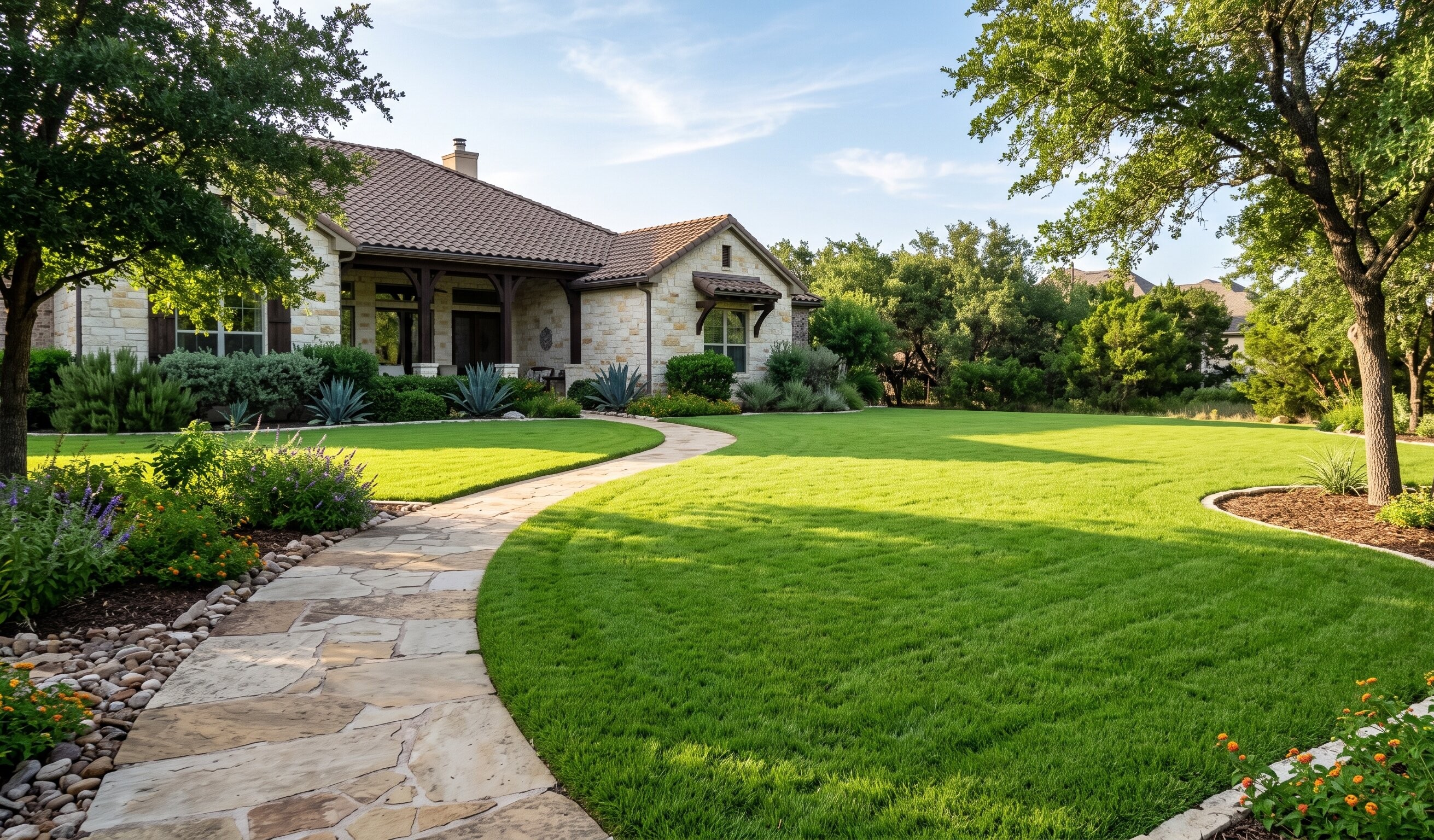
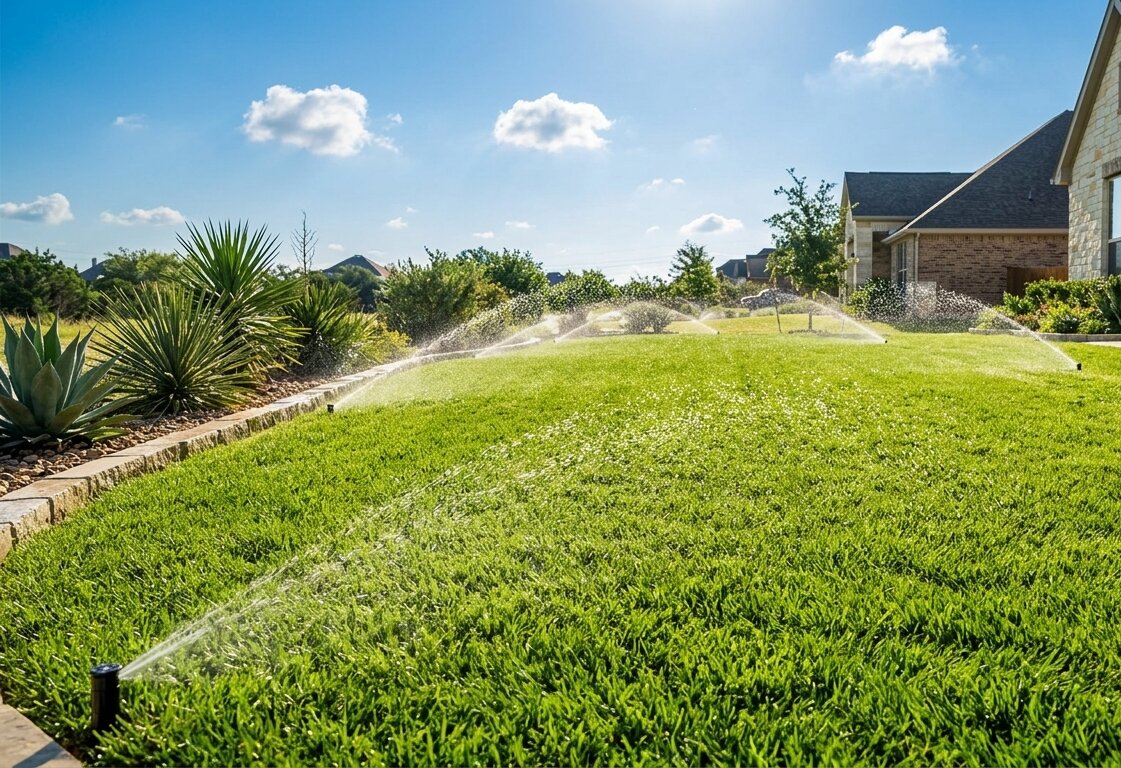
The grass you choose determines how much water your irrigation system needs to deliver and how you should zone and schedule it. When evaluating the best grass types San Antonio irrigation systems can effectively support, it's important to remember that not every grass variety is equally practical for our specific climate and water restrictions.
The most common lawn grass in San Antonio. It handles heat well, tolerates shade better than Bermuda, and produces a thick, lush turf. The downside: it's the thirstiest option. St. Augustine needs about 1 inch of water per week during summer which can be challenging under SAWS restrictions. Irrigation setup: standard spray or rotary heads with even coverage. Run times should be calculated to deliver that 1 inch across the zone area. Uneven coverage means dry spots that brown quickly in July and August.
.png)
More drought-tolerant than St. Augustine and recovers quickly from stress. It handles foot traffic better, making it a good choice for yards with kids and pets. It does require full sun Bermuda thins out significantly in shade. Irrigation setup: Bermuda needs about 0.5–0.75 inches per week in summer. It can go dormant (brown) during drought and recover when water returns, which makes it more forgiving under strict watering restrictions. Lower precipitation-rate rotary nozzles work well.
%20(1).jpg)
A middle ground between St. Augustine and Bermuda. Zoysia is drought-tolerant, handles moderate shade, and produces a dense turf. It establishes slowly but requires less water and mowing once it's mature. Growing in popularity in San Antonio for good reason. Irrigation setup: similar to Bermuda 0.5–0.75 inches per week. Zoysia's dense growth habit means it resists weeds well, and its lower water needs make it easier to manage under SAWS Stage 2 or 3 restrictions.
.jpg)
The most water-efficient option for San Antonio. Buffalo grass is a native Texas grass that can survive on rainfall alone in most years. It's low-growing, requires minimal mowing, and stays green through moderate drought. It won't produce the thick, manicured look of St. Augustine, but it's increasingly popular with homeowners who want a low-maintenance, water-wise lawn. Irrigation setup: minimal. Supplemental watering during extreme drought only 0.25 inches per week or less. Some homeowners with buffalo grass eliminate lawn irrigation zones entirely and use their system budget for drip zones on beds and trees.
If you're installing new sod or transitioning grass types, your irrigation system may need adjustments. Different grasses have different water depth requirements, and the system needs to deliver the right amount without overwatering or creating runoff on San Antonio's clay soil. Moore Irrigation can evaluate your current system and adjust the zone layout, nozzle selection, and scheduling to match your turf type whether you're keeping your existing grass or making a change.

%20(1).jpg)