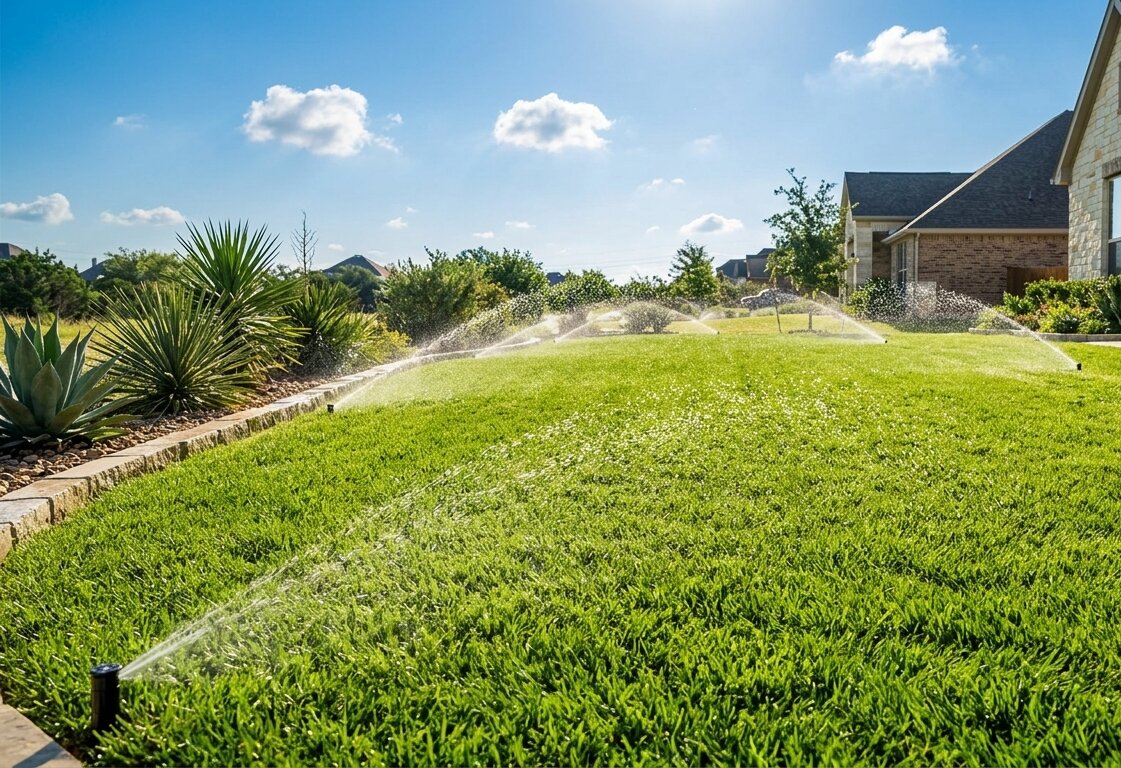
Drip irrigation delivers water slowly and directly to the root zone through tubing and emitters rather than spraying it over the surface. It’s built for garden beds, shrub rows, flowers, and young trees — not for turf. We install drip zones for San Antonio and Hill Country properties, both as part of a new system and as a retrofit onto sprinklers already in the ground.
Most people look into drip after watching beds struggle through a Texas summer while the lawn does fine, or after hand-watering new trees became a daily chore. Below we cover why drip works so well in this heat, how a drip zone gets added to an existing system, what proper depth and emitter placement look like in clay soil, and when drip honestly isn’t the right answer.
Spray heads lose a lot of water to evaporation and wind, especially in July and August. Drip puts water at the root, slowly, where the plant can actually take it up. Beds and trees get what they need with far less waste.
That efficiency matters more here than in a milder climate. A bed on drip stays consistently moist through a long stretch of heat, while the same bed on a spray zone swings between soaked and bone dry. Inside San Antonio, SAWS enforces year-round watering rules, and drought stages can tighten them further. Drip and soaker lines may be treated differently from spray zones — confirm current details with SAWS before assuming anything. Boerne, Bulverde, and other Hill Country customers follow their own utility’s rules.
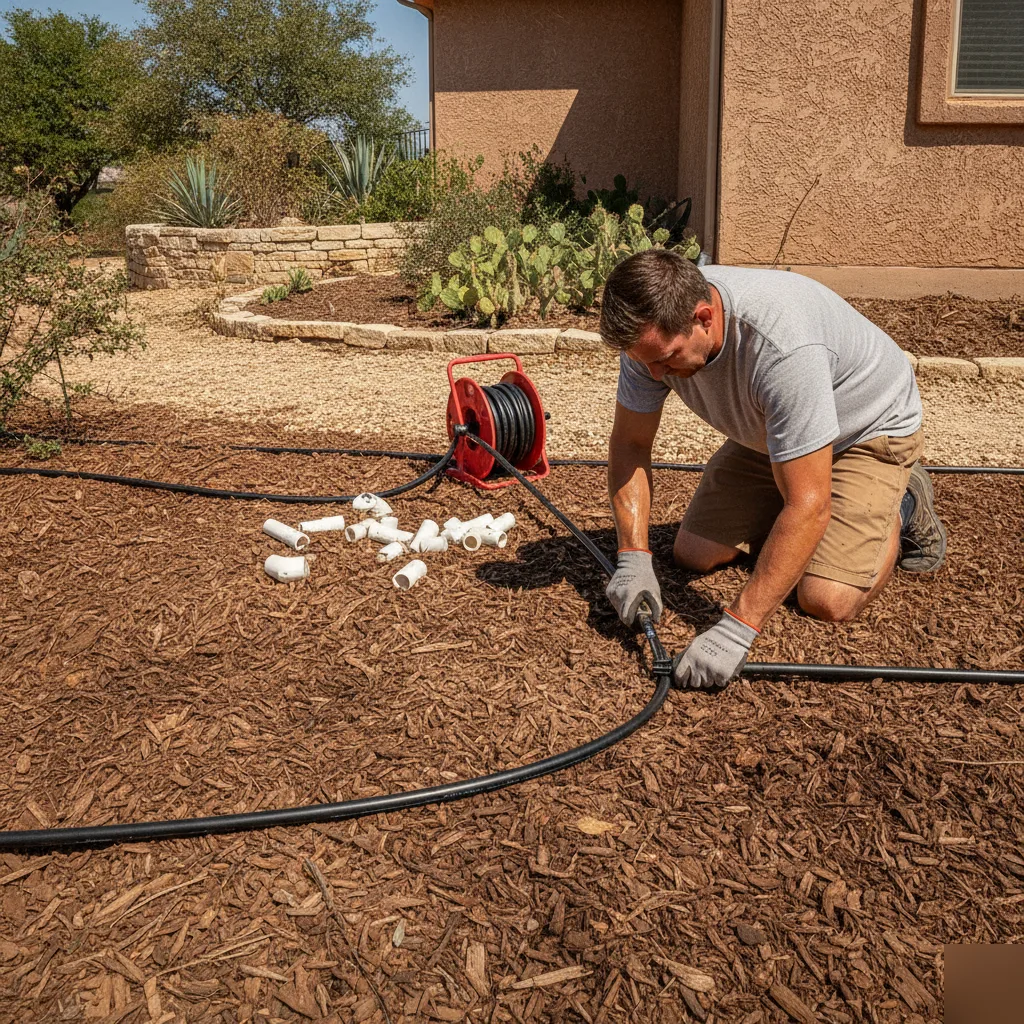
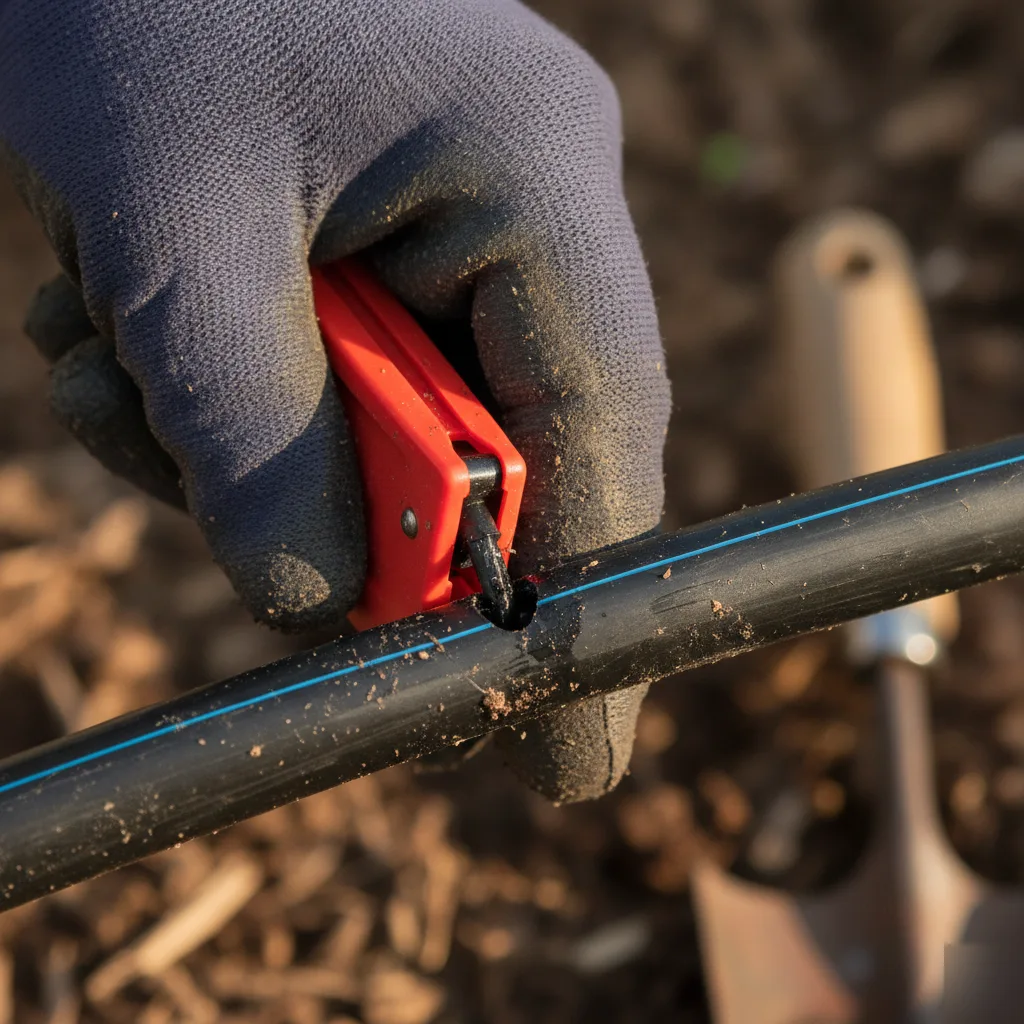
Most drip work we do is a retrofit, not a new build. If you already have a sprinkler system, the valves and controller are usually there to build on.
Often one existing valve can be converted without adding new wire or trenching a line across the yard, which keeps the job contained to the bed itself.
Whether that works depends on your current valve and controller — some can support an added zone, some can’t.
Retrofit and new-build pricing differ, and both are estimate-based after a look at what’s already in the ground. Zone count and linear footage of tubing drive most of it. Ask for an itemized quote so you can see what’s tubing, what’s fittings, and what’s labor.
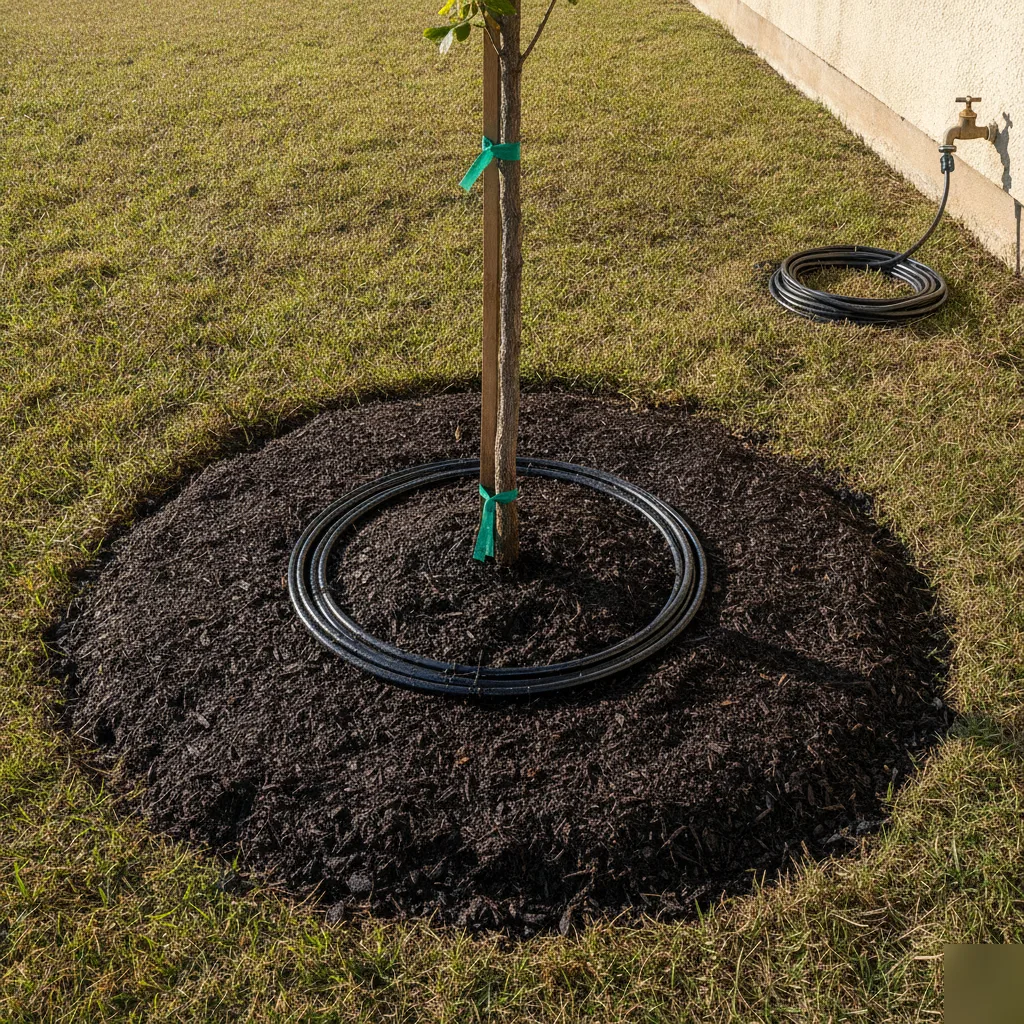
Newly planted Live Oak, Bur Oak, Red Oak, and Monterrey Oak are vulnerable through their first San Antonio summers. A tree that struggles in year one usually wasn’t watered wrong on any single day — it was watered shallowly, over and over.
Hand-watering mostly runs off the surface, especially on clay. Drip goes slow enough to reach the root ball. As the root system spreads, emitter placement needs to move outward with it, which is something worth revisiting a year or two after planting.
Beds work the same way. Slow, targeted water at the root beats a spray head throwing water over the top of foliage.
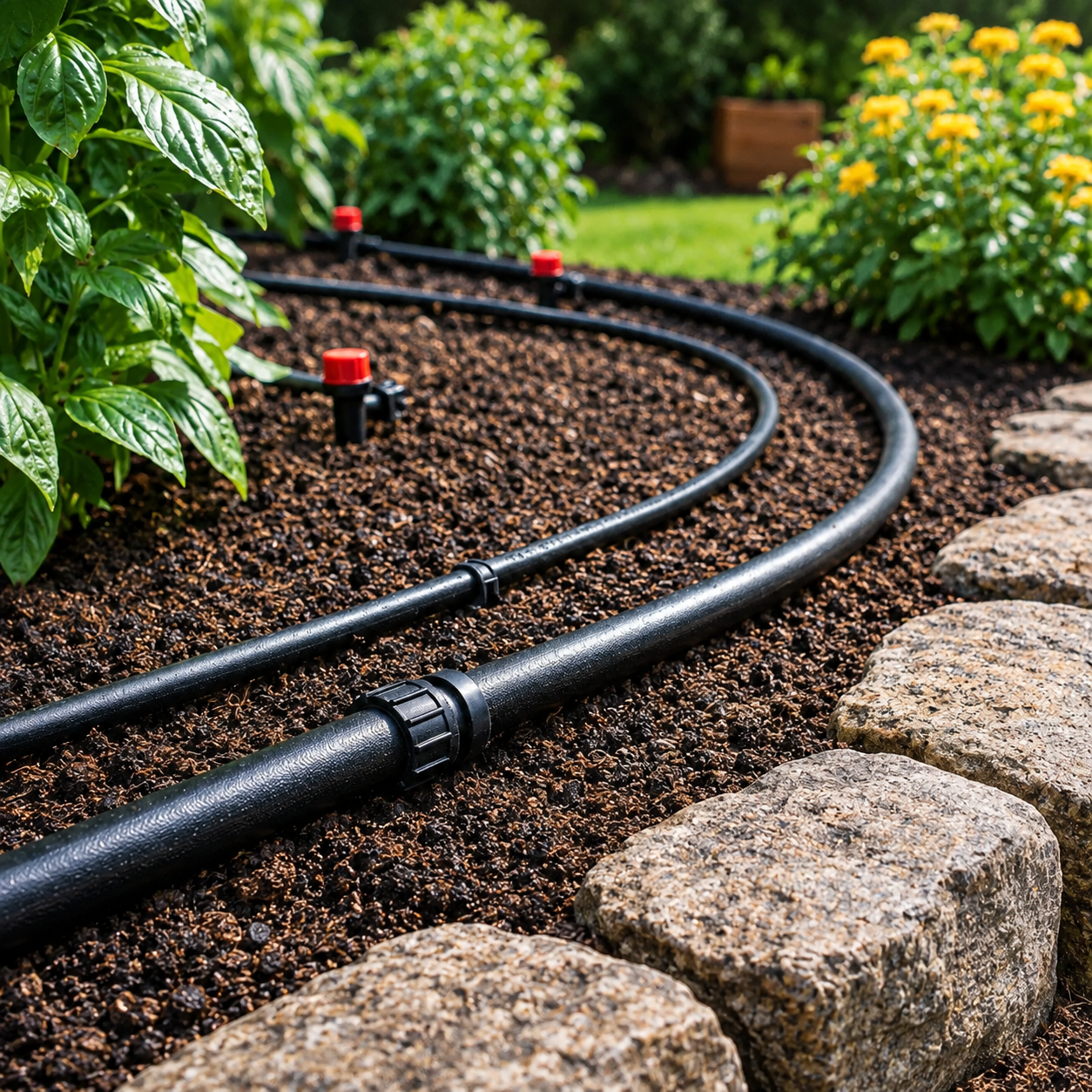
Bexar County’s expansive clay soils spread water sideways rather than straight down. That changes ideal emitter spacing — water travels farther horizontally than most spacing charts assume.Burial depth matters too. Tubing set too shallow, an inch or two under the surface, gets caught by mowers and aerators. That’s one of the most common complaints we hear about drip installed by someone who treated it like a garden-center kit.
•Emitter spacing set for how water actually moves in local clay
•Tubing buried deep enough to survive normal yard maintenance
•Filters and pressure regulation, since hard water clogs emitters over time
•Flush points so lines can be cleared during seasonal service
Turf and lawn areas need spray or rotor heads, not drip lines. If your goal is a green lawn, drip is the wrong tool. A single container or one small bed can often be handled with a retail soaker hose or hand-watering, with no professional needed. Be honest about scale — DIY works for small setups.
Where a pro adds value is integration: tying a drip zone into existing valves and a controller so it runs on its own schedule, with proper filtration and pressure regulation. That’s a different job from laying a soaker hose in a flower bed. Scale is the honest test. If you’re watering one bed beside the porch, a hose and a timer will do. If you’re watering several beds, a shrub row, and a handful of young trees on different schedules, that’s a system, and a system wants proper valves, filtration, and pressure regulation.
The other case where drip doesn’t fit: a yard with no working sprinkler system at all. Adding a drip zone to nothing means running new valve wire and a new point of connection, which is closer to an installation job than a retrofit. In that situation it’s usually better to plan turf and beds together from the start.
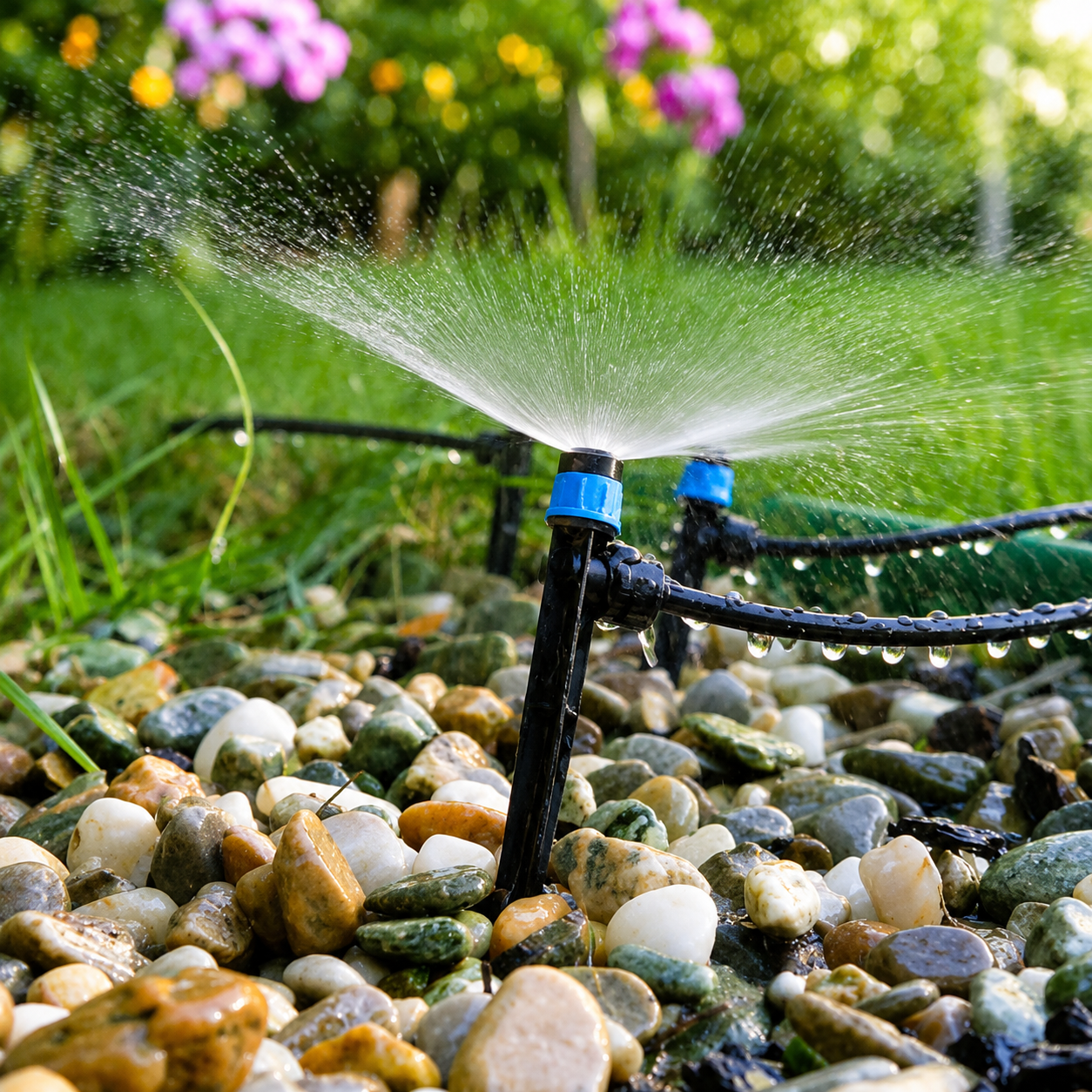
Priced after an on-site estimate based on zone count, tubing footage, soil, and whether it’s a retrofit or new build. No flat rate exists industry-wide, so ask for an itemized quote.
Emitters can clog over time, especially with mineral-heavy water and clay soil sediment common in the San Antonio area. Periodic flushing and checks prevent this.
Drip and soaker lines may be treated differently from spray zones under local rules, since they deliver water slowly at the root. Confirm current details with SAWS, and note Hill Country customers outside the SAWS area follow their own utility’s rules.
Usually yes. Most jobs convert an existing valve rather than trenching a new line. Whether your current valve and controller can support it is the first thing we check.
Yes — San Antonio plus Boerne, Bulverde, Helotes, Scenic Oaks, Timberwood Park, and the surrounding areas.
%20(1).jpg)