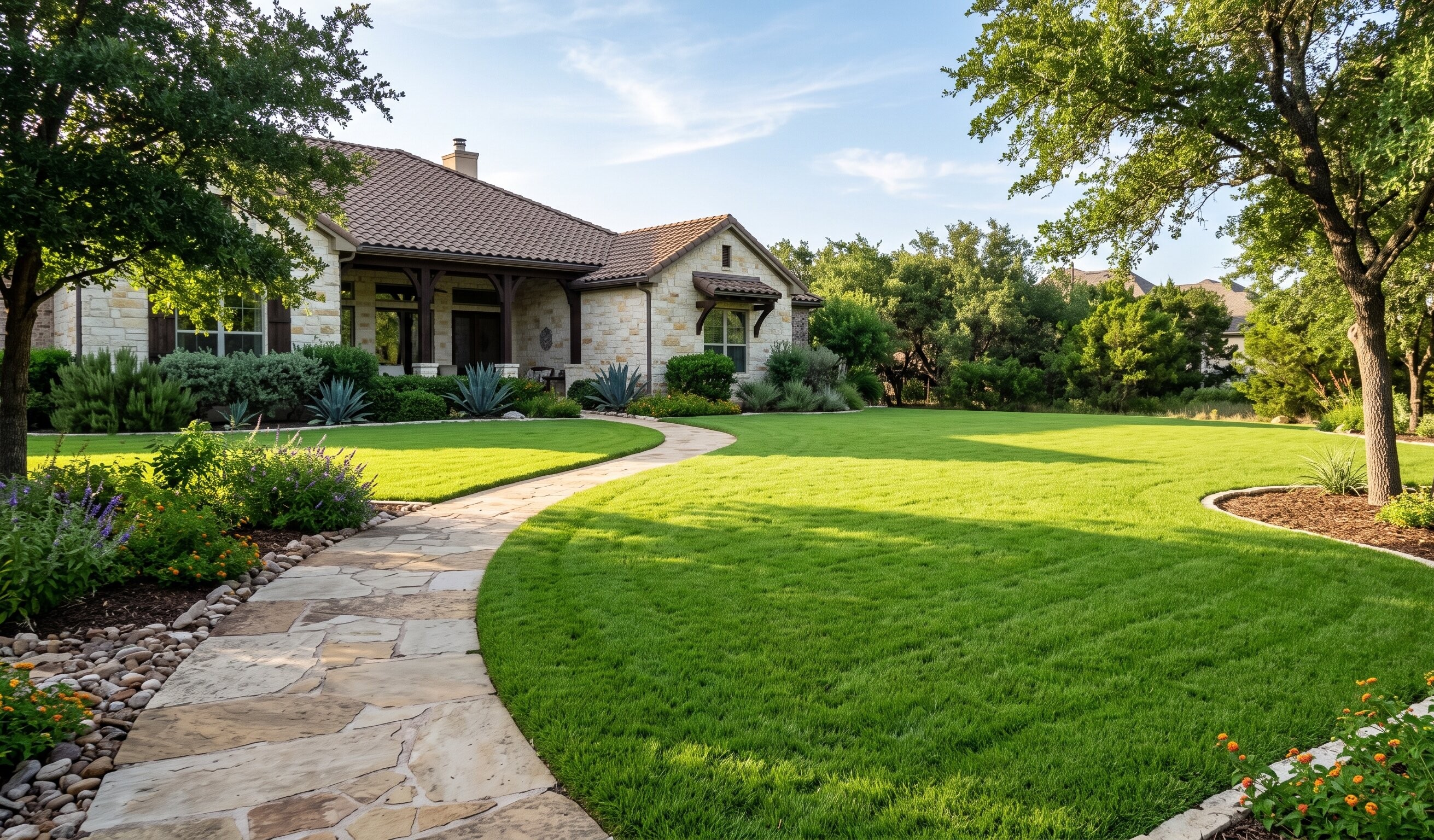
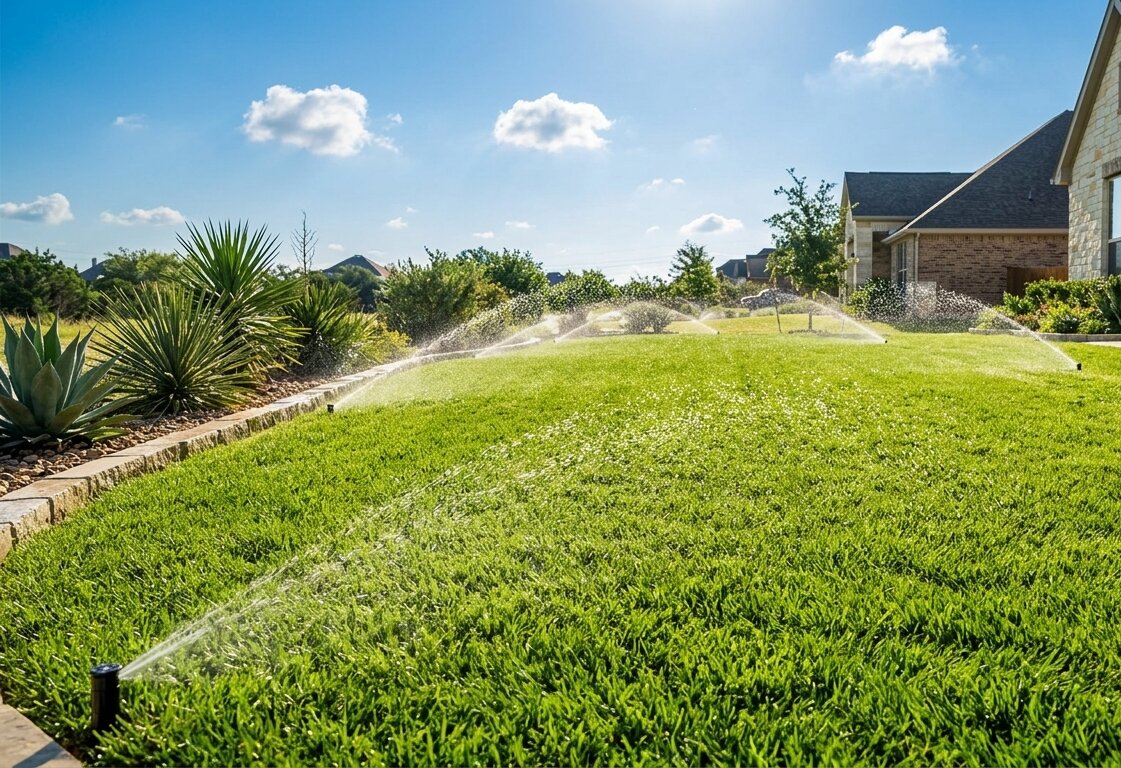
Warm-season grass seed needs warm soil and steady moisture to germinate, so late spring through early summer is when it takes best around San Antonio. Seed thrown down too early sits cold and rots, and seed thrown down in the middle of a hot dry stretch dries out between waterings. Getting the date right matters more than which bag you buy.
Most folks seed at the wrong time of year. They see brown patches in March, grab a bag at the store, and spread it that weekend.
Bermuda, zoysia, buffalograss, the warm-season grasses that hold up here, won't wake up until the soil itself warms. Air temperature fools people. It can hit 80 in the afternoon while the ground two inches down is still cold from a February front. Seed sitting in cold wet soil doesn't sprout. It swells and rots.
Wait too long and you trade one problem for another. By deep summer, bare soil bakes, and that top half inch dries out between cycles no matter how good your system is. Throw seed down in November and you've fed the birds.So the honest answer? Pick the date first. Then buy the seed.
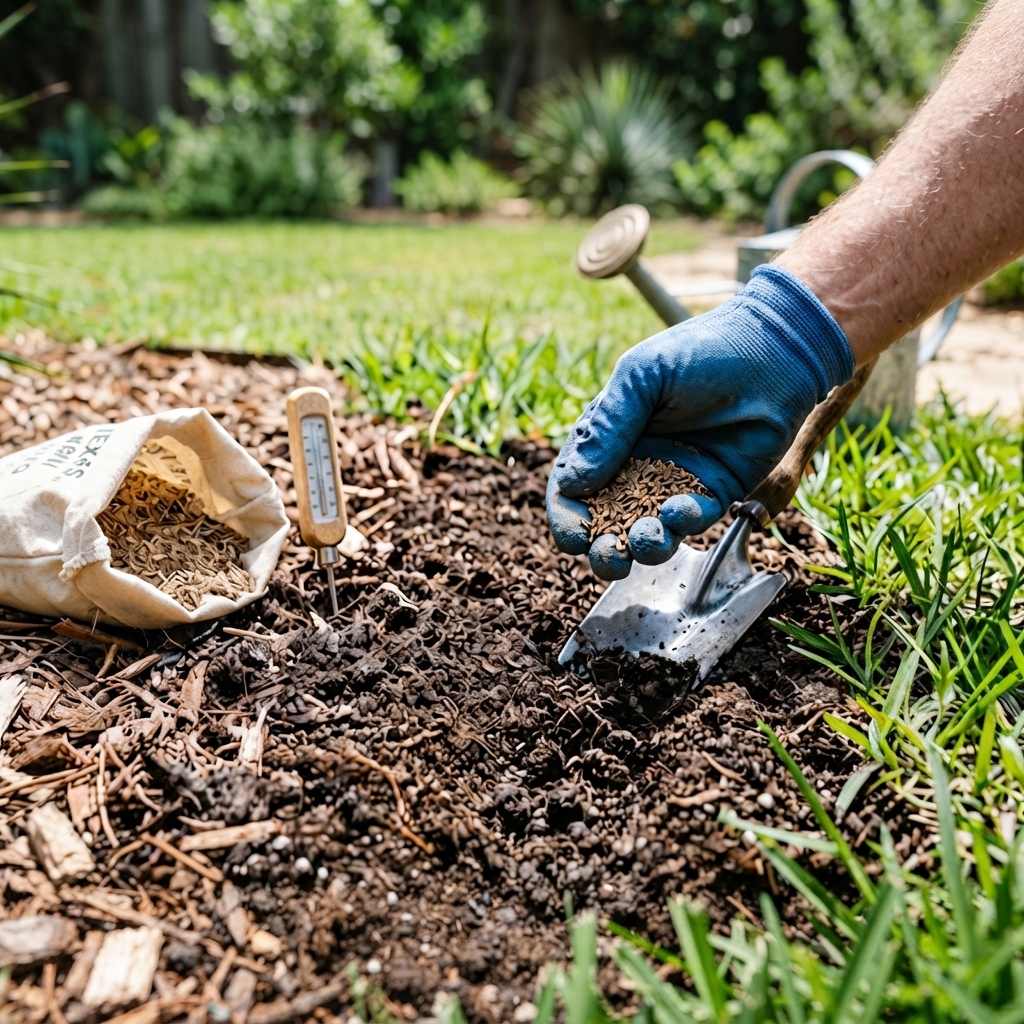
Seed choice is where most bare lawns get lost. Our summers run long and hot, which rules out most cool-season grasses as a permanent lawn here. They'll sprout, look great for six weeks, then July gets hold of them. Warm-season grass is what holds up through a San Antonio August. Sun is the next question, and it's not a soft one. Bermuda wants full sun and lots of it. Put it under a live oak canopy and you're paying for thin grass that never fills in. Zoysia handles a little shade, not deep shade. Some shady spots won't carry turf at all no matter what you seed.
Then there's what's under your feet.
• South of 1604, heavy clay holds water and crusts over. Seed can drown in a low spot or bake under a hard surface crust.
• North toward the Hill Country, soil gets shallow and rocky over limestone. Water drains fast and seed dries out between waterings.
• New construction lots often have compacted subsoil scraped bare. Seed needs a workable seedbed before it needs anything else.
• Any yard that puddles after rain needs the slope fixed first. Seed won't outrun standing water.
We look at all of that before we talk about a bag. Estimates are free, and we'll tell you straight whether seed is the right call for your yard or whether sod or hydro mulch would serve you better.
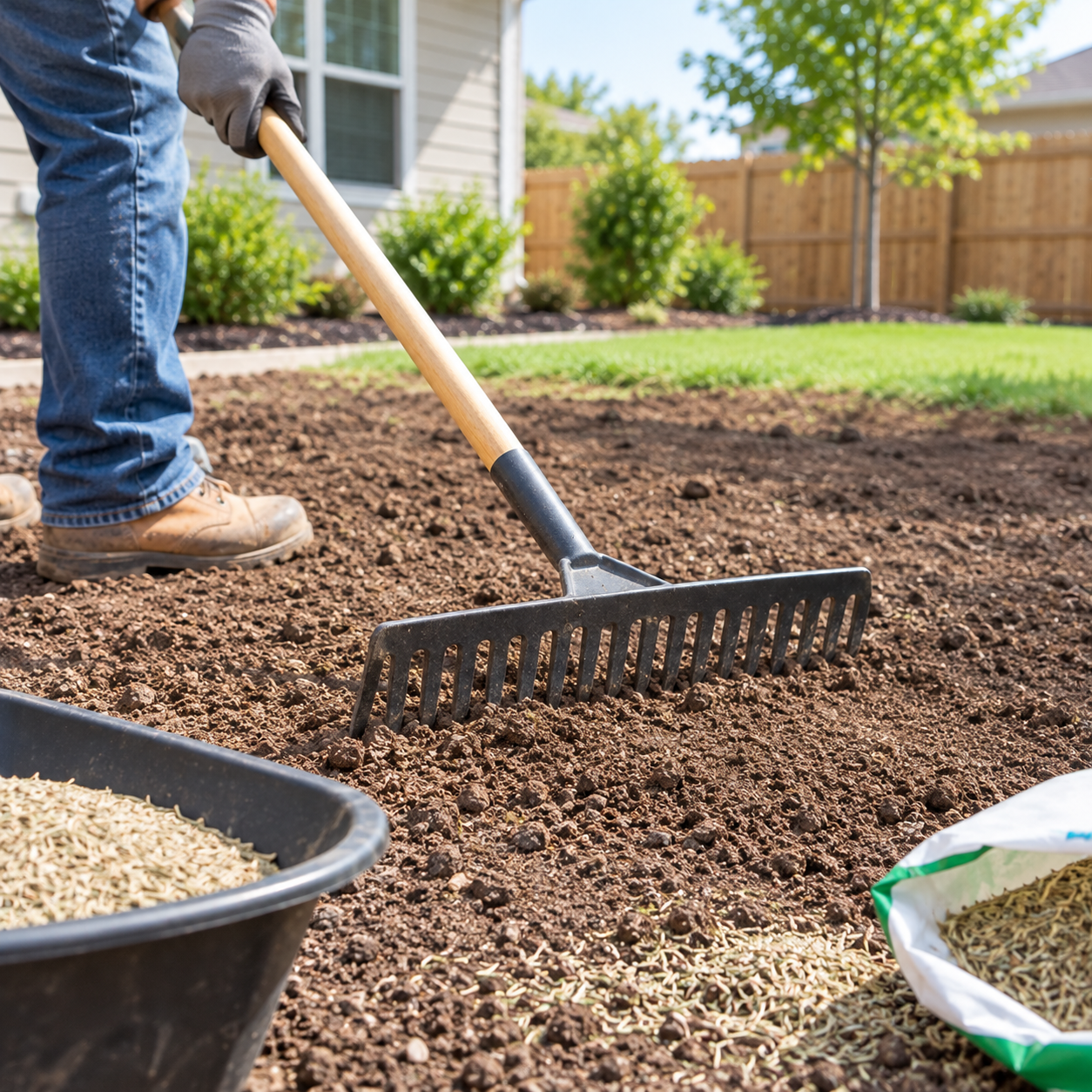
Seed needs contact with soil. Not with thatch, not with a crust of dried clay, not with a layer of old dead grass. That single idea explains most of the failed seeding jobs we get called out to look at.
Here's the order we generally work in:
• Clear out debris, dead turf, and anything thick enough to block seed from reaching dirt.
• Loosen the top layer of soil so seed has somewhere to sit instead of washing off.
• Bring in and spread topsoil or compost where the existing soil is too thin or too tight.
• Level out the small dips and humps that turn into puddles or bare spots later.
• Firm the surface lightly so seed stays put through the first watering.
We see this every single week. Folks buy good seed, skip the boring part, and end up doing it twice.
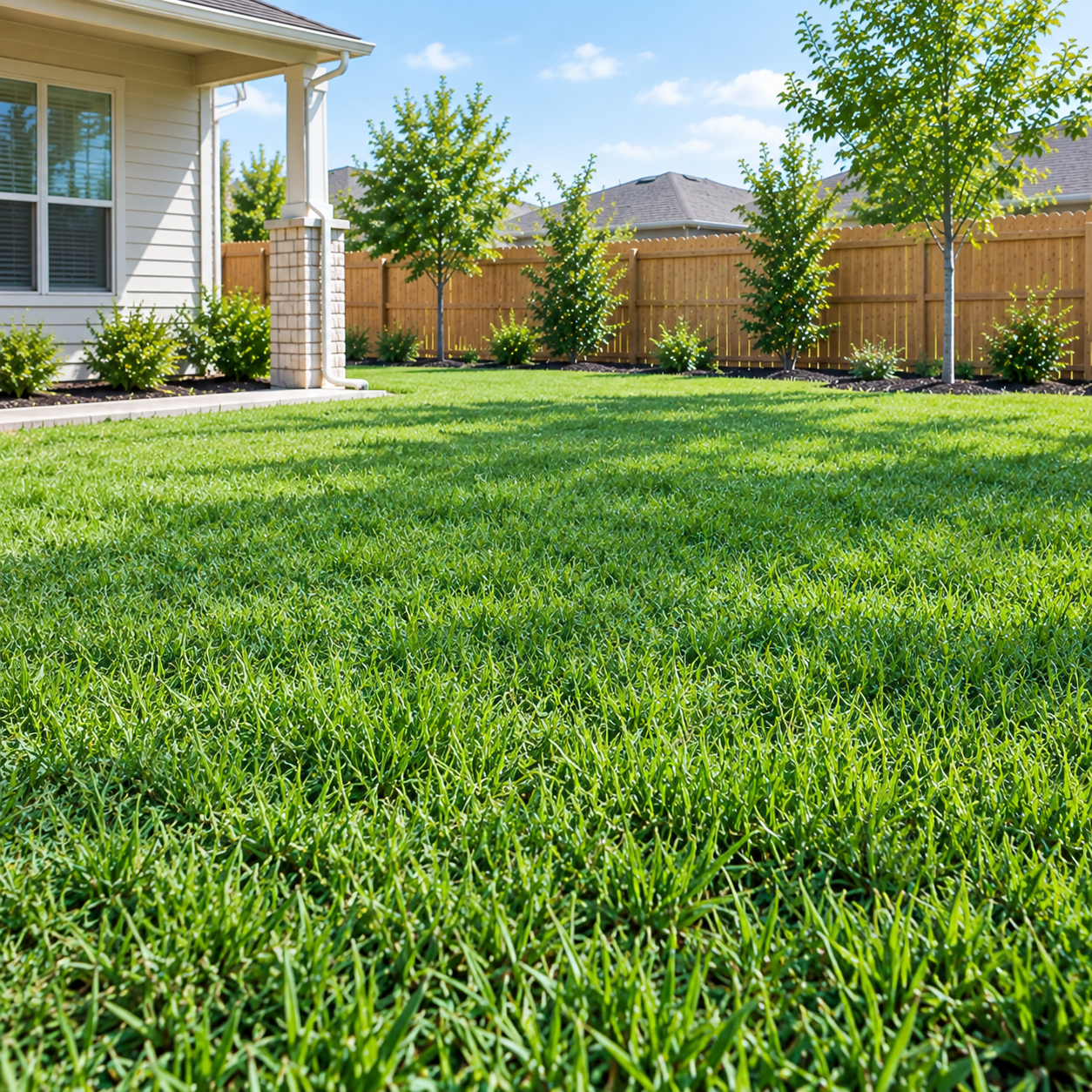
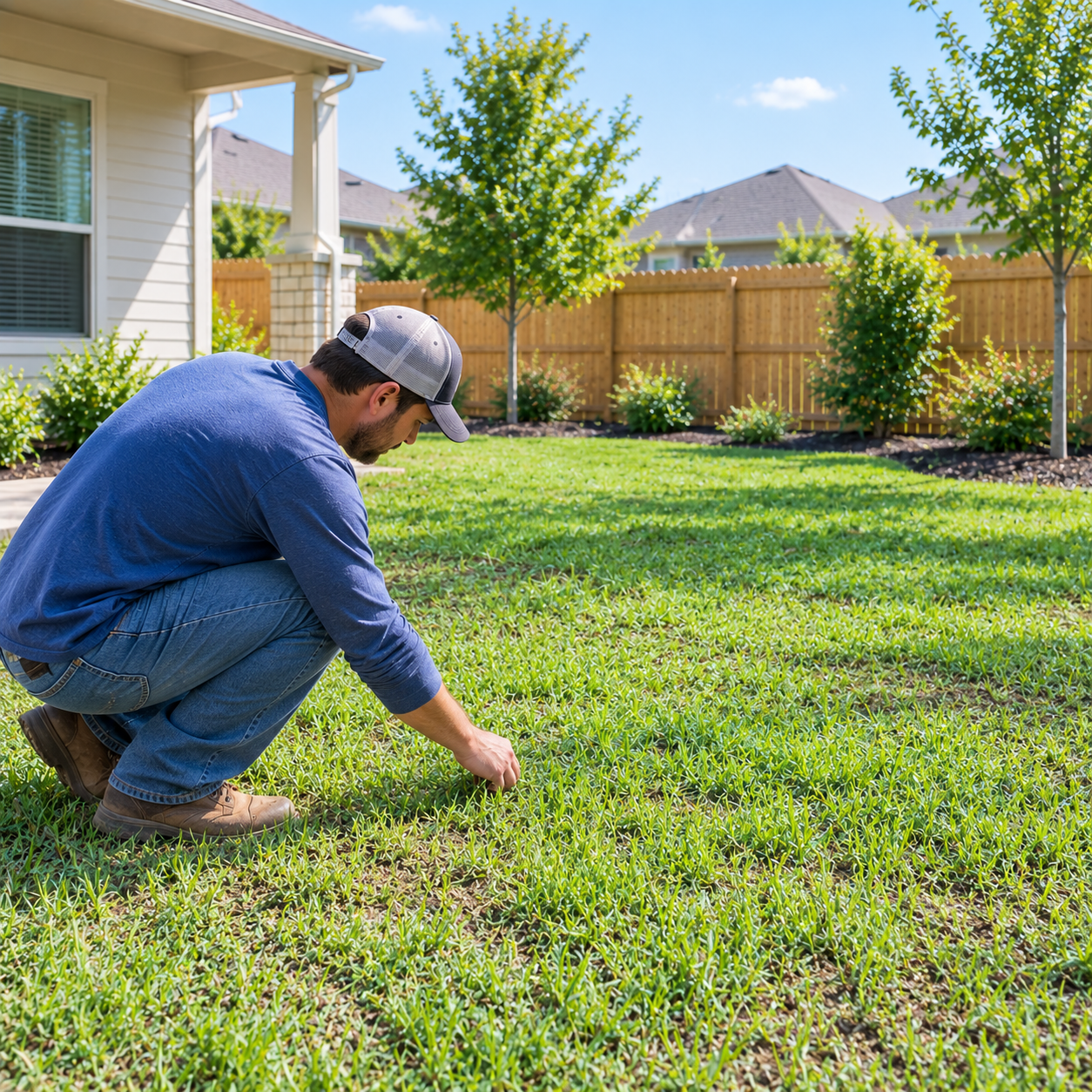
Seed doesn't do anything until it swells with water. Bermuda usually breaks ground in one to three weeks when soil is warm. Zoysia takes longer, sometimes three weeks or more. Those windows shift with soil temperature, so an early-May seeding and a late-June seeding behave differently even in the same yard.
Here's the part folks underestimate. The top half inch of soil has to stay damp the whole time, and in a San Antonio July that surface dries out in a couple of hours.
• Weeks one and two: short, light cycles several times a day. You're wetting the surface, not soaking the ground. Puddles wash seed into low spots.
• Week three, once you see green: back off the frequency, start running each cycle longer. This pulls roots downward.
• Weeks four through six: fewer waterings, deeper each time, until you're close to a normal schedule.
• First mow: wait until the new grass is about a third taller than your target height, and make sure the mower blade is sharp. A dull blade yanks young seedlings out by the roots.
Before you spread anything, find out what your water provider allows for new seed. For SAWS customers that's the Year-Round Watering Rule plus whatever drought stage is in effect. Everyone else goes by their own utility.
And expect it to look patchy at first. The thin spots usually fill in by week five or six as the grass spreads sideways. If a whole area stays bare past that point, something's off with coverage or water, and that's worth a look before you throw more seed at it.
Late spring through early summer is your best window. Warm-season grasses like bermuda, zoysia, and buffalograss need warm soil to germinate, not just warm air. Seed thrown down in March often sits in cold soil and rots. Wait too long into deep summer and bare soil bakes, drying out seed between waterings.
Most failed seeding jobs come down to bad timing or bad soil contact. Seed planted too early sits in cold, wet soil and rots. Seed planted in a hot, dry stretch dries out before it can take root. And seed needs direct contact with soil, not thatch or a crust of dried clay.
Warm-season grasses like bermuda, zoysia, and buffalograss hold up best here. Bermuda needs full sun, so it struggles under live oak canopies. Zoysia tolerates a little more shade but not deep shade. The right choice depends on your sun exposure, soil type, and whether kids or dogs will be running on it daily.
%20(1).jpg)