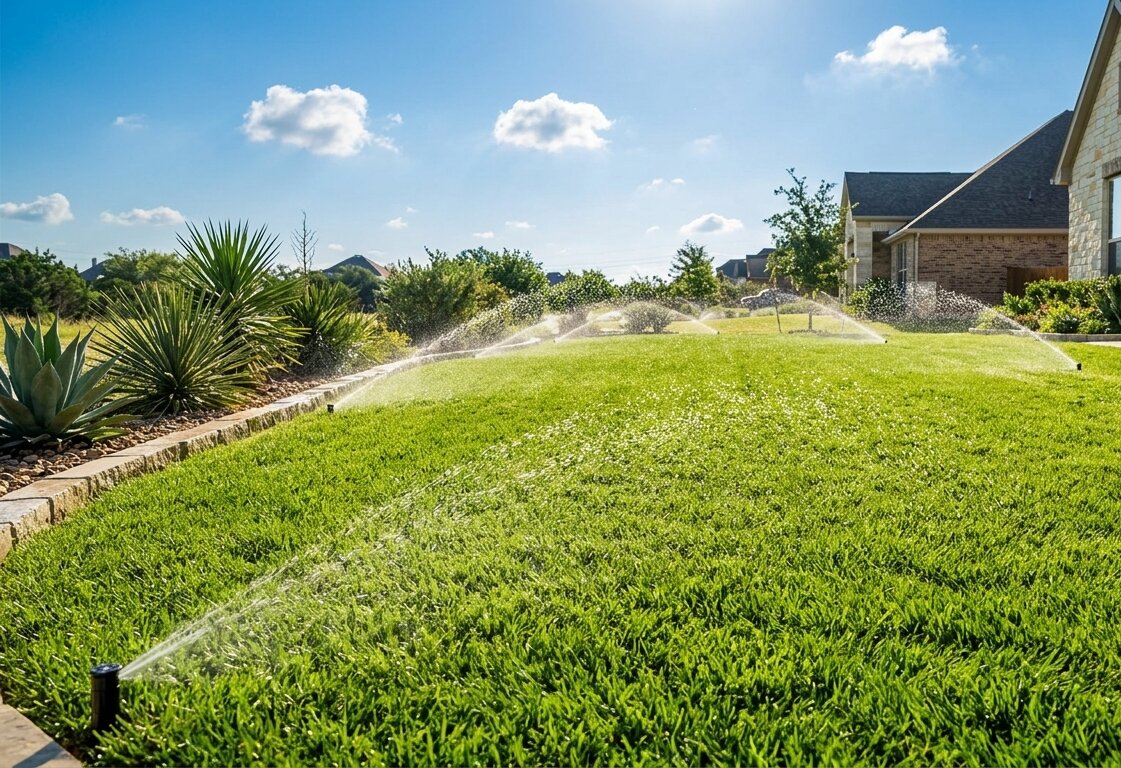
A tune-up handles drift: heads that got bumped, nozzles clogged with mineral scale, a controller running longer than it needs to. Repair is for actual failure, a cracked line, a valve stuck open, wiring that quit. The tell is whether the problem moves when you adjust something or stays exactly where it is. Most folks call us because of one bad spot in the lawn. And that spot is doing the diagnosing for you, if you watch it. Run the zone and stand there. A head that's spraying but aimed at the driveway is an adjustment. A head that gurgles and barely lifts is telling you something upstream lost pressure. Dry grass with a soggy ring around it usually means a cracked riser under the turf.
These are the ones that mean repair, not adjustment:
• A zone that won't come on at all, or won't shut off after the controller cycles past it
• Water bill climbing while the lawn looks the same or worse
• A head that mists instead of throwing droplets, which usually points to a pressure or line problem rather than the head
• Wet ground or a green streak along one line when nothing has run for a day
• Heads that rise and then sink partway through the cycle
Nine times out of ten, when someone tells us the whole system is shot, it's one valve and two heads. That's why we run every zone before we quote anything. Guessing from the curb helps nobody.
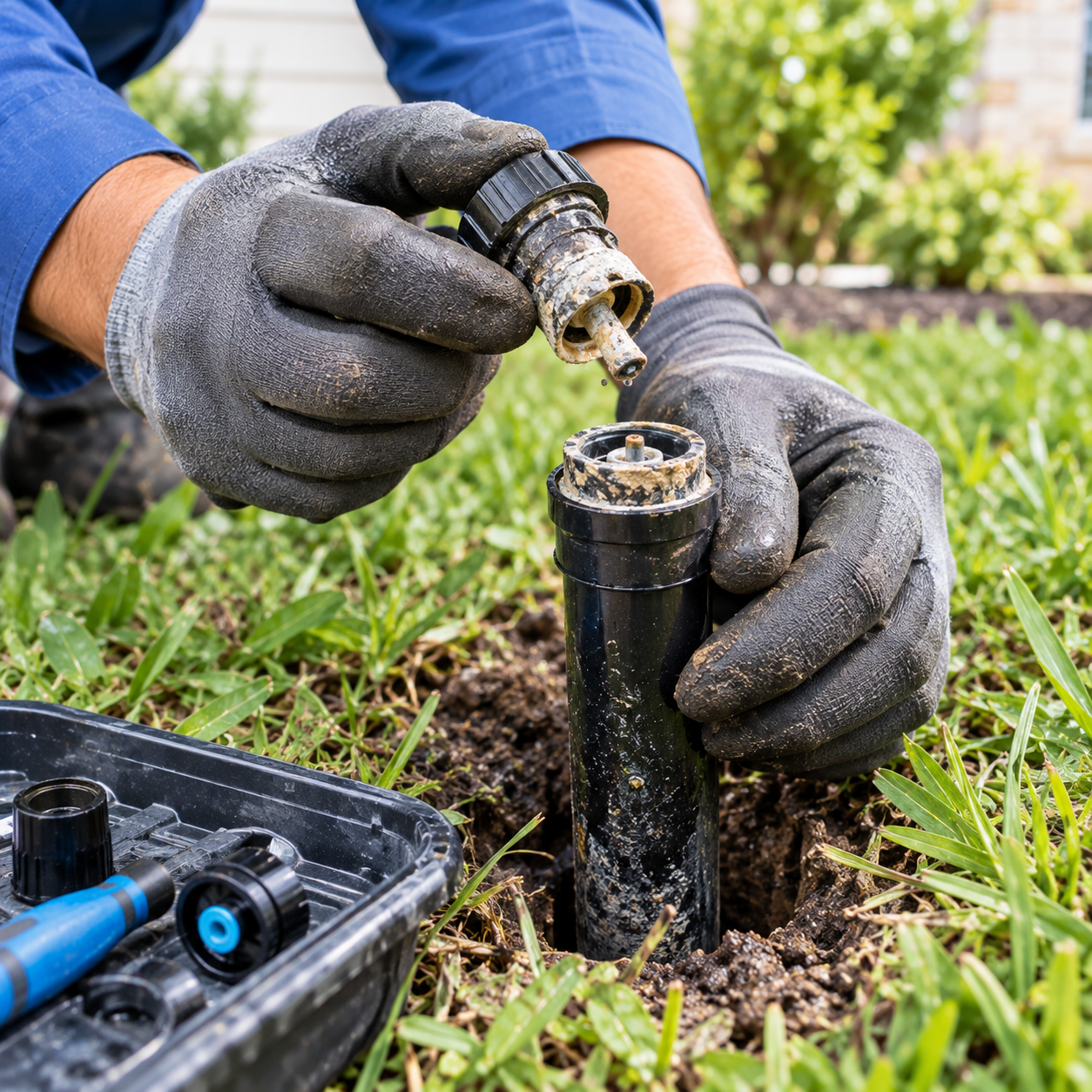
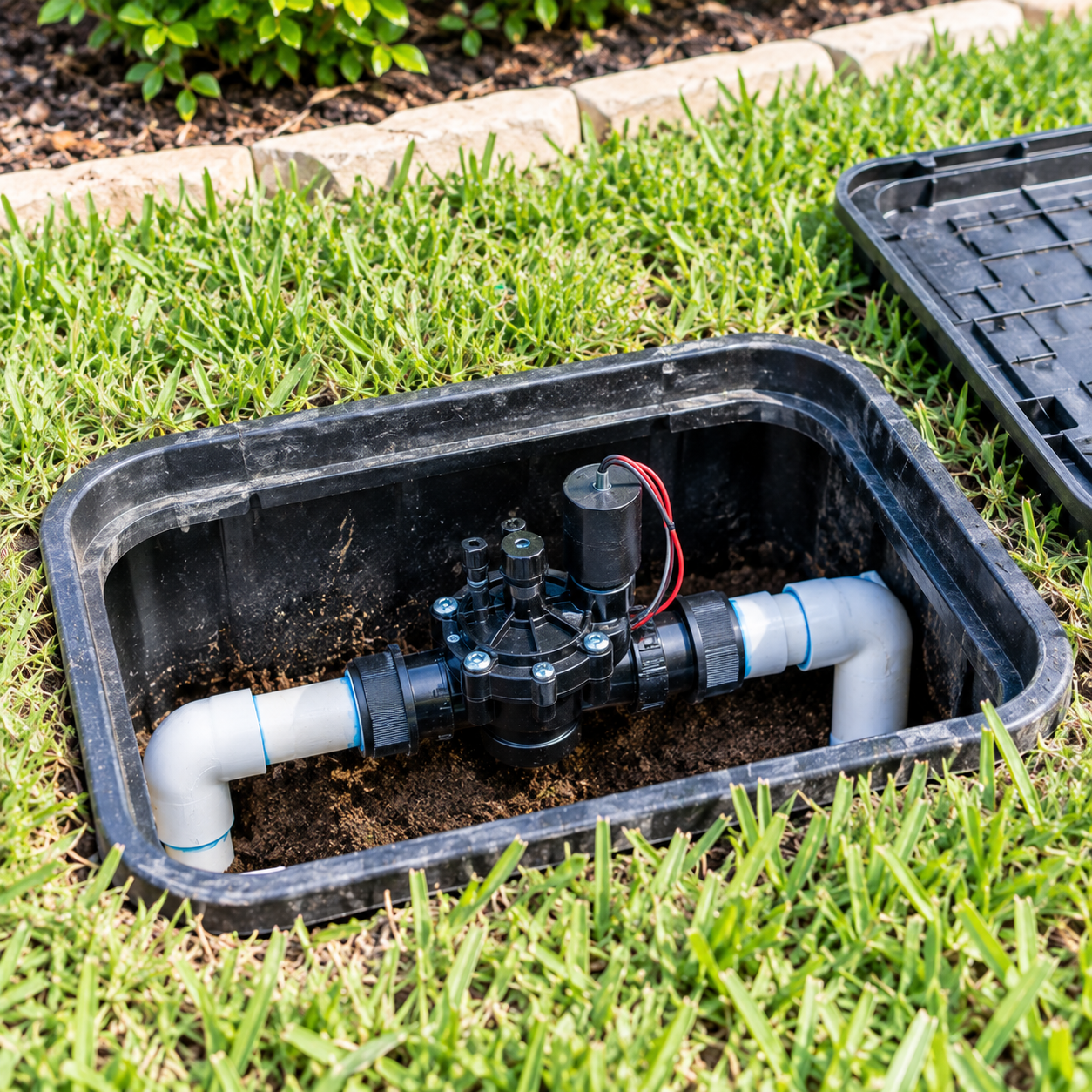
Most of what we dig up isn't a manufacturing defect. It's the ground doing what the ground here does. South of 1604, you're mostly in heavy clay. That soil swells when it's wet and shrinks hard when it dries out. A buried lateral line gets pulled one direction, a fitting gets pushed the other, and eventually something gives. That's why so many leaks show up after the first real rain following a long dry stretch. North of town it flips. Shallow rocky soil over limestone means lines were often laid at the minimum workable depth, sometimes bedded right against rock. Every mower pass, every truck in the driveway, every freeze puts pressure on that. Water from a leak up there travels sideways along the rock shelf and surfaces somewhere you'd never dig.
Then there's the water itself. It's hard here, and the minerals build up on nozzles and inside rotor gears until the pattern goes sideways. A head that's been scaled for years doesn't get fixed by turning a screw. It gets replaced. Freezes are the other big one. We don't get them often enough for people to stay in the habit of prepping, and that's exactly the problem. A hard freeze finds the backflow preventer above ground, the exposed valve, the head sitting in standing water. Cracks show up in spring, not in January.
A repair that ignores all this is a repair you'll pay for twice. Glue the pipe, walk away, and the same soil moves it again next August. We'd rather fix the cause.
Thinking about Irrigation System Repair & Maintenance? Let's talk.(210) 490-5394
Call now for a free estimate. Moore Irrigation Services Inc is ready to help.
A sprinkler repair starts at the controller, not with a shovel. We run every zone one at a time and watch it. A zone that never comes on points to wiring or a valve.
A zone that comes on weak points to a leak, a clog, or pressure being split too many ways.
• Talk through what you've noticed: the brown patch, the wet spot, the bill that jumped.
• Run each zone from the controller and walk the yard while it's running.
• Check heads for hard water buildup, cracked bodies, crooked risers, and nozzles blasting the driveway instead of the grass.
• Test valves and wiring on any zone that won't fire or won't shut off.
• Locate the actual break, which usually means one small dig, not a trench.
• Make the repair, run the zone again, and show you it's working before we leave.
That last step matters more than people expect. You should see the fixed zone run with your own eyes, and you should know which head we replaced and why.
Digging is kept small on purpose. We open the smallest spot that gets the job done and put the sod back over it. We hold Texas Irrigator License LI0004523, and we'll tell you straight if we find more than you called about, and what can wait.
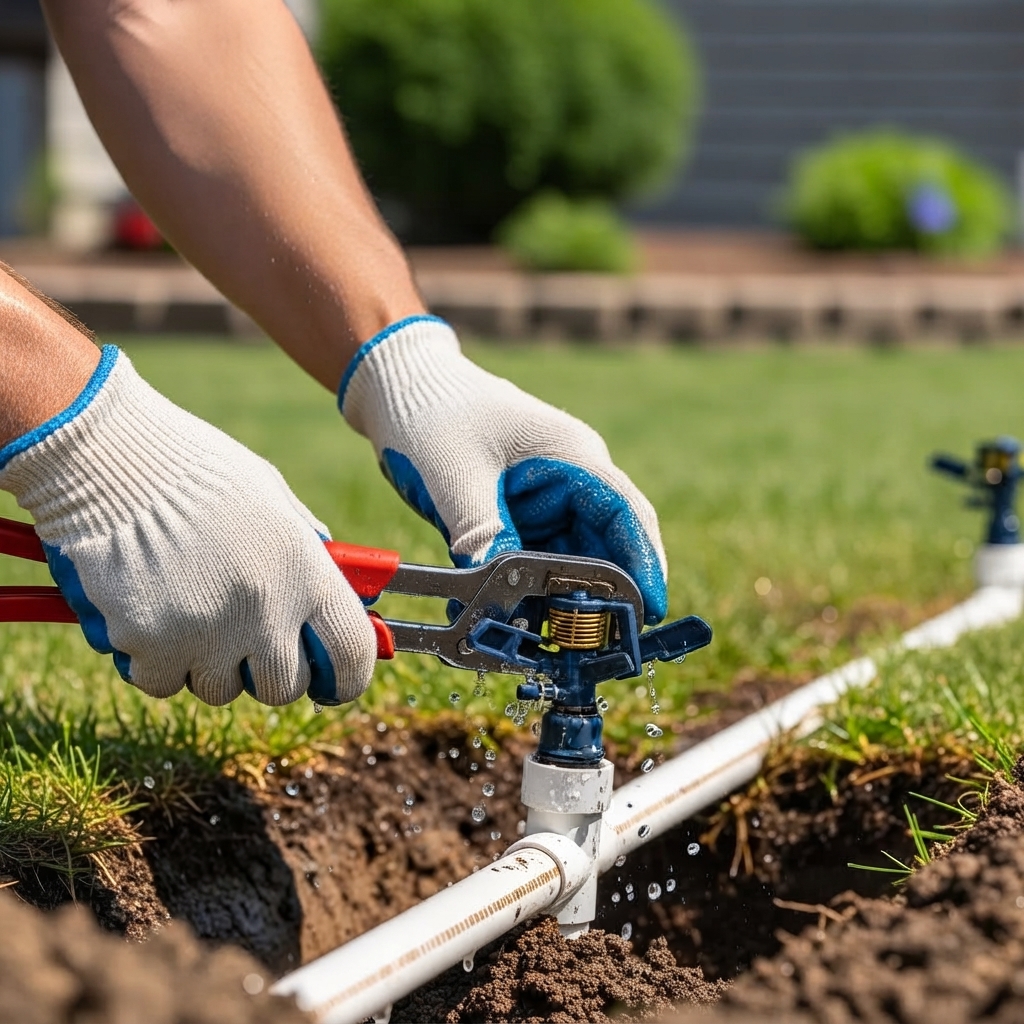
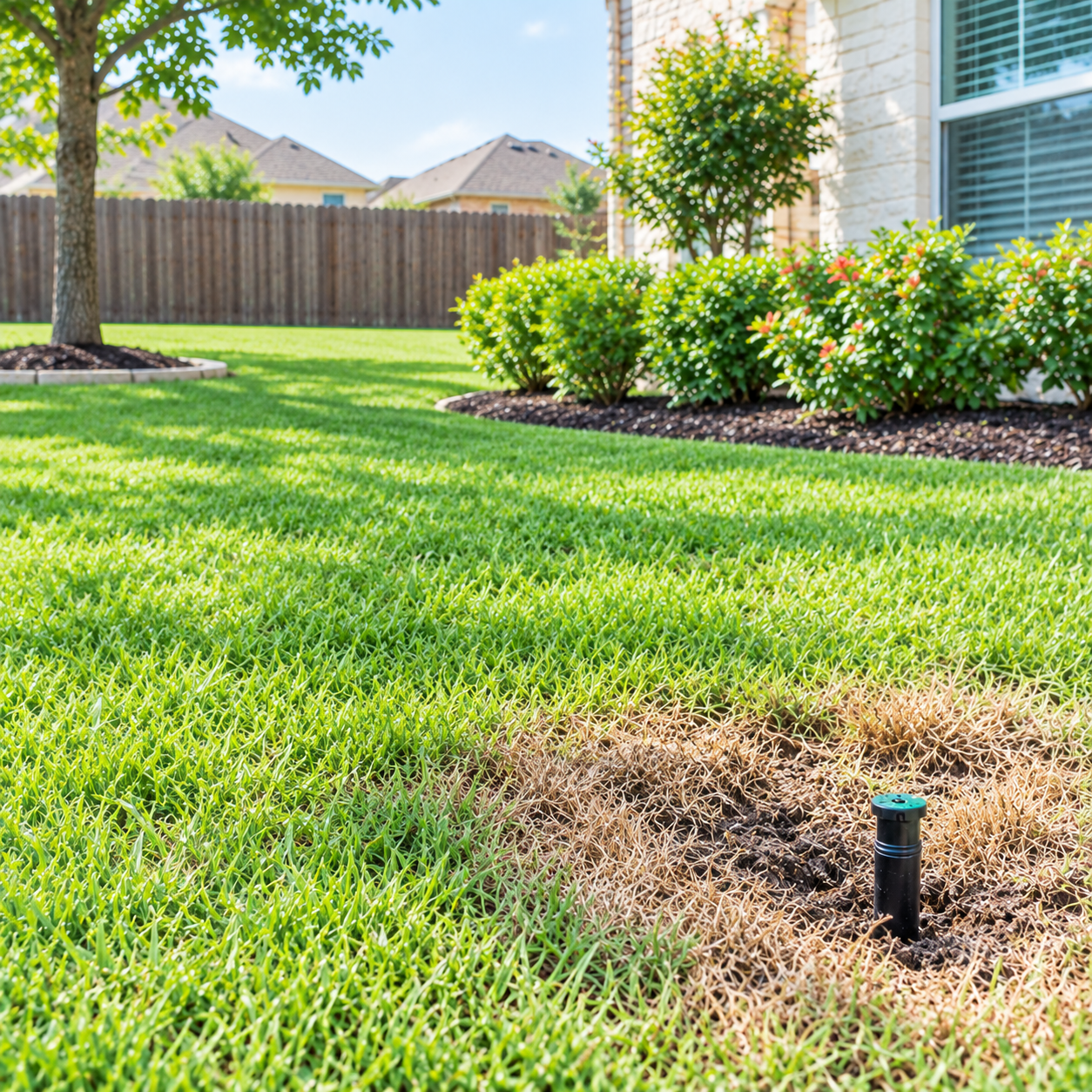
Some of what we get called out for, you can handle yourself in ten minutes. We'd rather tell you that than take the trip. A pop-up head that's spraying the driveway instead of the grass usually just needs turning. Most rotors and spray heads adjust by hand or with a small screwdriver at the top. Grass grown up over a head? Trim the edge back. That fixes a surprising number of "dead spots" people are ready to pay for.
Controller problems are the other big one. If a zone quit running and nothing looks broken above ground, check the schedule before you check the pipe.
• The controller lost power after a storm and reset its program
• The rain sensor is still wet and holding the system off
• Someone bumped the dial to off or manual
• A battery died and wiped the saved schedule
• You're watering on a day your utility doesn't allow, so nothing came on
That last one catches folks constantly. SAWS customers are on the Year-Round Watering Rule, and other utilities set their own days. Check yours before you assume something failed.
Where you should stop and call: water surfacing in the yard, a valve that won't shut off, wire faults, or a backflow preventer that's leaking or cracked.
Watch the spot in your lawn while the zone runs. If the problem moves when you adjust the head, it's just aimed wrong. If it stays exactly the same, that's a repair. A head that mists instead of throwing droplets, or a zone that won't shut off, points to a real failure like a cracked line or stuck valve.
Clay soil south of 1604 swells when wet and shrinks when dry, and that movement pulls buried lines apart. A fitting gets pushed one way while the pipe stays put, and the break usually shows up right after the first real rain following a dry stretch.
Yes, and it's often worse because San Antonio doesn't freeze often enough for people to stay in the habit of prepping. A hard freeze targets the backflow preventer above ground, exposed valves, or a head sitting in standing water. The cracks usually don't show up until spring.
%20(1).jpg)