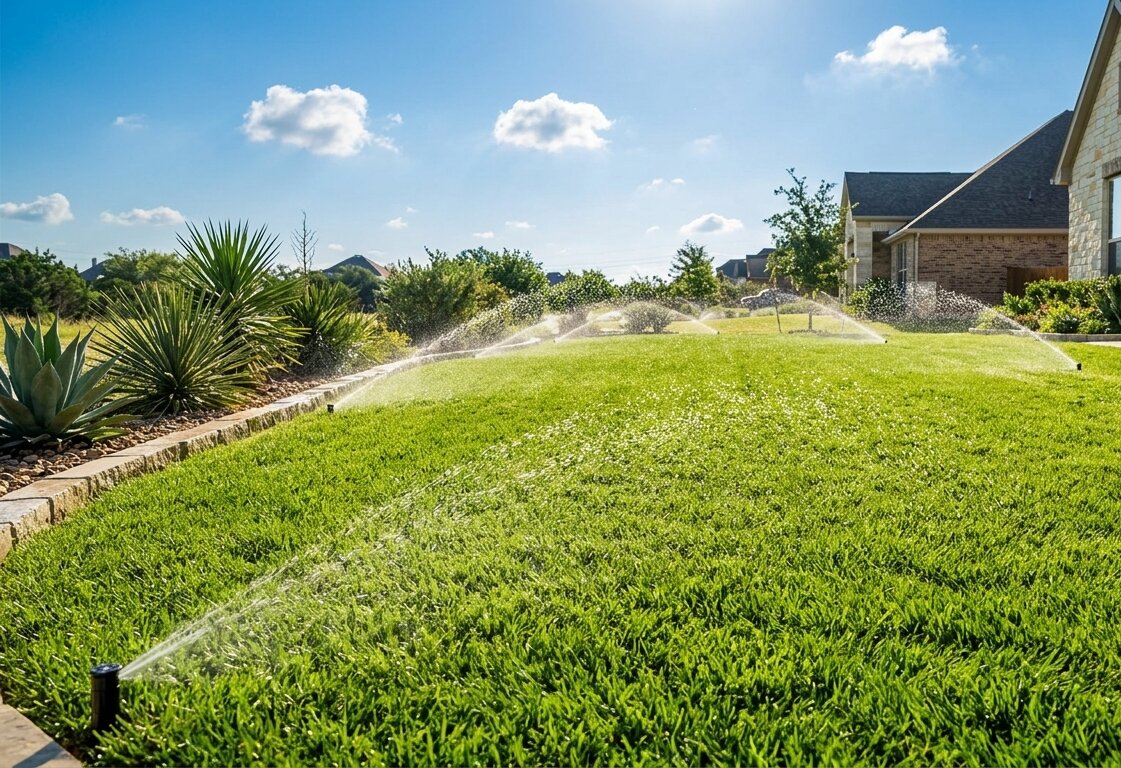
Irrigation system design is the planning work that happens before anything goes in the ground — measuring water pressure and flow, mapping zones around soil type and sun exposure, and deciding where spray belongs and where drip belongs. We do this for San Antonio and Hill Country properties, both new builds with nothing installed yet and older yards where the original layout stopped matching the landscape.
People usually arrive here after repairs stopped helping. The same corner dies every August, one zone never gets enough pressure while another floods, or a yard has been reshaped by a pool or an addition and the old zone map no longer fits. Below we cover how to tell a design problem from a broken part, how soil drives zoning here, how local watering rules shape a plan, and what happens on design day.
A repair fixes one broken thing. A design problem shows up as a pattern — the same corner dies every August, or one zone never gets pressure while another floods.
•Brown or thin patches in the same spots every summer, even after repairs
•One zone that always runs weak while a neighboring zone runs fine
•A water bill that keeps climbing while the yard still looks stressed
•Heads spraying the driveway, house, or street instead of grass
•A system installed for a yard since reshaped by new beds, a pool, or an addition
•Runoff pooling in one area while another patch stays bone dry
South of 1604, heavy clay sheds water before it soaks in, so the original zone layout can’t keep up. North in thinner, rockier soil, water disappears fast and coverage gaps appear sooner. Neither problem gets solved by swapping a nozzle.
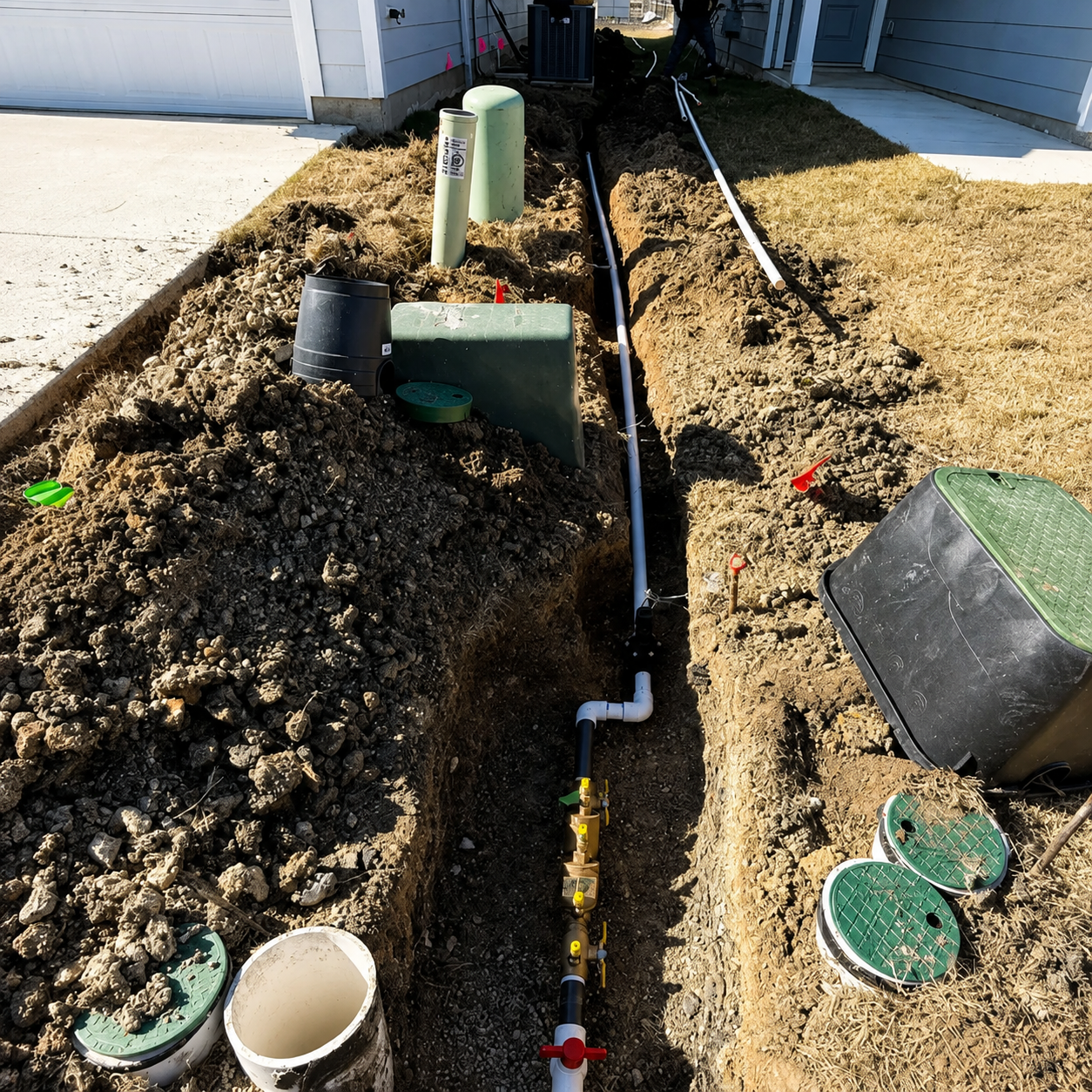
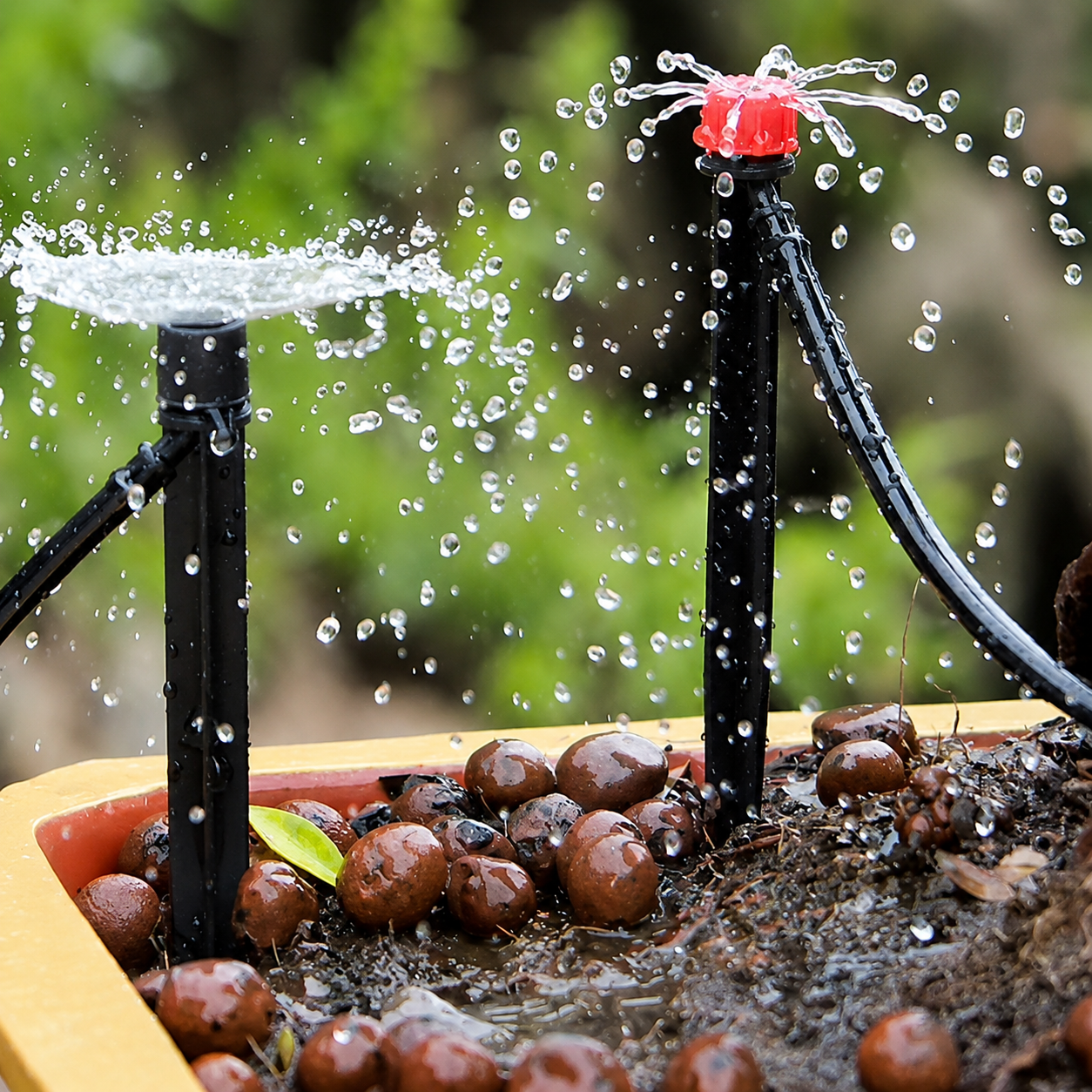
Before drawing zones, we assess the soil. Heavy clay south of 1604 holds water and causes runoff if overwatered. Rocky, shallow northern soil loses moisture rapidly. Because a clay-focused zone starves rocky ground and vice versa, we design zones tailored specifically to distinct soil and plant types.
•Clay-heavy zones usually need shorter, repeated run times rather than one long soak
•Rocky zones to the north often need more water per cycle since it drains through
•Turf runs on spray or rotor zones, kept separate from beds
•Beds and flowers run on drip zones, designed and sized on their own
Mixing spray and drip on one zone is the most common design mistake we find on older systems. Get zoning wrong at the design stage and no amount of controller programming fixes it later.
A good design starts with your water source, not your yard. We check static pressure and flow rate before drawing a zone line. Get that wrong and you get heads that mist instead of spray, or a back yard zone starved because the front is taking the pressure.
Inside San Antonio, SAWS enforces a Year-Round Watering Rule that applies regardless of season, and drought stages tighten things further when the region needs it — check with SAWS for what applies right now. But plenty of the areas we work in — Boerne, Bulverde, Helotes, Bracken — sit with other water utilities entirely, each setting its own rules. A design built for a SAWS customer doesn’t automatically fit a Cross Mountain or Timberwood Park property.
Design is also where backflow prevention gets decided. Texas requires a backflow preventer on irrigation systems to keep water from siphoning back into the drinking supply, and it needs a licensed irrigator to install. Our design and install work is done under Texas Irrigator License LI0004523.A design that ignores your utility’s rules or skips proper backflow protection costs you later, either in a failed inspection or a system fighting the restrictions it should be working within.
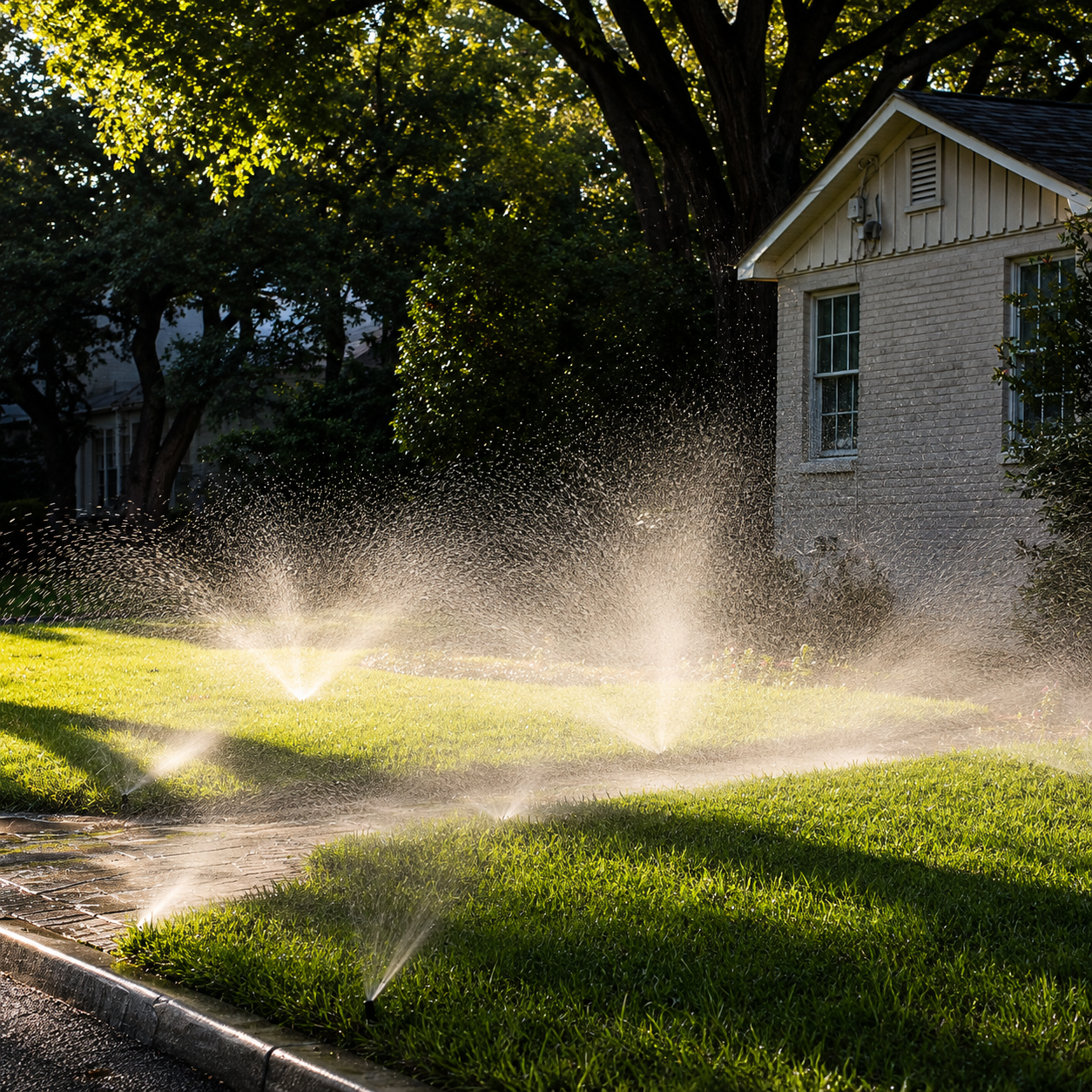
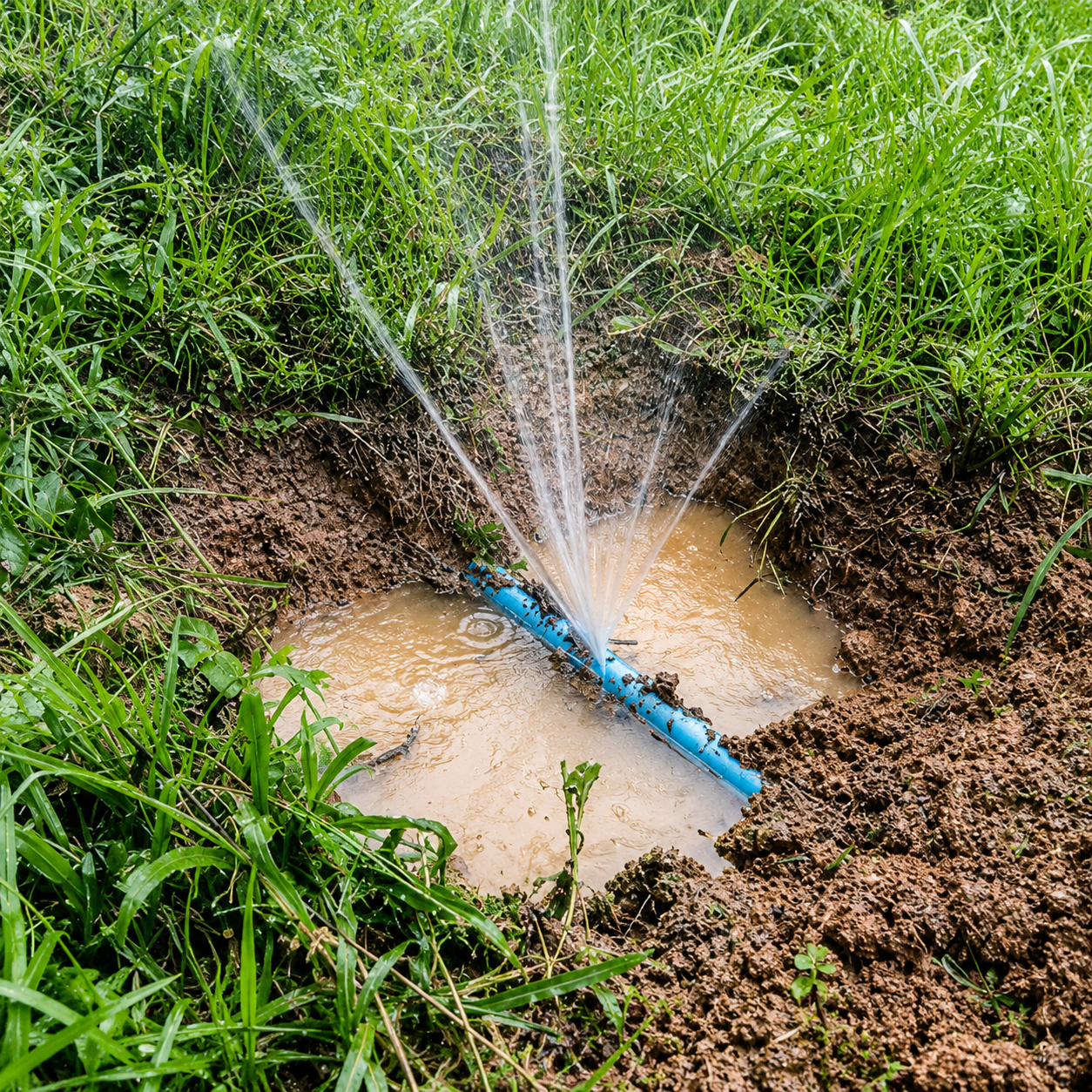
Not every problem is a design problem. If your system worked for years and now one zone is acting up, something broke.We get calls from people ready to redo the whole yard when the real issue is one bad valve or a head that finally gave out. A cracked lateral line. A solenoid that stopped firing. A controller that lost its program after a power flicker. None of that means the original plan was wrong.
•One zone or one head is the problem, not the whole yard
•The system ran fine for years before this started
•You can point to when it changed — after a freeze, or a dig job
•Pressure feels normal everywhere except one spot
Design work is for yards where coverage was never right, where pressure drops no matter what you fix, or where a new build has nothing laid out at all.
Design day is mostly walking and measuring. We check static pressure at the spigot and flow rate at the meter, then walk the property noting slope, sun exposure, plant types, and anything that will complicate a trench — mature roots, hardscape, a pool. Zones get sketched around what we find, and the yard gets flagged so you can see where lines and heads would run.
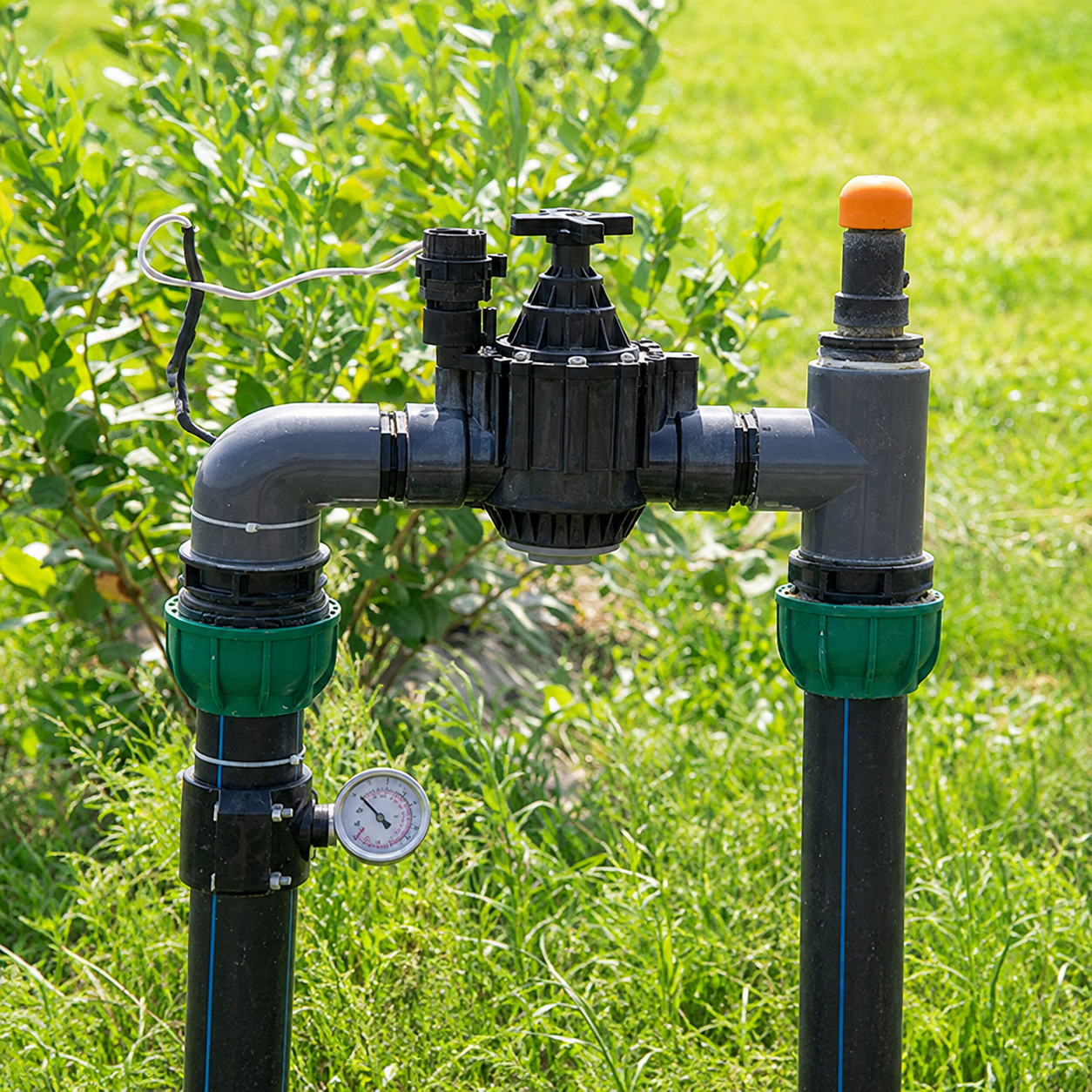
Older San Antonio properties frequently have double-check backflow assemblies that need inspection or upgrade. We look at what’s there and whether it still does its job. Freeze events are a known regional stress point for these devices, so placement matters. If trenching is likely to disturb beds or turf, we say so on design day rather than on install day.
%20(1).jpg)