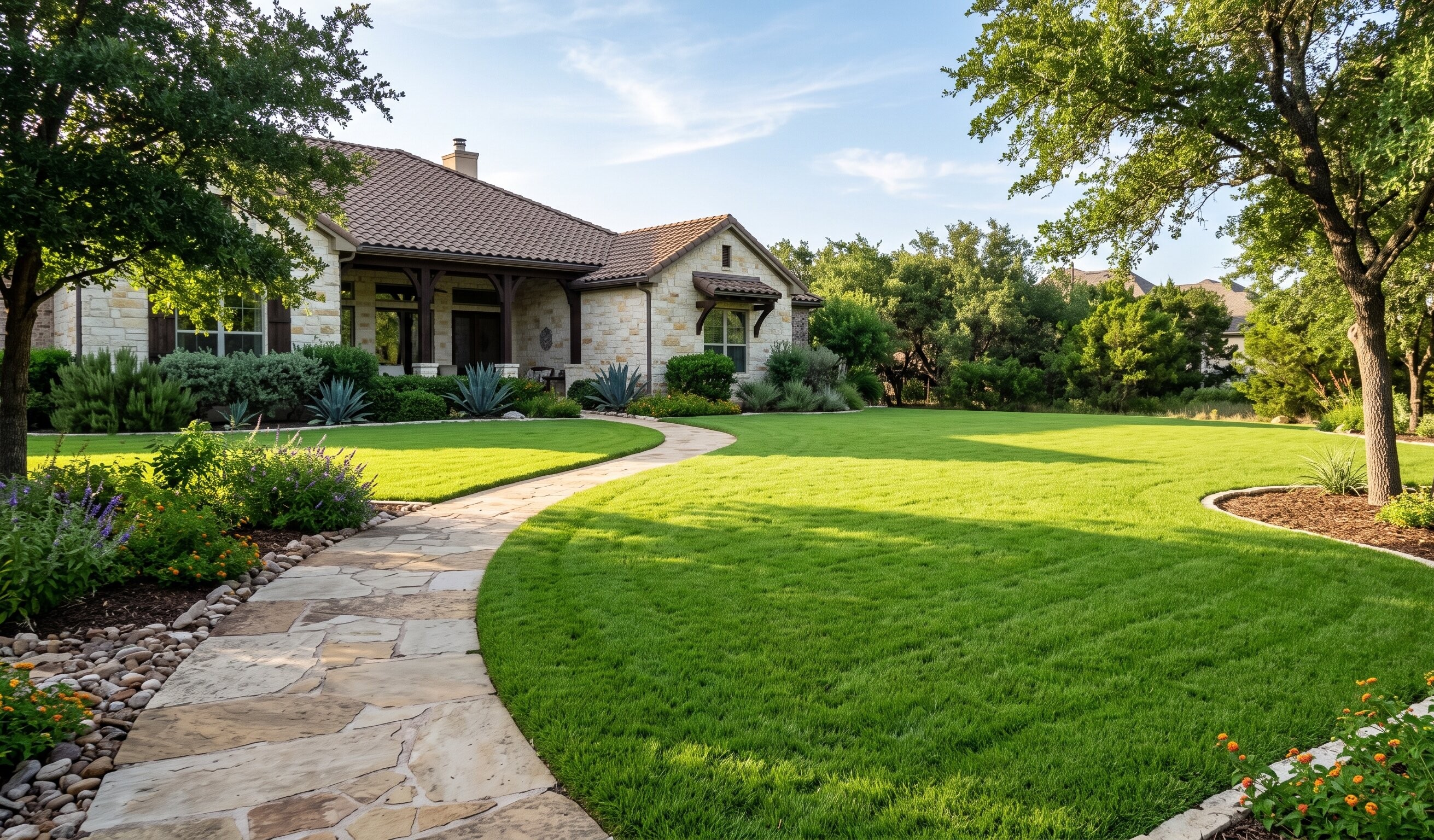
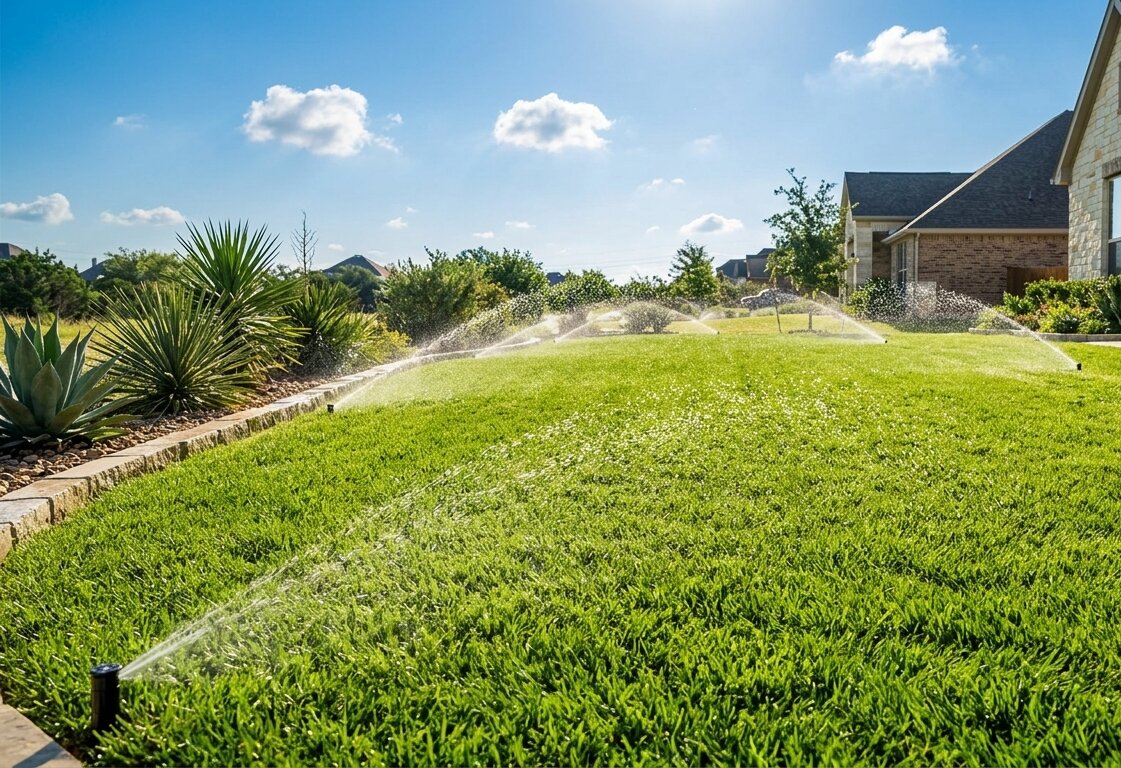
Sod makes more sense than seed when you need cover fast, when the yard slopes or washes, or when weeds and bare dirt already own more than about half the space. Seed needs weeks of steady moisture and a calm surface to take hold, and a San Antonio summer rarely gives you either.
Most folks call us after they've already tried a bag of seed. It sprouted, looked promising for two weeks, then cooked. That's not bad luck. Seed needs the top half inch of soil damp almost constantly while it germinates, and watering rules usually won't let you run a sprinkler on that schedule.
Here's the simple test we walk people through in the yard.
• More than half the lawn is bare dirt, weeds, or dead thatch you can rake up in handfuls.
• The ground slopes toward a street, a fence line, or a swale, and rain carries loose soil with it.
• You've got a closing date, a party, an HOA letter, or a rental turnover coming.
• Dogs, kids, or foot traffic that won't stay off the area for six to eight weeks.
Hit two or three of those and seed is fighting uphill. Sod skips germination entirely. You're laying grass that already has roots and a soil layer attached, so it holds the ground the day it goes down. But not every yard needs turf. If you've got thin spots in an otherwise healthy lawn and you're in no hurry, seed or hydro mulch will do the job for less disruption. We'll tell you that straight when we look at it.
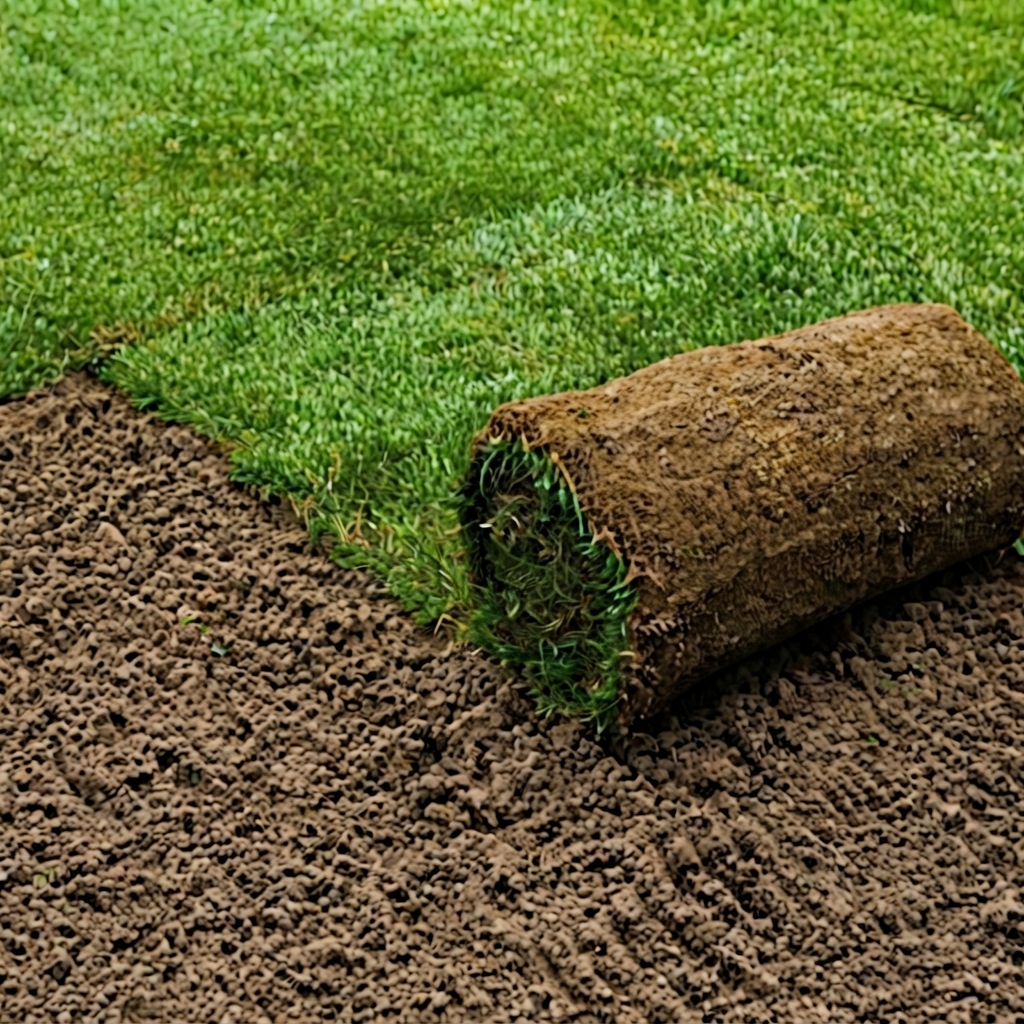
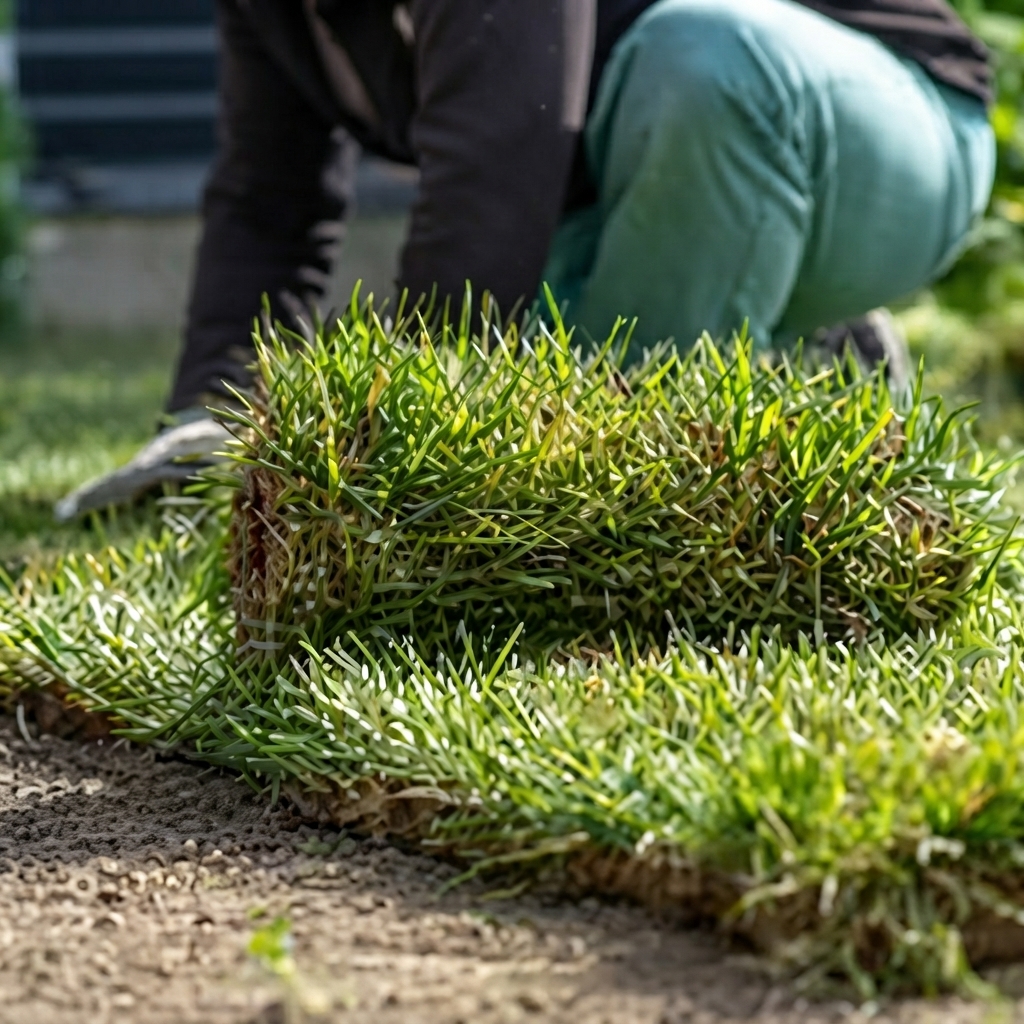
Sod has only an inch of attached soil, so what's underneath matters. South of 1604, heavy clay holds water and resists roots. North toward Bulverde, shallow soil over limestone creates poor conditions. Both need preparation before laying sod—most failures occur when ground prep is skipped.
• Kill and strip the old grass and weeds. Bermuda runners left in the ground will come back through new sod.
• Break up the top few inches so the ground isn't a sealed pan.
• Add compost or screened topsoil where the soil is thin or the clay is dense.
• Level it smooth and firm, then check the fall so water moves away from the house, not toward it.
• Test-run the sprinklers ahead of delivery day, so you find the dry corners while they're still easy to fix.
Check sprinkler coverage before sodding—misaligned heads burn stripes in new turf during heavy watering. Rushed jobs show lumps under seams, gray compacted dirt visible, and sod peeling up within weeks. Proper prep prevents costly failures. Contact Moore Irrigation Services for a free estimate: (210) 490-5394.
Walk your yard at noon and again at four. Count the hours of direct sun in each spot. That number decides more about your new lawn than anything else you'll pick. Most people order sod based on what a neighbor has, then wonder why half of it thins out by the second summer.
Here's the short version of what we plant around here and why.
• Bermuda: loves full sun, handles kids and dogs, goes thin fast under trees. Six to eight hours of sun minimum.
• St. Augustine: the best shade tolerance of the common warm-season grasses, wide blade, but it bruises easier under heavy foot traffic.
• Zoysia: slower to fill in, takes moderate shade, holds up well to traffic once it's established.
• Buffalograss: low water once rooted, but it wants open sun and doesn't like being walked on much.
Traffic is the part folks forget. A dog run along a fence line, a path from the back door to the gate, a spot where a trampoline sits all summer. Bermuda will take that abuse. St. Augustine won't, not long term. We'd rather tell you that up front than come back in a year.
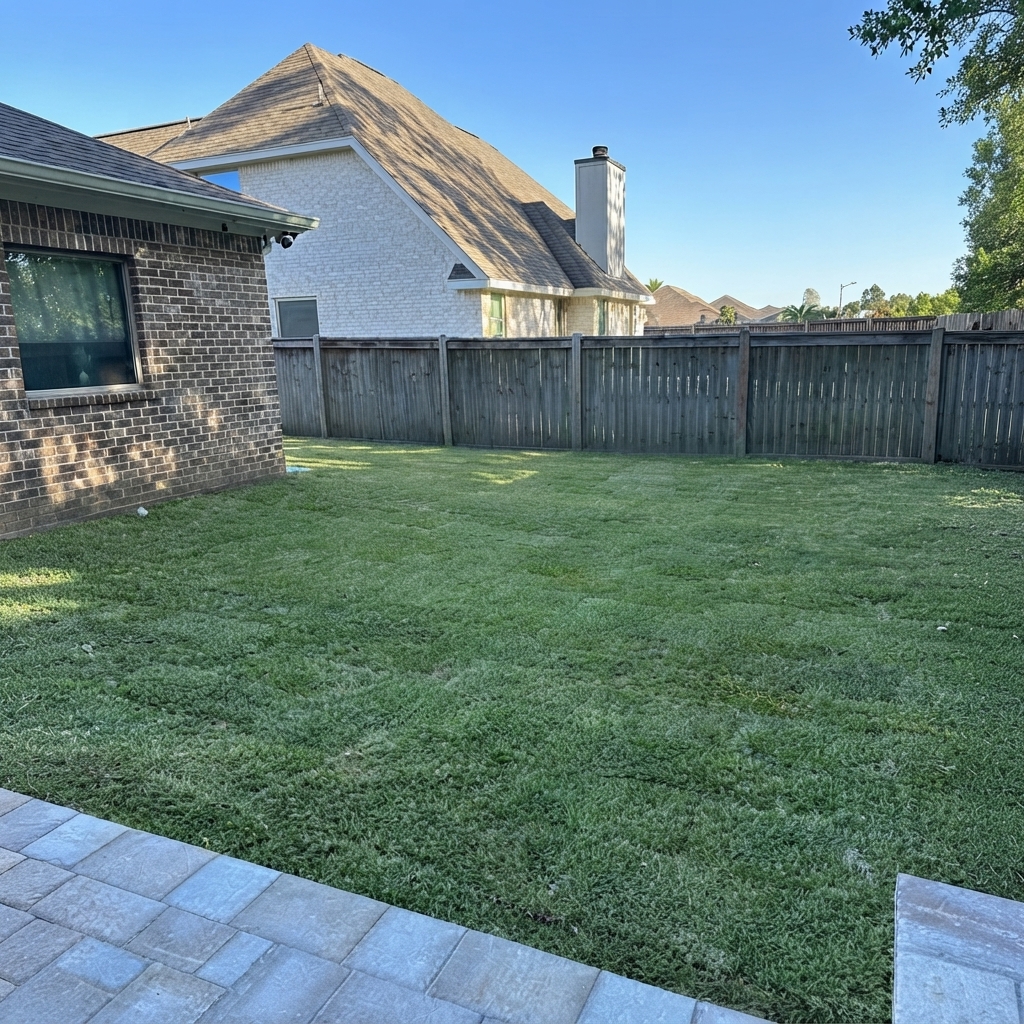
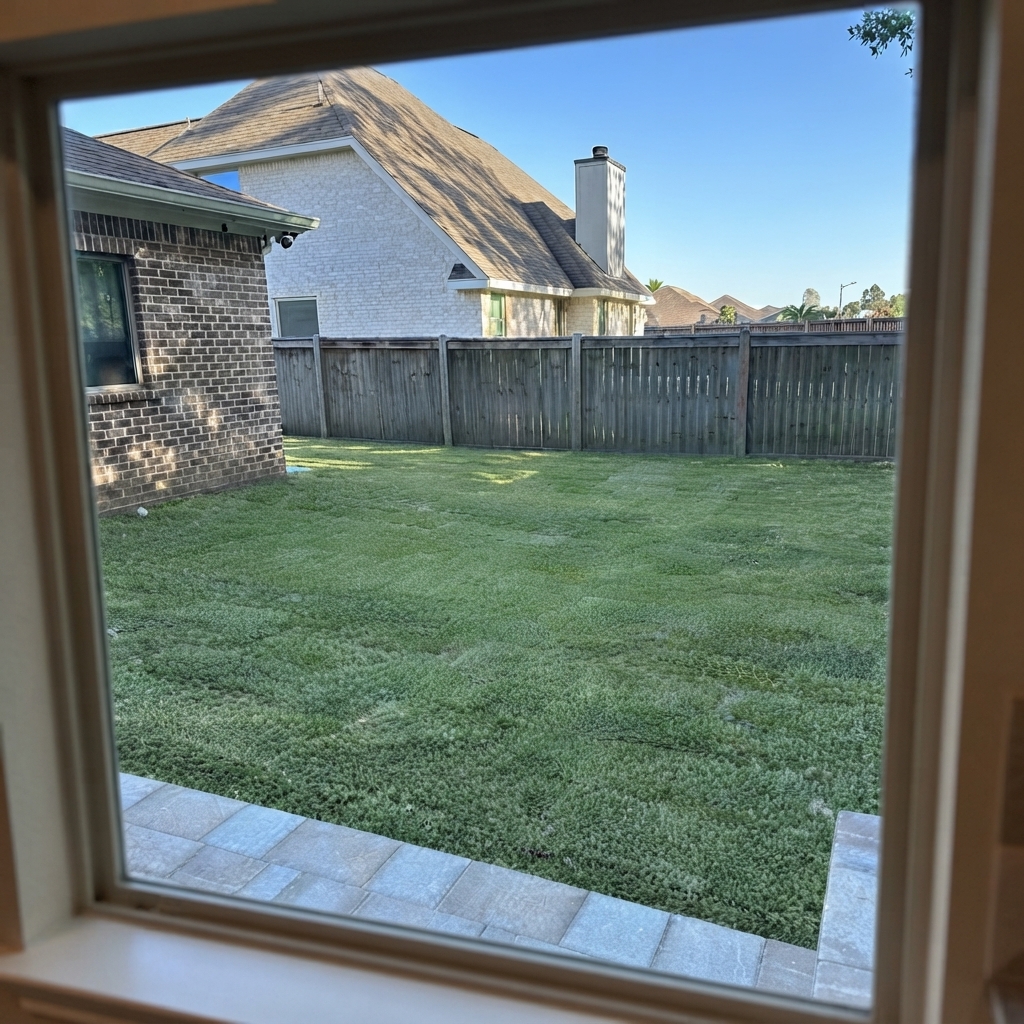
Sod installation takes one day: lay pieces tight and staggered, roll firmly, then soak deeply. Water heavily week one, reduce week two, stretch intervals week three as roots establish. Keep foot traffic off for two weeks. Check rooting by day fourteen. Verify local watering restrictions before installation—they vary by utility and drought stage.
• Spring through early summer is the sweet spot. Warm-season grass roots fast and you're ahead of the worst heat.
• Deep summer works, but it's unforgiving. Miss two days of water in triple-digit heat and you'll see the seams shrink apart.
• Early fall is our other favorite window. Soil is still warm and the turf roots without fighting for its life.
• Dead winter we'll usually tell you to wait. Dormant sod doesn't knit down, and a hard freeze on unrooted turf is a gamble.
You likely need sod if more than half your yard is bare dirt, weeds, or dead patches. Sloped yards that wash out in the rain, tight deadlines like closings or parties, and high foot traffic from kids or dogs also point toward sod. If your lawn just has thin spots and you're not in a rush, seed can still work fine.
Most early sod failures trace back to skipped soil prep, not bad grass. If old grass and weeds weren't stripped, or the ground wasn't loosened first, roots never get a real chance to grow. Lumpy ground, gray dirt showing under green grass, and seams that peel up clean are all signs the prep step got rushed.
St. Augustine handles shade best among common warm-season grasses here. Bermuda needs six to eight hours of direct sun and holds up great under kids and dogs, but thins out fast under trees. Zoysia takes moderate shade and wears well once established.
%20(1).jpg)