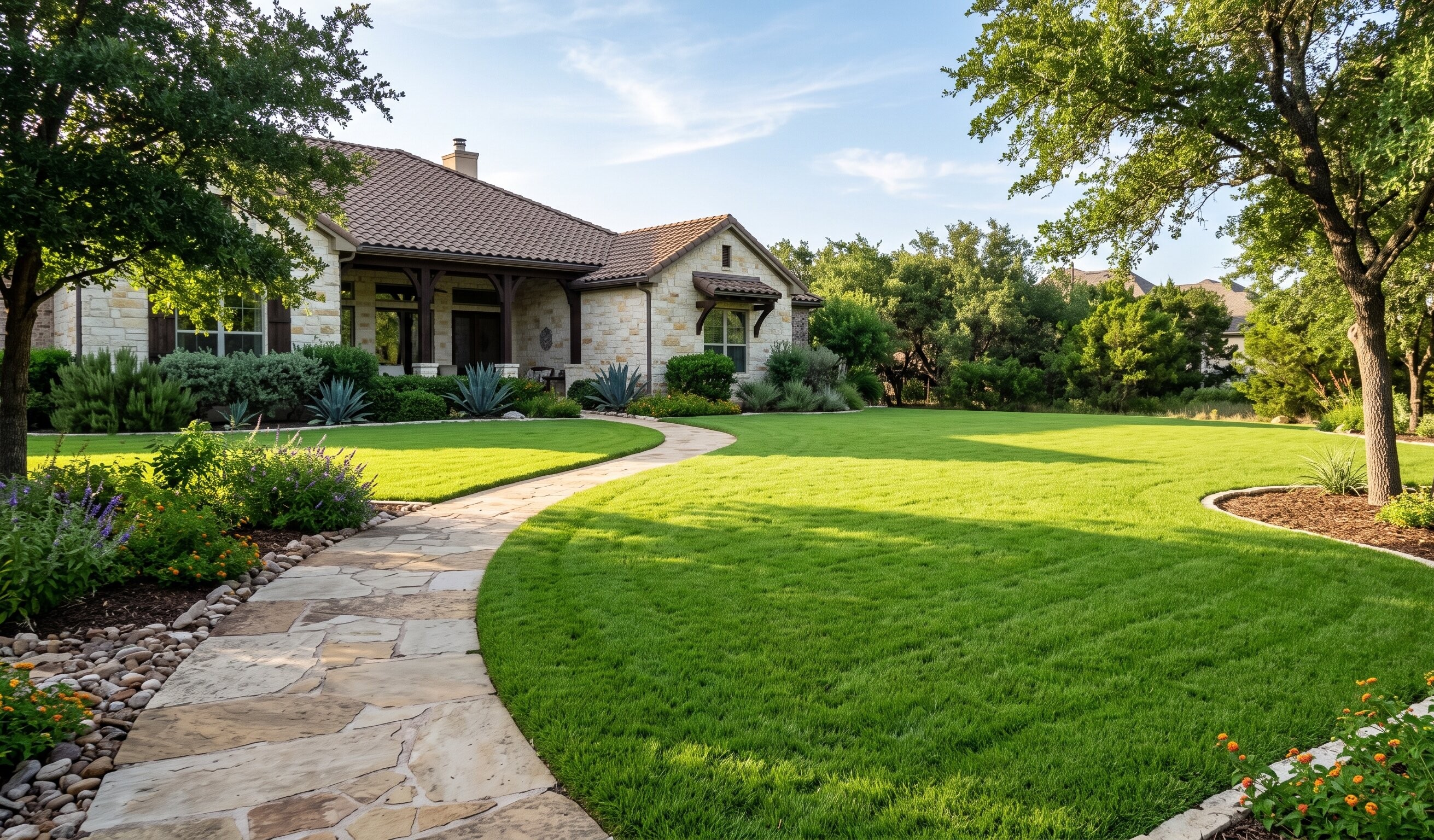
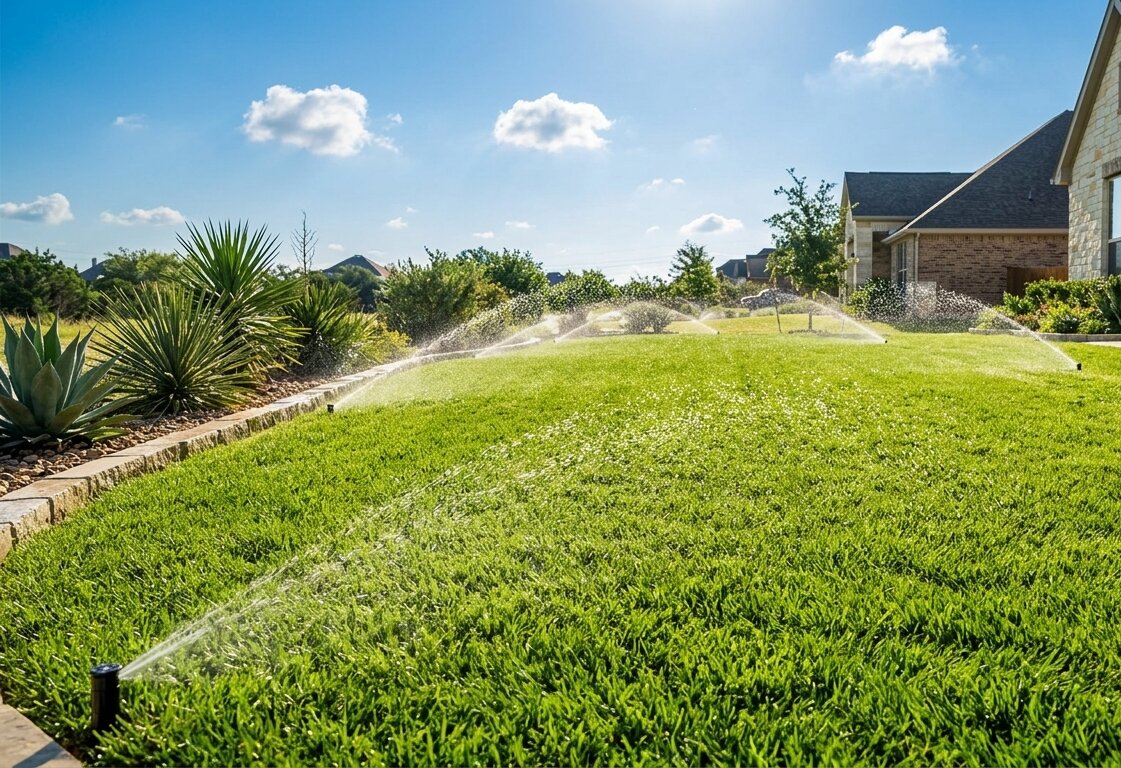
Water that sits, runs toward the house, or carves channels across the lawn is almost always a slope problem, not a plant problem. Clay soil holds that water for days instead of letting it drain. If you see the same wet spot after every rain, the ground needs regrading before new grass or a sprinkler system will hold up. Most folks call us about the grass. Brown patch here, mush over there, bare dirt where sod used to be. But the grass is just telling on the dirt underneath it. Here's the simplest test you can run yourself. Wait for a decent rain, then walk the yard about a day later. Ground should be damp, not squishy. If your shoe prints fill with water 24 hours after the sky cleared, that spot has nowhere to drain to.
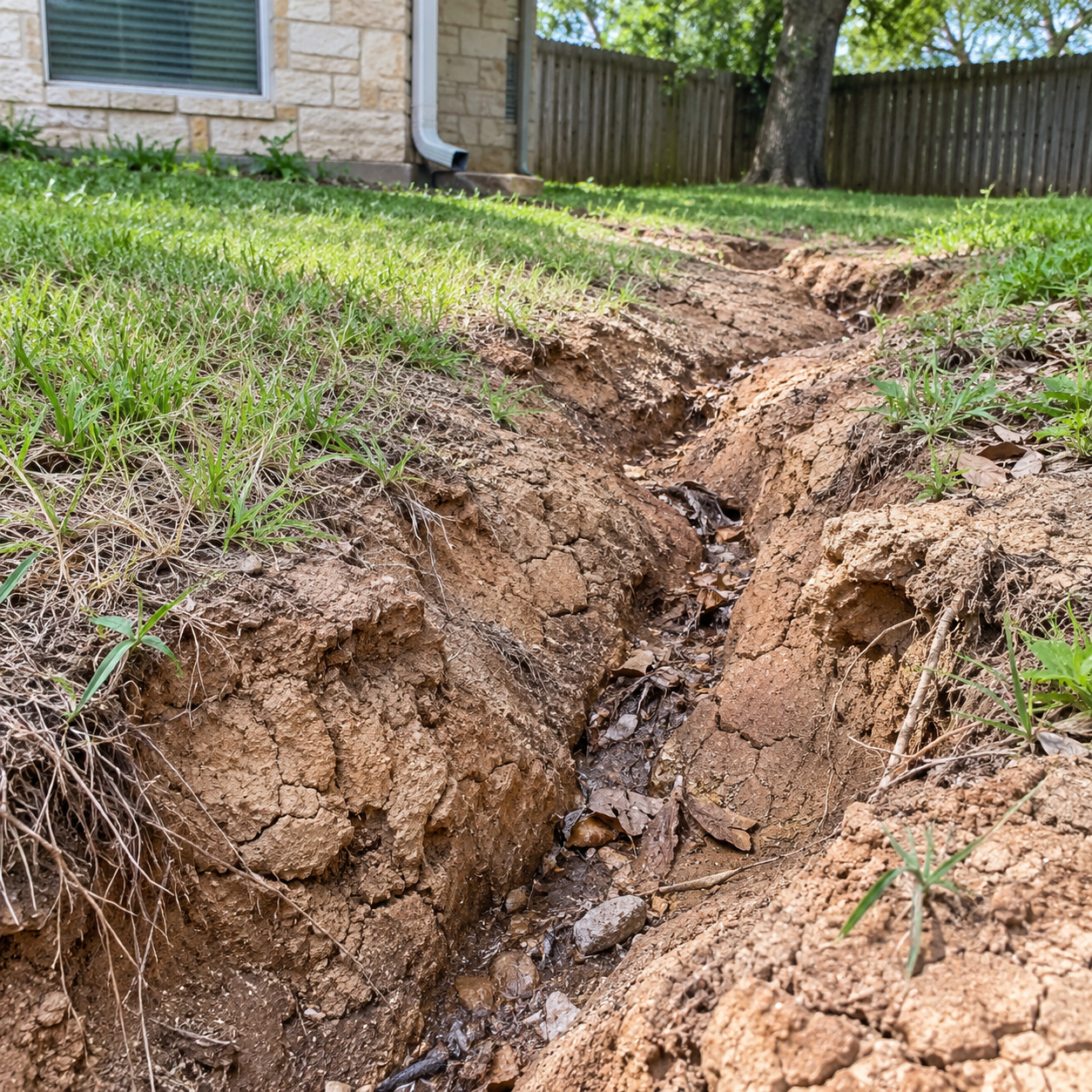
Close-up of eroded clay soil channel showing yard drainage problem in San Antonio. Things we look for when we walk a property:
• Standing water against the foundation or along a patio edge after rain
• Little fans of washed-out dirt and mulch at the bottom of a hill
• Grass that thins out in the same low spot every single year
• Downspouts dumping onto ground that slopes back toward the house
Erosion is the other tell. If rain is cutting narrow channels across your lawn, water's moving too fast over ground that's too steep in one place and too flat in another. We see this every week on newer lots where the builder's rough grade never got finished right.
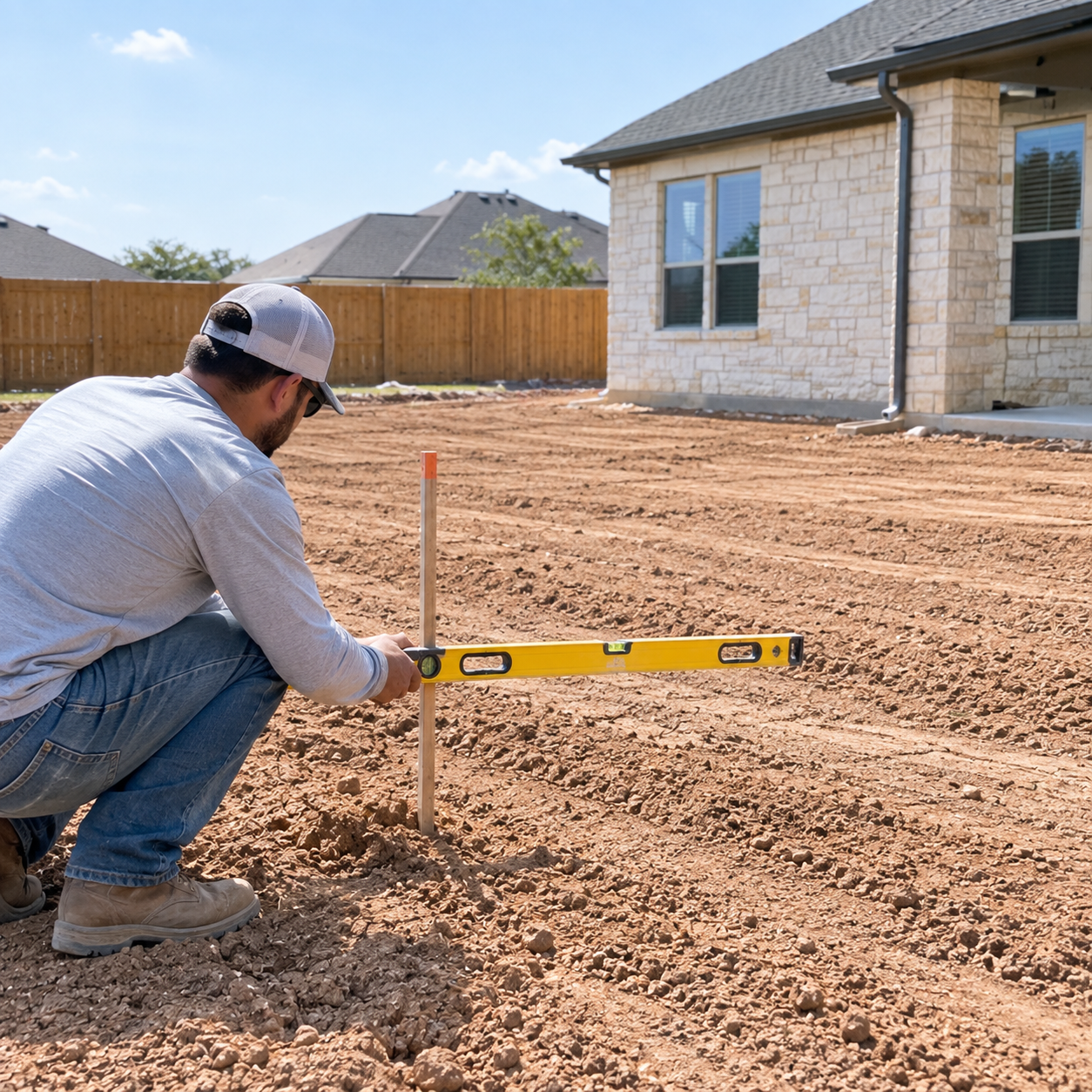
Builders often rough-grade lots, then add four inches of topsoil and sod. This looks great initially but fails after rain because compacted clay underneath sheds water poorly. Buried debris like concrete and lumber creates settling issues, forming pooling water years later. Landscaper checking finished grade level on new construction yard in San Antonio
So how do you tell if your yard got the shortcut?
• Water stands in the same spot after every rain, even light rain
• Grass grows thin or dies in a patch that gets plenty of sun
• A shovel hits something hard or hollow about a foot down
• Low dips appeared a year or two after you moved in
• The soil right against the foundation has settled and now slopes toward the house. That last one is the one to take seriously. Fixing it means pulling the sod, breaking up what's compacted, hauling out the junk, and re-establishing real fall away from the house. It's more work than a topdressing. But it's the only version that holds. Have questions? We're happy to help. (210) 490-5394 Call now for a free estimate.
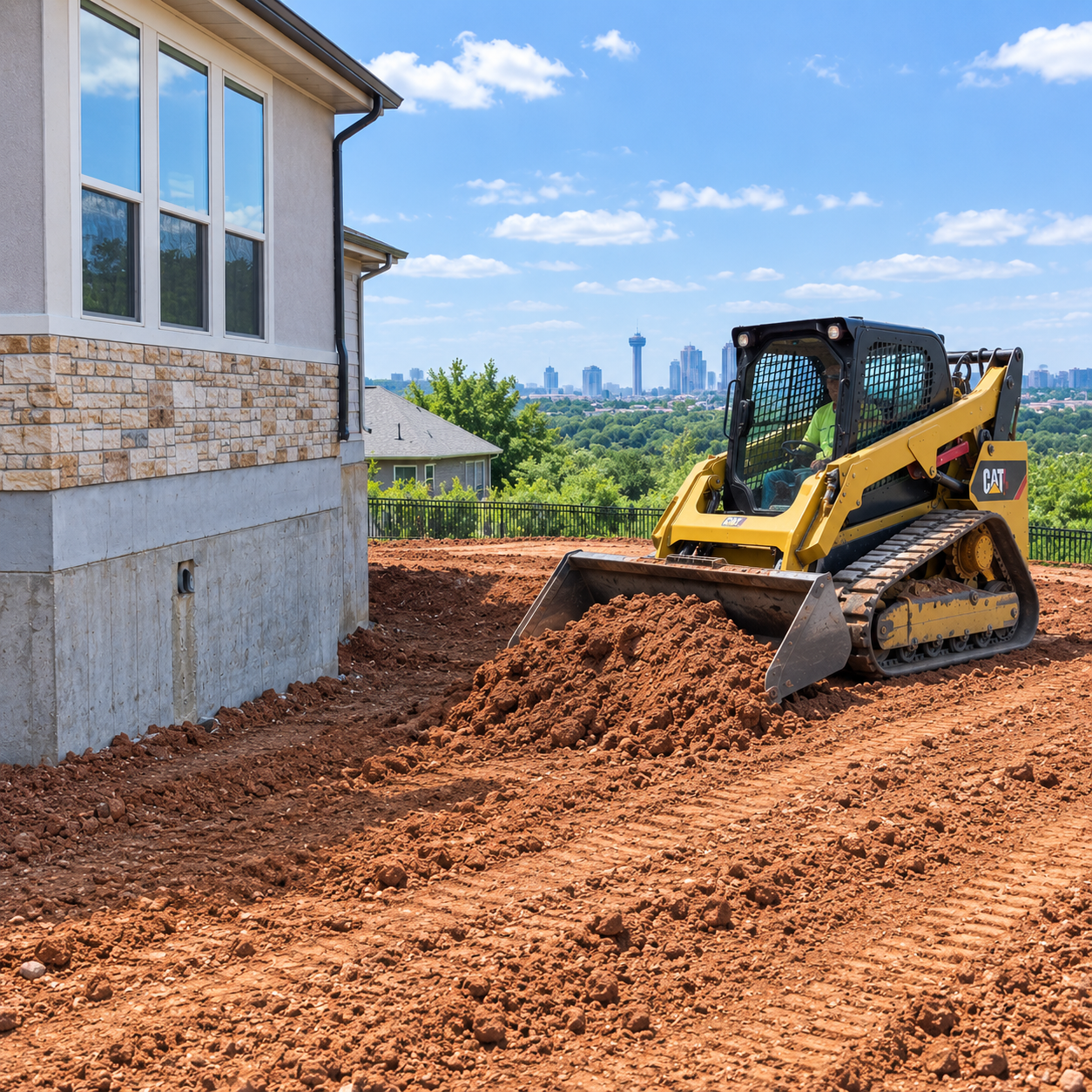
Most folks picture a tractor showing up and shoving dirt toward the back fence. That's not it. Grading is a measured job, and the measuring is the part that decides whether your yard drains right for years to come.
• We walk the property and shoot elevations. We find your high points, your low points, and where water is sitting now, and we note where it needs to go once it leaves your yard.
• We mark what can't move. Sprinkler lines, valve boxes, utility markings, tree roots, patio edges, and the foundation line all get flagged before a blade touches dirt.
• We set the target slope. The ground next to the house should fall away from the foundation, and the rest of the yard has to keep that water moving instead of parking it in a low spot.
• We cut and fill. Soil comes off the high spots and goes into the low ones. On the clay south of 1604 we often bring in fill, because that ground packs hard and doesn't give up much when you cut it.
• We compact and finish. Loose fill settles and you end up with a new low spot by spring. Compaction is the step that keeps the grade you paid for.
• We check the water. A hose test or the first good rain tells us whether the slope is doing its job before anything gets planted on top.
Timeline varies by lot size and soil volume. Small backyard fixes take one day; full lot regrades with imported fill take longer. We prioritize proper compaction over speed. Critical: don't plant sod or seed until grading is complete—we've had to remove newly installed turf repeatedly.
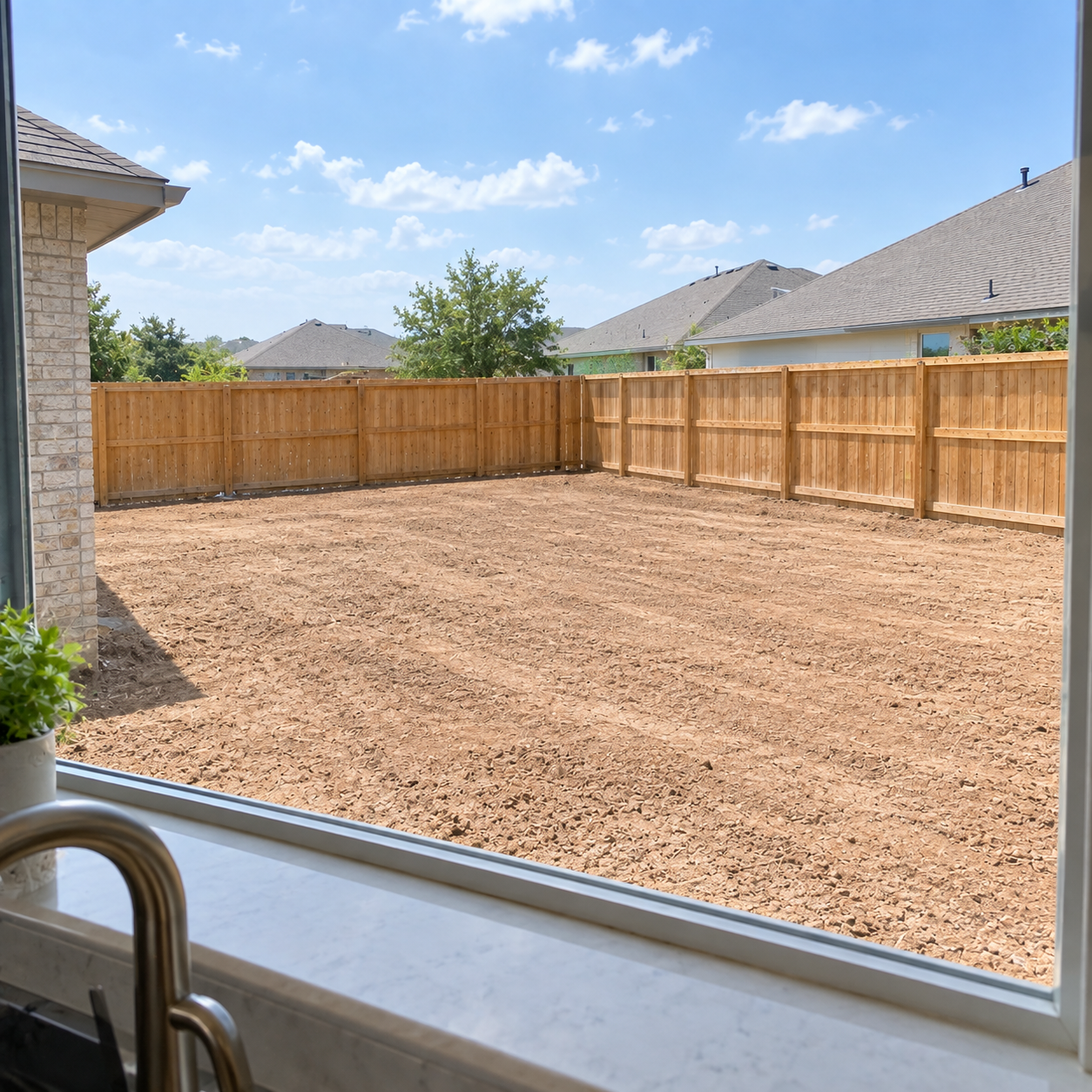
A lot of the wet yards we look at don't need to be regraded at all.
If the puddle is one small spot, maybe three or four feet across, and the rest of the yard drains fine after a rain, that's a low spot. You can fill it yourself with screened topsoil, tamp it, and seed or patch it. Do it in stages. Two inches at a time, water it in, let it settle, then add more. Dump six inches at once and it'll sink right back over the next few months.
A soggy patch right under a sprinkler head or over a valve box is usually a leak, and that's a repair, not a slope issue. And if your house is under a year old, fresh construction backfill is still settling, especially in the clay south of 1604. Grading it now can mean grading it again later.
But if water crosses the whole lawn, pools for two days, or runs toward the house instead of away from it, that's slope. That's when the ground has to move. And if the water has nowhere to go once it leaves your yard, grading usually needs a French drain or surface drain alongside it.
Check the ground about a day after a good rain. If it's damp but not squishy, you're probably fine. If your shoe prints fill with water 24 hours after the rain stops, that spot has nowhere to drain. Standing water by the foundation and channels cut across the lawn are signs too.
Builders often rough grade a lot just enough to pass inspection, then cover it with a few inches of topsoil and sod. It looks fine on closing day. Two rainy seasons later a low spot shows up because compacted clay underneath won't drain, or buried construction debris settles.
Not always. Slope is only half the problem, and water still has to go somewhere once it leaves your yard. On flat lots south of 1604 you can grade a perfect slope and still end up with a soggy corner at the fence line. Sometimes the real fix is grading plus a French drain.
%20(1).jpg)