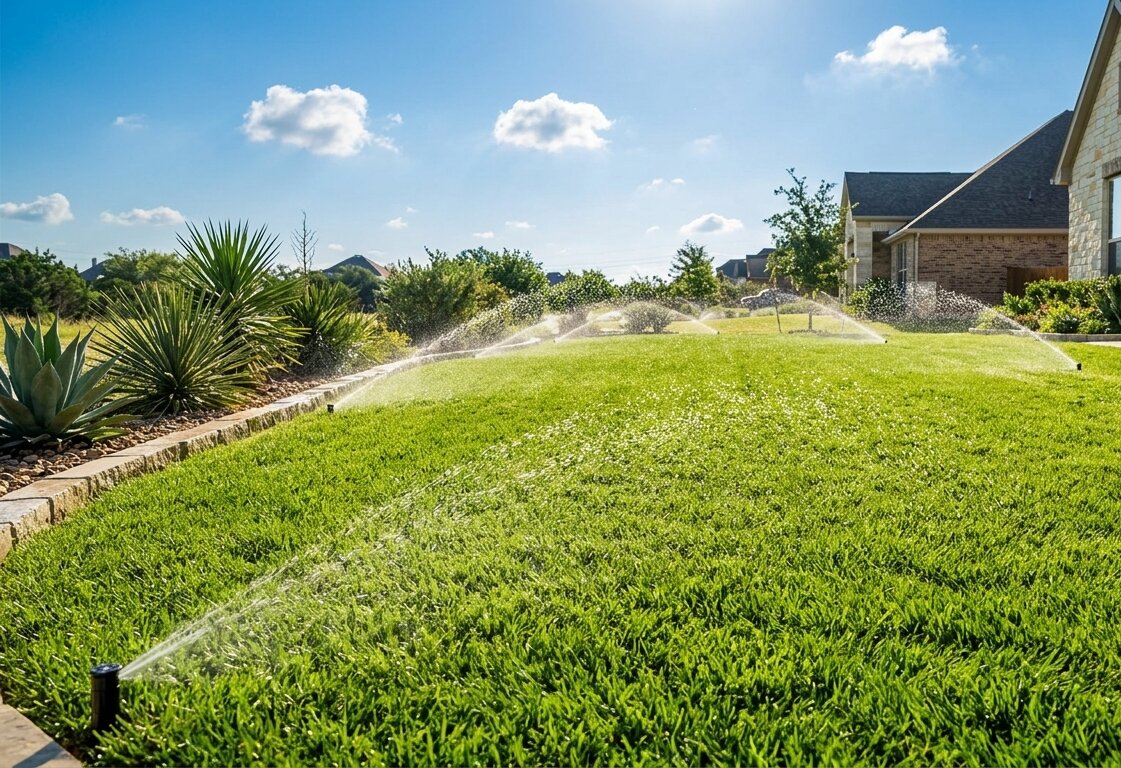
Some irrigation problems are obvious; a geyser in the front yard is hard to miss. But most system issues develop gradually, and catching them early saves money and prevents landscape damage.
If parts of your lawn are green and other parts are browning, the system isn't covering evenly. This can be caused by clogged nozzles, heads that have settled below grade (especially in San Antonio's shifting clay soil), wrong nozzle sizes on heads in the same zone, or low pressure from a partially closed valve or a leak upstream.
Walk your property while each zone runs. Look for heads that aren't popping up fully, spray patterns hitting the sidewalk or fence instead of the lawn, and areas between heads where coverage doesn't overlap.
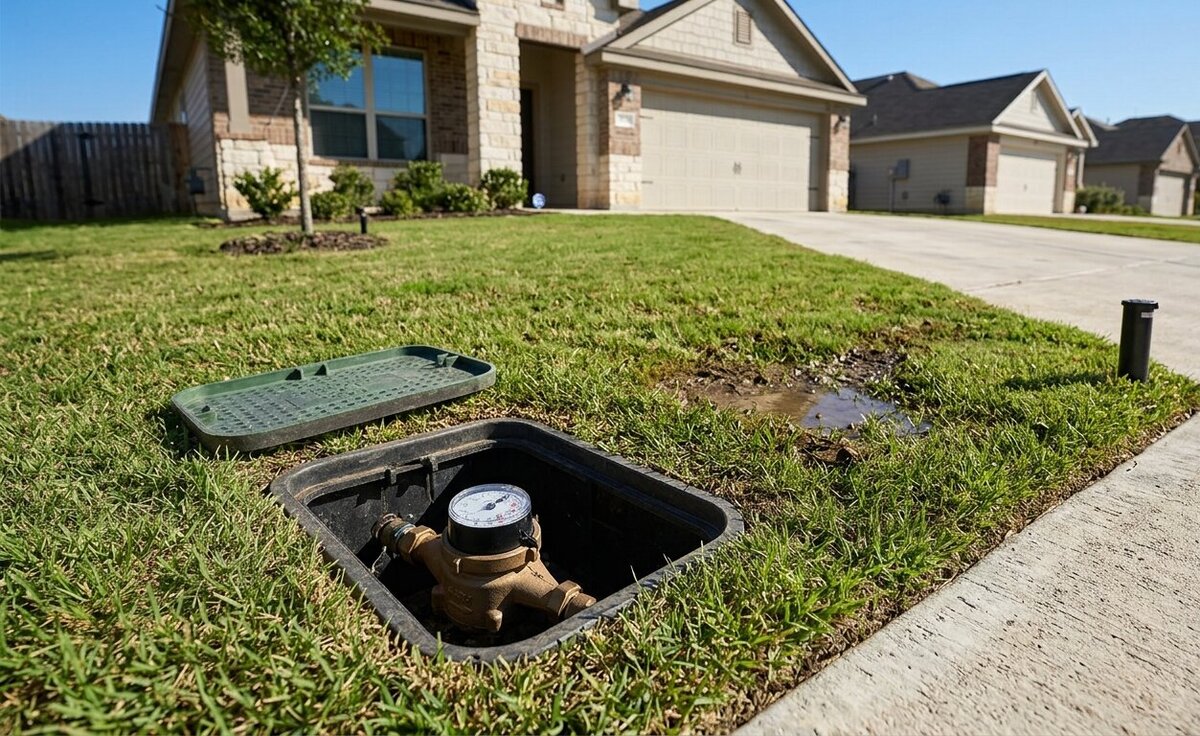
A sudden jump in your SAWS bill without a change in watering schedule usually means a leak. Underground leaks are common in San Antonio, the clay soil shifts, joints separate, and water flows into the ground where you can't see it. You might notice a persistently wet or mushy area in the yard, or the leak might be under a slab where there's no visible sign.
If your bill jumped $30–50 or more month-over-month, run each zone one at a time with the water meter visible. If the meter is spinning fast on a zone that shouldn't be drawing much water, you've found your problem zone.
If zones are running at the wrong time, not running at all, or running continuously, the controller may be the issue. Common causes: power surges (frequent in San Antonio during summer storms) that reset programming, dead backup batteries that lose the schedule during outages, or corroded wiring connections between the controller and the valves.
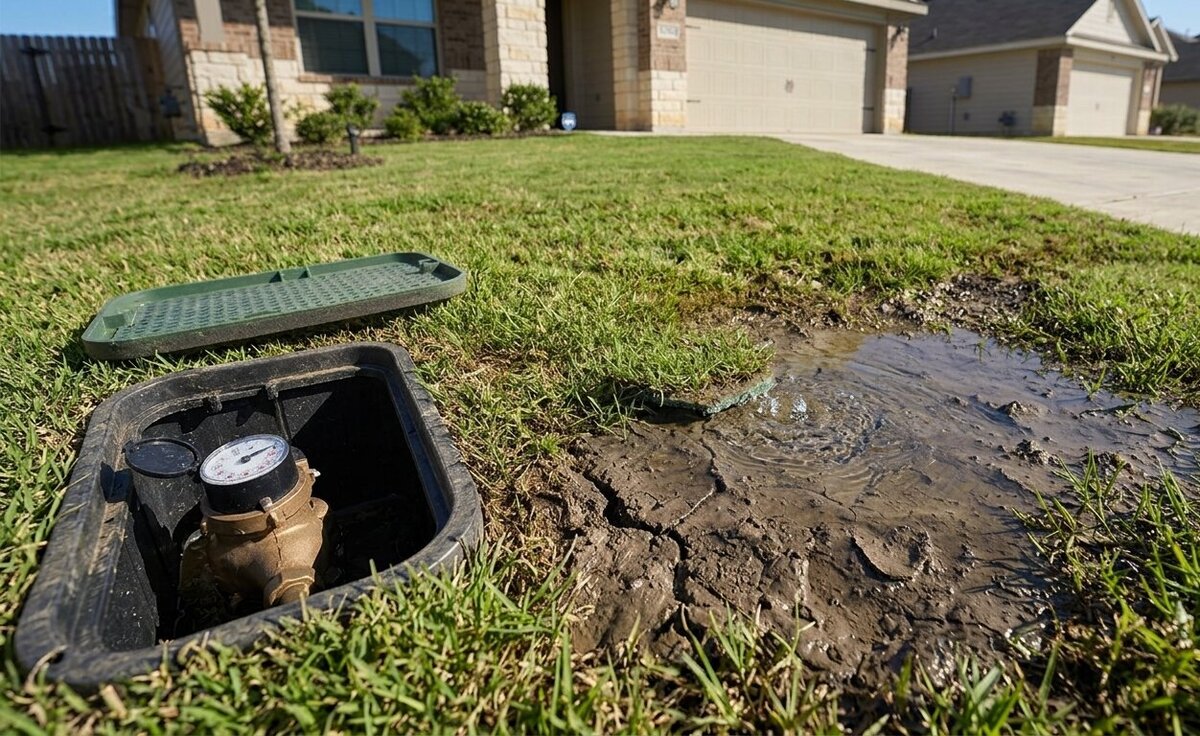
Standing water or erosion channels after a watering cycle mean you're either overwatering or the system is applying water faster than the soil can absorb it. San Antonio clay soil absorbs water slowly, standard spray heads can overwhelm it in minutes. The fix is usually changing to rotary nozzles that apply water at a lower rate, splitting long run times into two shorter cycles with a soak period between them, or adding drip zones to replace spray heads in sloped areas.
If you're seeing any of these signs, it's worth having the system evaluated before the problem gets worse. A 30-minute diagnostic visit can identify issues that would cost significantly more to fix if left untreated through a full San Antonio summer.

%20(1).jpg)