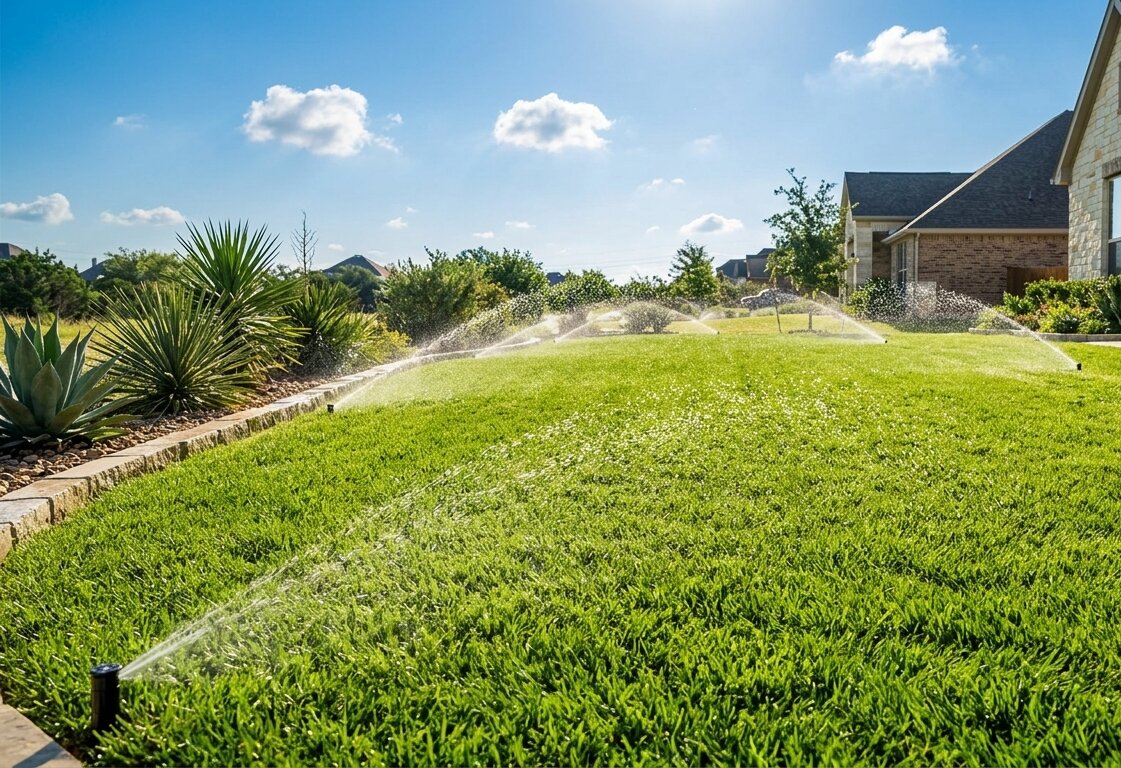
Most San Antonio properties need both drip and spray irrigation, the question is where to use each. The answer depends on what's planted, how the beds are configured, and how you want to manage water use under SAWS restrictions.
Spray and rotor heads are designed for turf grass, St. Augustine, Bermuda, Zoysia. These grasses need even coverage across open areas, and sprinklers deliver that efficiently when properly spaced and adjusted.
Rotary nozzles (like Hunter MP Rotators) are more efficient than traditional spray heads because they apply water more slowly, reducing runoff on San Antonio's heavy clay soil. Because our clay is highly compacted, fast-dispersing spray heads often cause water to pool and run off into the street before it can absorb. Slow-applying rotary nozzles give the ground the time it needs to drink.
Sprinklers also work well for large, open planting beds with consistent spacing. Ground cover areas and uniform shrub rows can be watered with low-volume spray heads.
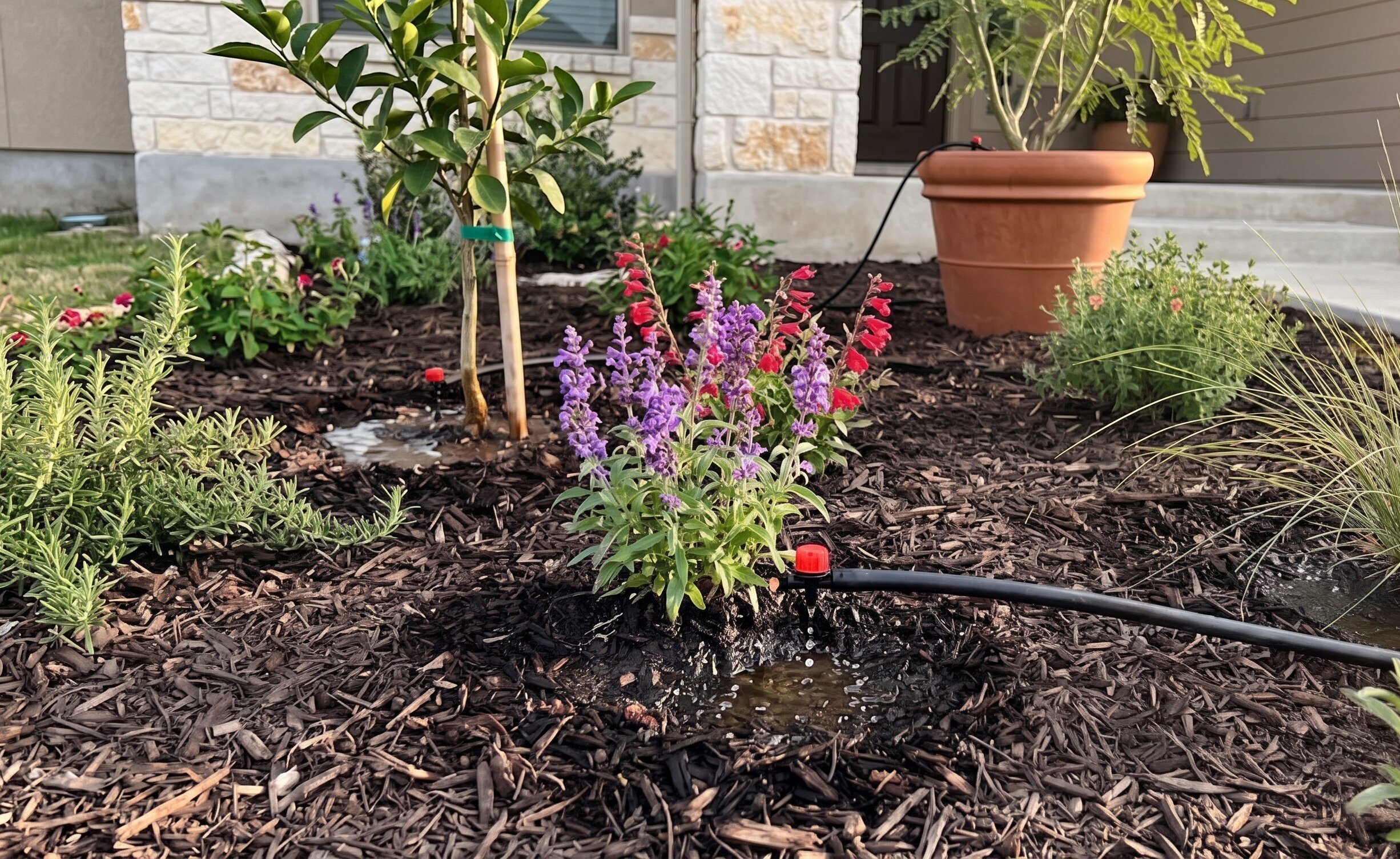
Drip is better for garden beds, individual trees, foundation plantings, container plants, and any area with mixed plant types that have different water needs. Drip delivers water directly to the root zone, which means less evaporation, less weed germination (since the soil surface between plants stays dry), and more control over how much each plant gets.
In San Antonio specifically, drip has another major advantage: it's exempt from the once-per-week watering restriction under SAWS Stage 1 rules. Drip zones can run any day, which gives your landscape beds and gardens consistent moisture even when sprinkler zones are limited.
When it comes to keeping wide turf lawns evenly green without dry patches, sprinklers are the clear winner, providing the uniform, head-to-head coverage that open grass needs. However, if your goal is to combat high water bills caused by wind drift and evaporation, drip irrigation is the far more efficient choice, boasting a 90%+ efficiency rate by trickling water directly into the soil.
If you are dealing with water pooling and runoff on San Antonio's heavy clay soil, both drip systems and rotary sprinklers offer a solution because they apply water slowly, giving the tight soil plenty of time to absorb it. For navigating strict SAWS Stage 1 drought limits, drip irrigation offers much-needed scheduling flexibility, as it is allowed to run up to three days per week while traditional sprinklers are limited to just one. Finally, if you want to stop constantly fighting weeds in your garden beds, drip irrigation wins again by delivering water only to your plants' roots, leaving the surrounding topsoil dry and inhospitable to weed seeds.
The most effective irrigation designs in San Antonio use both. Spray or rotary heads cover the lawn zones, drip lines handle the beds and foundation plantings, and bubblers or dedicated drip emitters serve individual trees — especially newly planted ones that need supplemental water for the first two years.
Each type runs on separate zones with different schedules:
Lawn Zones: Might run 15–20 minutes to deeply soak the turf
Drip Zones: Run 30–60 minutes at a much lower flow rate to deeply saturate plant roots without creating runoff.
Your controller needs enough zones to separate these properly so you aren't overwatering your garden beds or underwatering your grass.
Moore Irrigation designs hybrid systems that match the specific layout and plant material on your property. With three generations of experience in San Antonio landscaping, we know what works in this climate and soil.

%20(1).jpg)