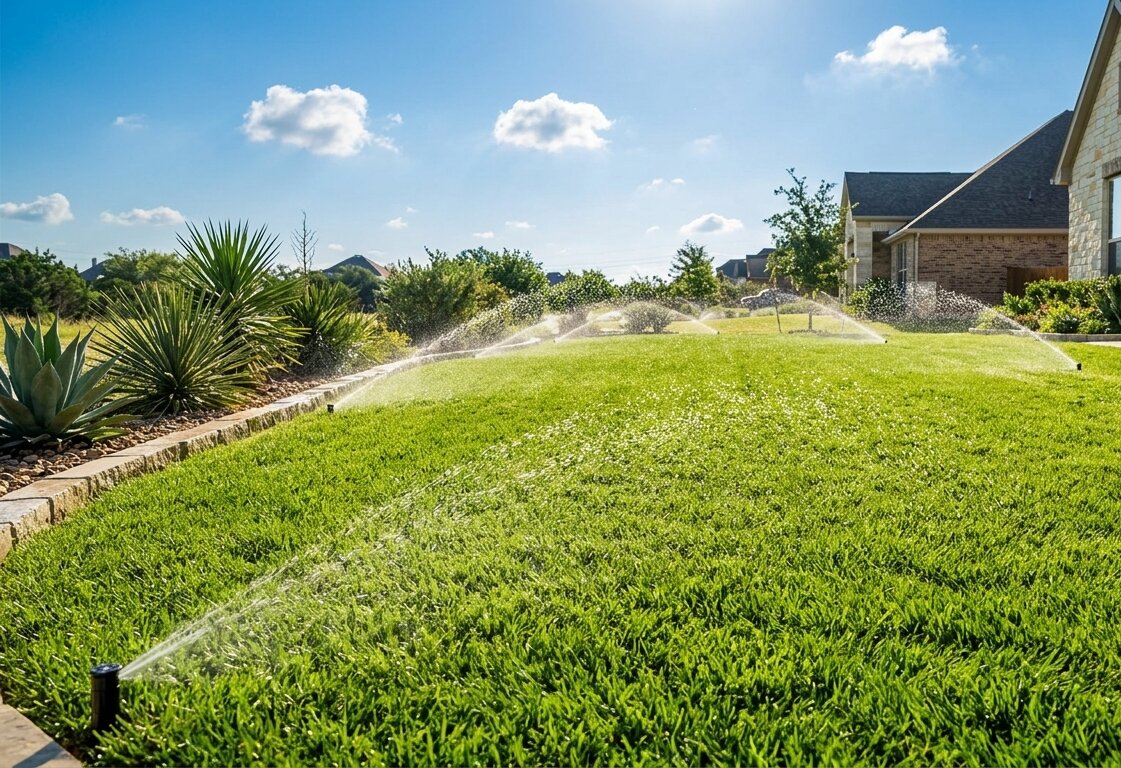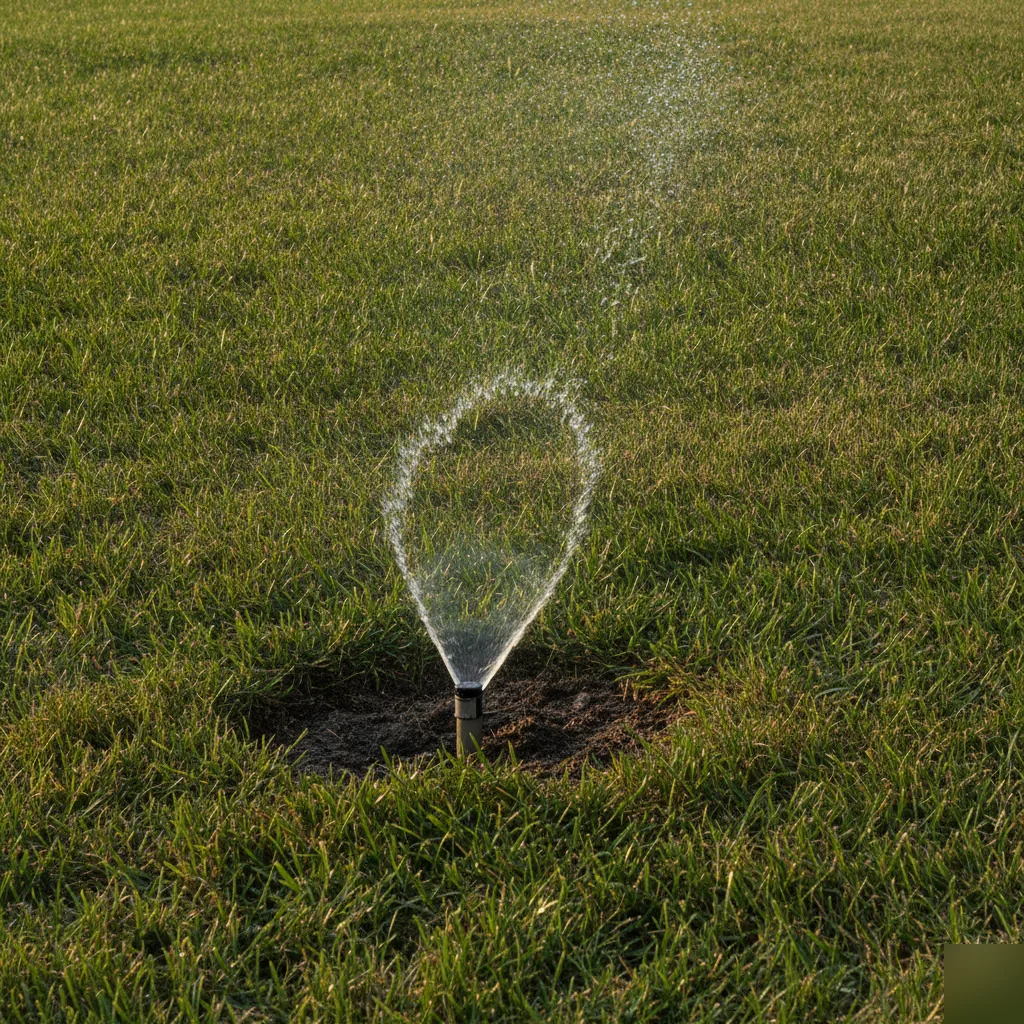
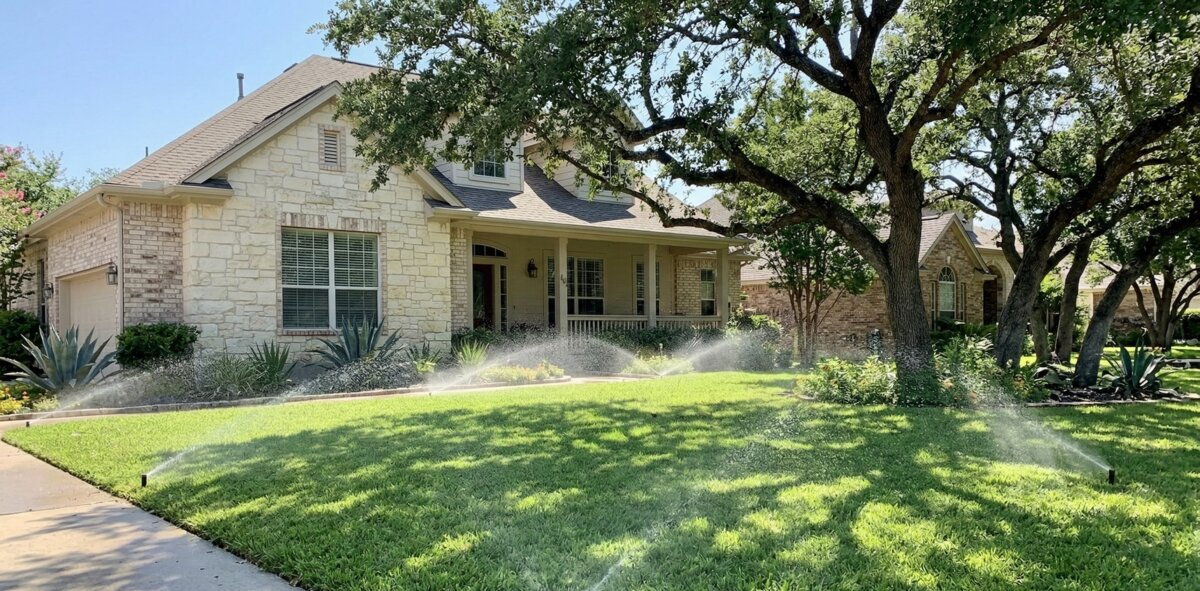
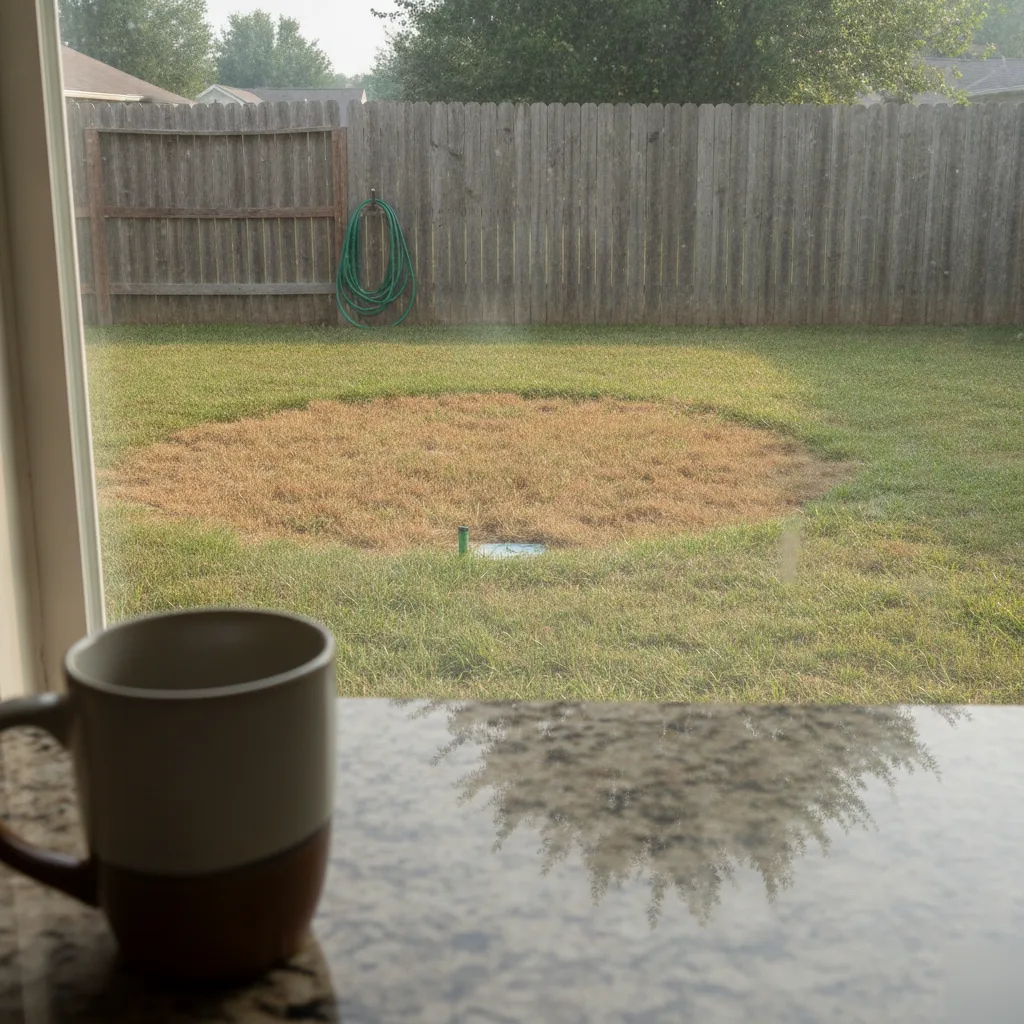
A dead patch of grass, a head that won’t pop up, or a water bill that jumped for no reason are all signs your system needs a repair call. Most of these trace back to a cracked line, a stuck valve, or nozzles clogged by San Antonio’s hard water.
You don’t need to be an irrigation expert to notice something is off. The system tells you where the problem is — you just have to know what you’re looking at.
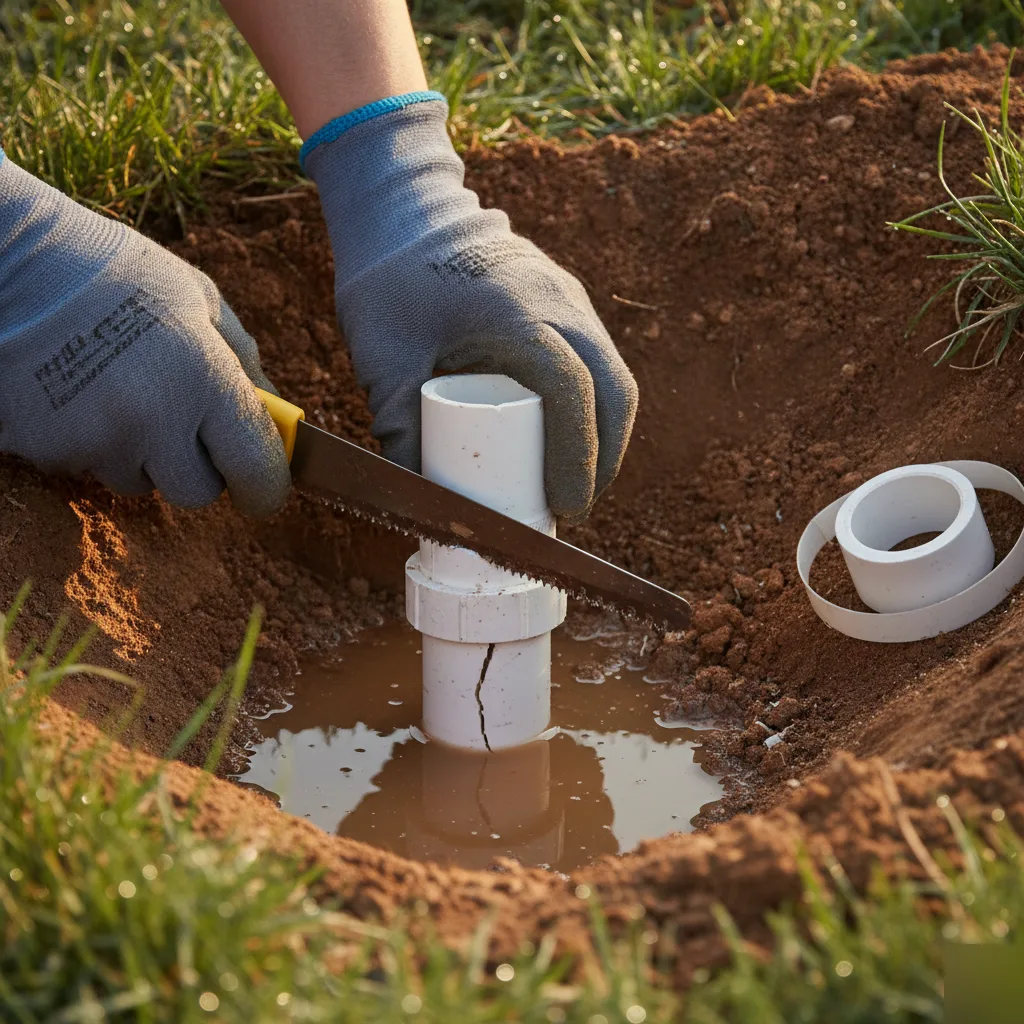
A sudden dead zone after a cold snap usually points to a cracked line or a head that split when water froze inside it. And a hissing sound near the valve box when the system is off is often a valve that isn’t seating right.
Not every problem needs a truck. A head clogged with mineral buildup is often a five-minute job: pop the nozzle off, rinse it, put it back. Same with a head spraying the sidewalk instead of the lawn — twist it back and adjust the arc. If your controller lost its schedule after a power blip, re-entering the times takes minutes.
Here is where it stops being a weekend fix. If a zone won’t shut off, if a wet spot won’t dry between cycles, or your bill jumped and you can’t find the leak, that’s a valve or line problem underground. Plenty of people try the easy things first — which is smart — then call once it’s clear the issue is buried or electrical.
Where you live changes what breaks.
South of Loop 1604, clay soil swells when wet and shrinks hard when dry. That movement shifts pipe and pulls fittings loose, so slow leaks appear seasons after a system went in. North of 1604 — Timberwood Park, Bracken, out toward Cross Mountain — soil is thin and rocky. Heads sit shallow because there’s nowhere else to put them, which means more mower strikes and more lines nicked during yard work.
Then there’s the freeze. San Antonio doesn’t get hard freezes every winter, but when one hits, backflow preventers and exposed pipe take the damage. A valve that cracked in January often doesn’t reveal itself until the system runs again in March.
You don’t need to diagnose anything before calling — that’s our job — but knowing the shape of the visit helps.
We start by walking the yard and hearing what you’ve noticed. Then we run each zone one at a time. Often the problem shows itself fast: a cracked head, a valve that won’t fully close, a line nicked by a shovel or fence post. Older systems sometimes take more digging, especially when more than one thing has gone wrong at once.
We offer free estimates, so you’ll know what the fix involves before we touch anything. We also document the repair with a receipt — worth keeping, since a repaired qualifying leak may make you eligible for a SAWS leak adjustment. That’s reviewed case by case and never guaranteed, and requests go in within 60 days of the repair.
Fix the head but ignore why it broke, and you’ll be back in six months. A cracked head usually isn’t random — it points to pressure that’s too high, a valve that sticks, or mineral deposits building inside the nozzle.
San Antonio water is hard. Over time it leaves buildup on heads and nozzles, causing uneven spray, clogged filters, and heads that stick partway up. Swapping the part without mentioning the water behind it solves half the problem.
One honest note on that last point: a controller left on the wrong settings is specifically not treated as a qualifying leak for a bill adjustment. That’s exactly why catching a programming fault early is worth doing.


%20(1).jpg)