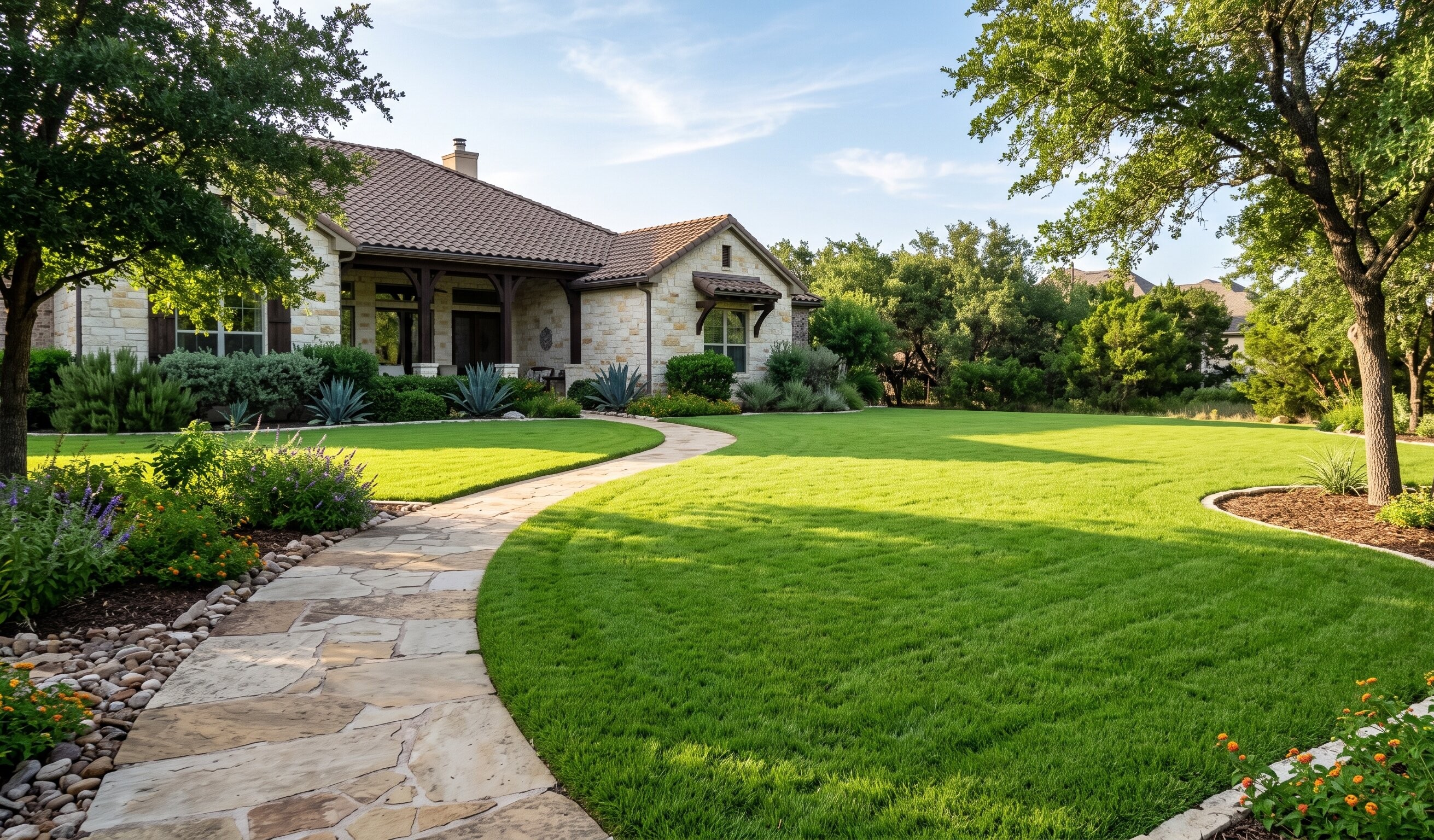
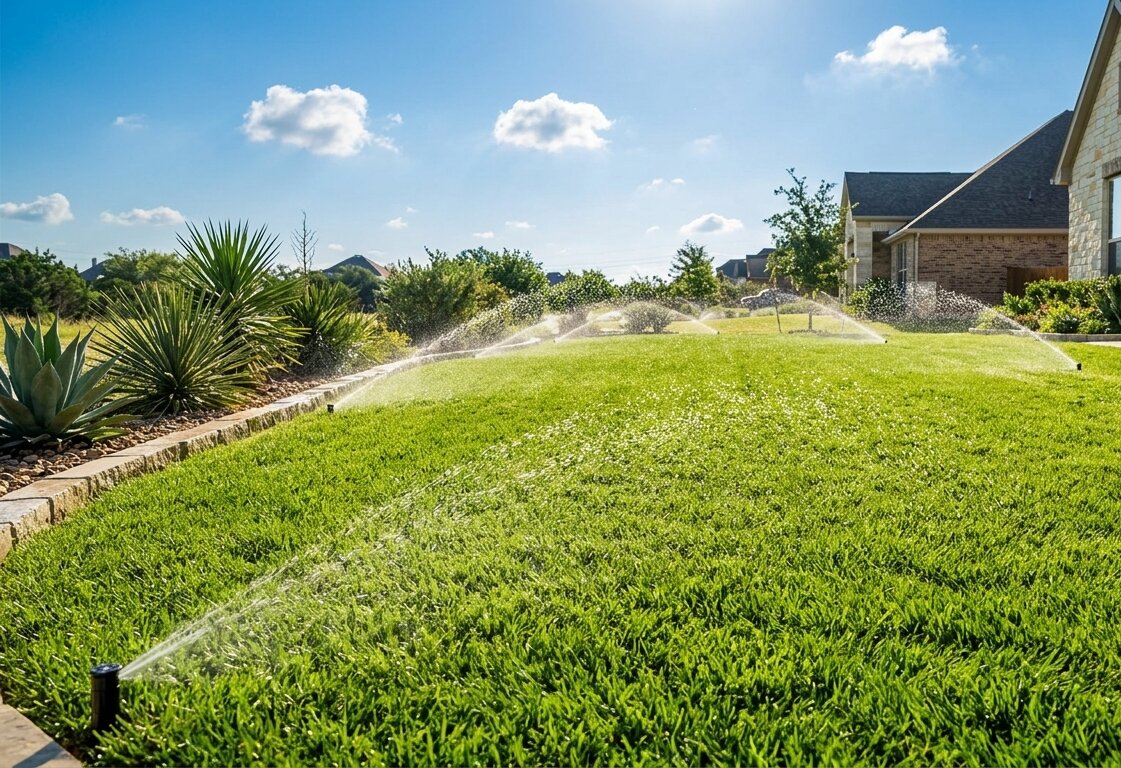
Moore Irrigation Services designs and installs low-voltage landscape lighting for San Antonio homeowners — walkways, steps, tree uplighting, patios, and front entries, planned around the irrigation lines already buried in your yard. Every design starts with a walk of the property near dusk, and every estimate is free.
Most people start thinking about lighting after a guest missed a step in the dark, or after the solar stakes died in the summer heat again. Below: why what's buried in your yard matters more than the fixtures, how to tell if you're ready for a real system, low-voltage versus solar, and how an installation actually runs.
Here's something most homeowners don't think about until it's too late. Your yard isn't empty underground. There's irrigation pipe, drip tubing near the beds, and maybe a valve box or two. All of this is buried a few inches to a foot down, depending on the zone. Trench a lighting run without knowing where it is, and you'll hit something. We've seen it happen on jobs where another crew went first.
This is where doing both irrigation and landscape lighting under one roof matters. When we install low-voltage lighting on a property where we've already put in the sprinkler system or drip lines, we know where everything sits. No guessing, no exploratory digging. On a new build, we can plan the lighting and irrigation layouts together, so wire runs and pipe runs don't cross paths.
Soil plays into this too. South of 1604, the clay holds moisture and shifts more with the seasons. Buried lines can sit at slightly different depths than you'd expect from the original install. North of that, the ground gets rocky fast, sometimes down to caliche within a few inches, and shallow digging around tree roots and stone takes more care. A quick check before the shovel comes out saves you a headache later.
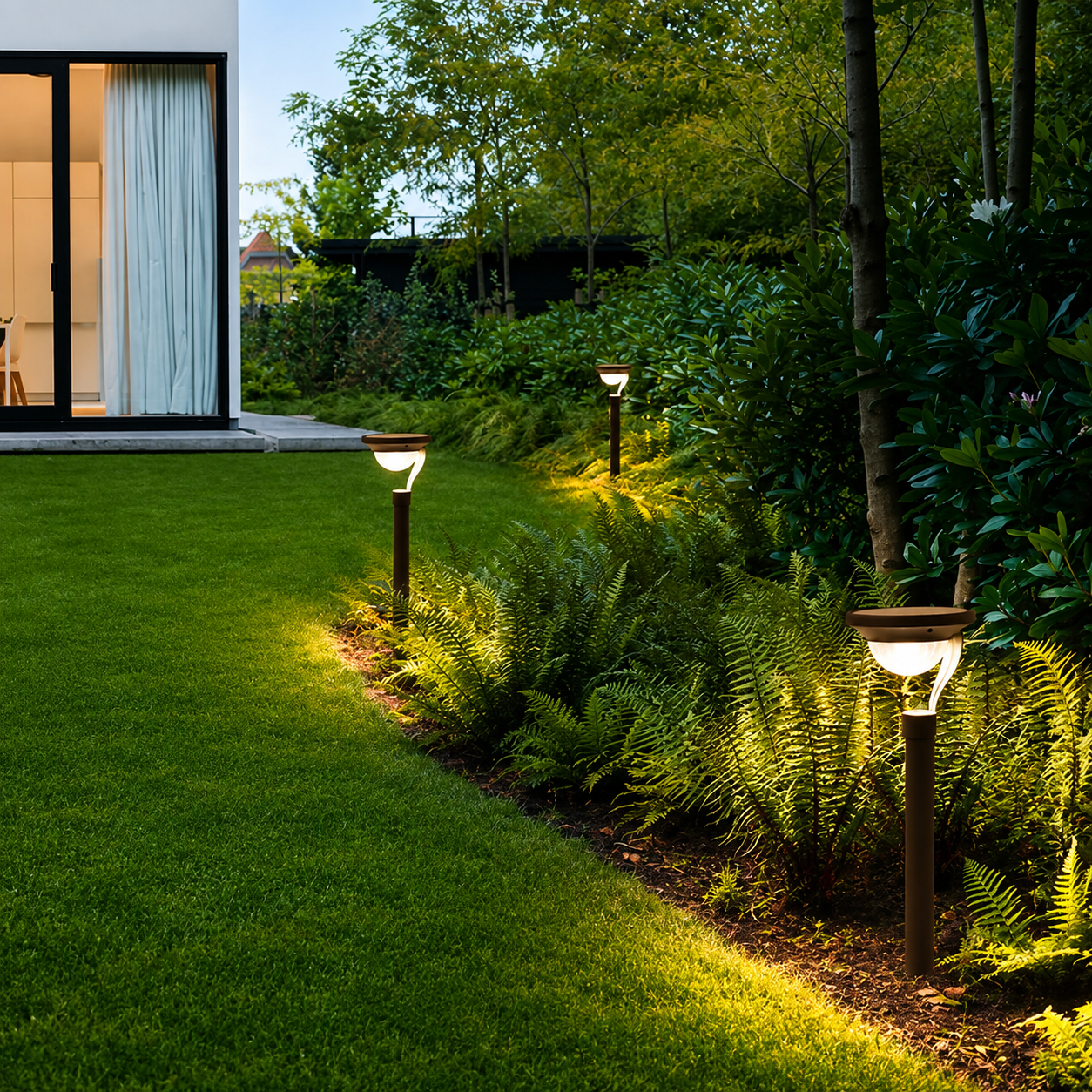
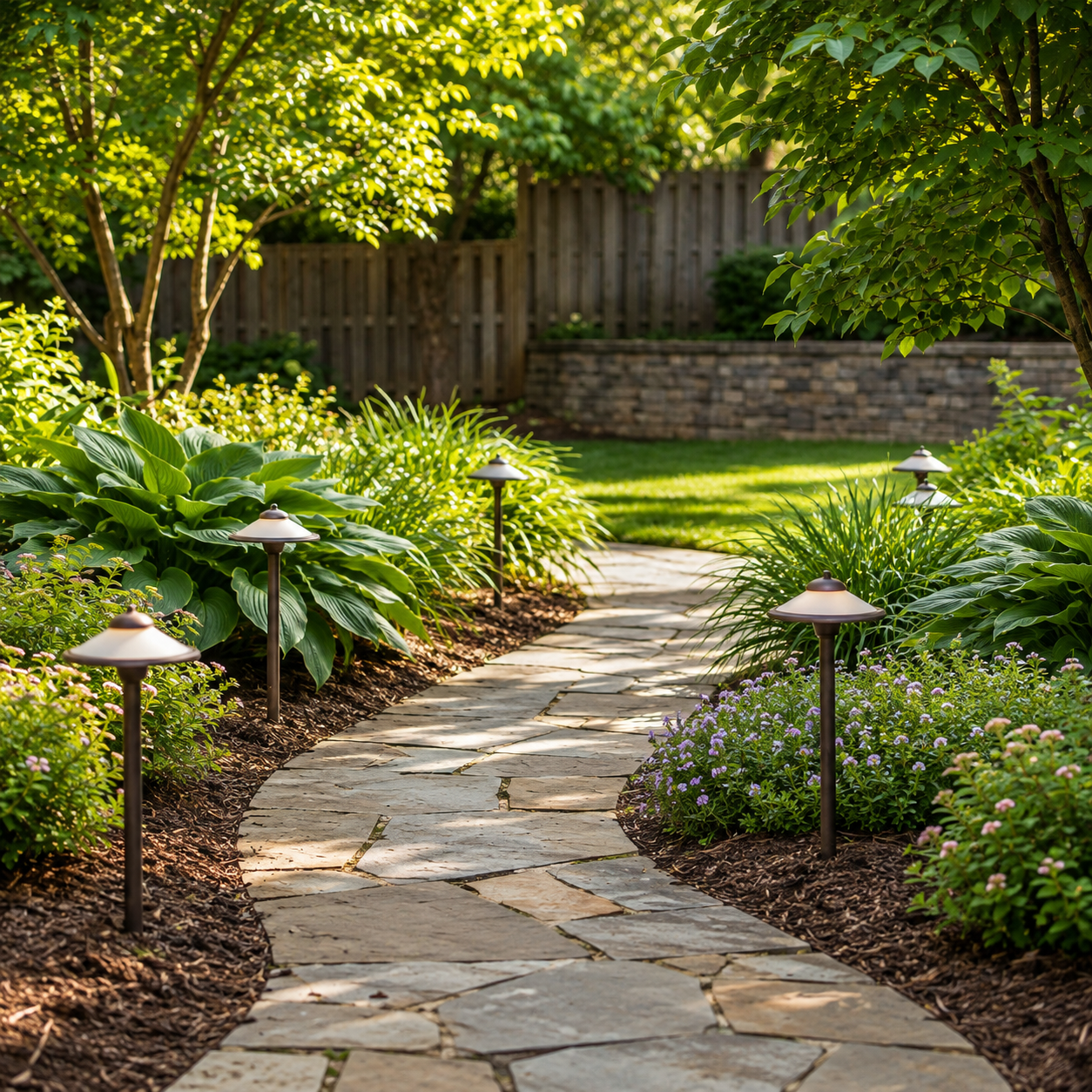
Walk your own yard after the sun goes down. Can you see the front steps? Can you find the walkway without your phone flashlight? If the answer is no, that's your first sign. We hear the same story a lot: someone's guest missed a step, or a delivery driver couldn't find the house number after dark.
•Walkways, steps, or a sloped driveway that disappear once the sun sets
•Trees, stone columns, or a nice facade that nobody sees after 7pm half the year
•A patio or pool area you'd use at night if it weren't pitch black
•House numbers or the front door that are hard to spot from the street
•A yard that looks great by day but flat and empty by night
If you're already dealing with a patchy sprinkler zone or thinking about other yard work, it's worth handling lighting at the same time so wire runs don't get cut later. That's common — we see it every season with folks doing a bigger yard project.
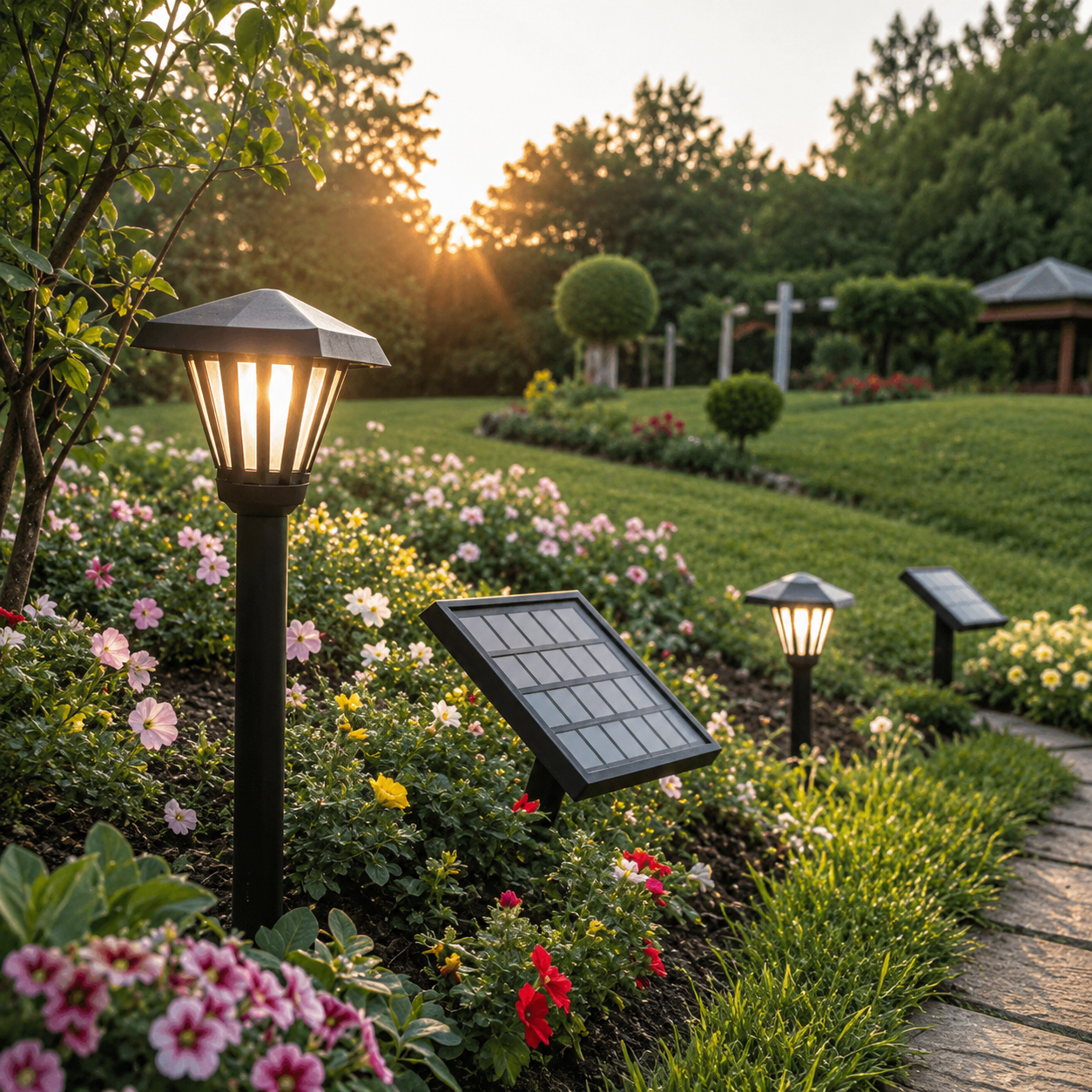
Solar stake lights look tempting. Grab a pack, push them in the dirt, done. But we get calls every year from folks whose stakes went dim after one San Antonio summer. Here's why. Solar panels need direct sun to charge. A lot of yards here sit under live oaks that shade the ground most of the day. Less sun means a weaker charge. A weaker charge means the light barely makes it to midnight. Heat is the other problem. Cheap solar batteries degrade fast once temperatures sit in the high 90s for weeks at a time. This is a normal July around here. So the lights that worked fine in spring fade out by August. Low-voltage systems run on a transformer wired to your home's power. Brightness stays steady no matter the season or the shade. That's the real difference.
•Solar stakes make sense for a small, sunny bed you just want to mark, nothing more.
•Low-voltage fits anywhere you want dependable light: walkways, steps, tree uplighting, architectural features.
•Low-voltage fixtures can be aimed and adjusted. Solar stakes mostly just glow straight up.
•If your goal is safety lighting on steps or a driveway, solar isn't reliable enough to trust after dark.
To be fair, not every yard needs a system. String lights for a party, one plug-in spotlight on a mailbox, or a porch bulb swap don't call for us, and there's no shame in testing one small area with solar stakes first. But if you're buying a third solar light because the first two died in the heat, or running extension cords across the patio every time you have people over, you've outgrown the temporary fix.
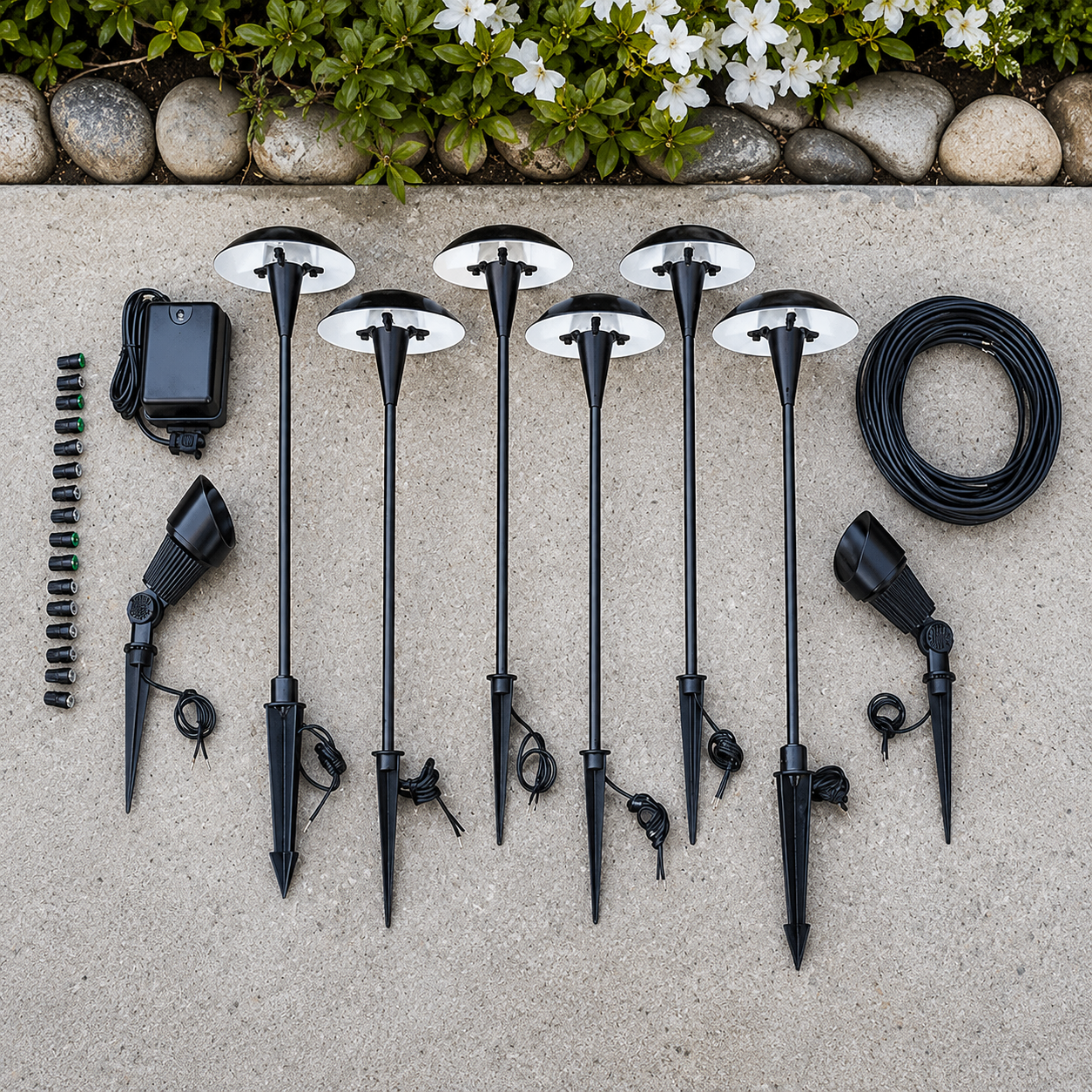
Good landscape lighting doesn't start with fixtures. It starts with a walk around your property, usually right before dusk. This helps us see the actual shadows your trees, columns, and walkways throw. From there the process follows a predictable path.
•We walk the yard with you and mark what you want lit: trees, steps, a stone wall, the front entry.
•We plan the fixture layout and figure out how many lights one transformer can run without dimming at the far end.
•We run low-voltage wire, usually buried a few inches down, planning extra care for rocky ground where it applies.
•We mount the transformer near an outlet, connect the timer, and test every fixture before we backfill any trench.
•We come back after dark for the final walkthrough. Fixtures get aimed and adjusted while you're standing right there looking at it.
That last step matters more than people think. A light that looks fine at 2 PM can blast straight into a window at night, or miss the tree entirely. We've adjusted plenty of fixtures on a final walkthrough that looked perfect on paper. One thing we hear a lot: "How long is my yard going to be torn up?" Low-voltage wire doesn't need deep trenching like a sprinkler line does, so the disruption is minor compared to other yard work.
We walk your yard near dusk and check what's already buried underground before we plan anything. Since we also install irrigation, we can usually tell you where existing sprinkler lines and drip tubing sit without digging test holes first. We also look at your soil type, tree shade, and which areas go completely dark at night. That walkthrough decides where wire runs, how many fixtures you need, and where the transformer should go.
It shouldn't, as long as your installer knows where your irrigation lines are before they dig. We've been called in after other crews hit buried pipe or drip tubing because nobody checked first. Since we handle irrigation and lighting under one roof, we already know where valve boxes and lines run on yards we've serviced. On a new property, we ask about your irrigation layout before marking any lighting trenches.
You need low-voltage lighting if you want dependable light on steps, walkways, or a driveway after dark. Solar stakes rely on direct sun, and a lot of Hill Country yards sit under live oaks that shade the ground most of the day. Weak sun means a weak charge, and by August, San Antonio heat can wear down cheap solar batteries fast. Low-voltage systems run off a transformer, so brightness stays steady all year, no matter the shade or season.
Yes, we install landscape lighting across San Antonio and the surrounding Hill Country. Soil changes depending on where you live, and that affects how we run wire — a clean trench in the clay south of Loop 1604, more careful shallow work in the rocky ground north of it. We plan every job around your specific soil and yard layout before we start digging.
%20(1).jpg)